


















Netanyahu's office said prior to the meeting that he wanted the US-Iran talks to include limits on Tehran's ballistic missile programme and support for militant groups such as Hamas and Hezbollah.
US President Donald Trump met privately with Israel’s Prime Minister Benjamin Netanyahu at the White House on Wednesday and said he'd insisted that negotiations with Iran continue as the US pushes for a nuclear deal with Tehran.
 ADVERTISEMENT
ADVERTISEMENT
ADVERTISEMENT
Netanyahu spent nearly three hours at the White House, but entered and left out of the view of reporters and he and Trump didn't take questions.
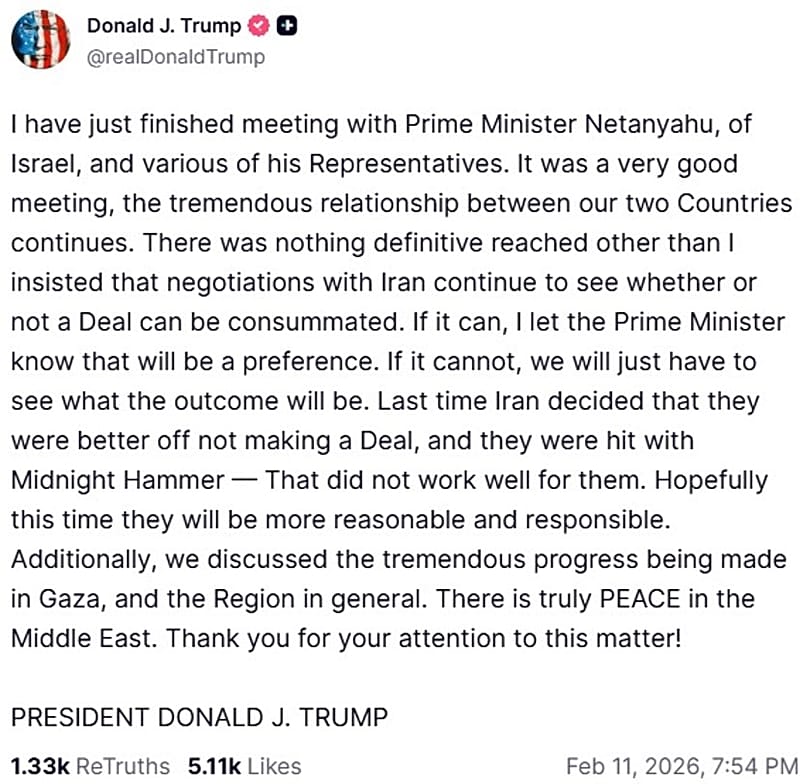
In a subsequent post on his social media site the president called it "a very good meeting" and said that "there was nothing definitive reached, other than I insisted that negotiations with Iran continue to see whether or not a Deal can be consummated."
"If it can, I let the Prime Minister know that will be a preference," Trump wrote. "If it cannot, we will just have to see what the outcome will be."
He added, "Last time Iran decided that they were better off not making a Deal" and were hit by US air strikes.
"Hopefully this time they will be more reasonable and responsible," Trump wrote.
In a statement, Netanyahu's office said the prime minister had discussed negotiations with Iran as well as developments in Gaza and around the region and that the pair had "agreed to continue their close coordination and relationship."
The visit was Netanyahu's sixth to Washington during Trump's second term and comes as both the US and Iran are projecting cautious optimism after holding indirect talks in Oman on Friday about how to approach negotiations over Iran’s nuclear programme.
Netanyahu pushes for more in Iran talks
Netanyahu's office said prior to the meeting that he wanted the US-Iran talks to include limits on Tehran's ballistic missile programme and support for militant groups such as Hamas and Hezbollah.
"I will present to the president our outlook regarding the principles of these negotiations — the essential principles which, in my opinion, are important not only to Israel, but to everyone around the world who wants peace and security in the Middle East," Netanyahu said on Tuesday before leaving Israel.
But it remains unclear how much influence Netanyahu will have over Trump's approach toward Iran.
Trump initially threatened to take military action over Iran's bloody crackdown on nationwide protests against the country's dire economy, then shifted to a pressure campaign in recent weeks to try to get Tehran to make a deal of its nuclear programme.
Iran is still reeling from the 12-day conflict with Israel in June which included a series of devastating air strikes, including the US bombing several Iranian nuclear sites.
Trump has said repeatedly that US strikes had "obliterated" Iran's nuclear capabilities, though the amount of damage remains unclear.
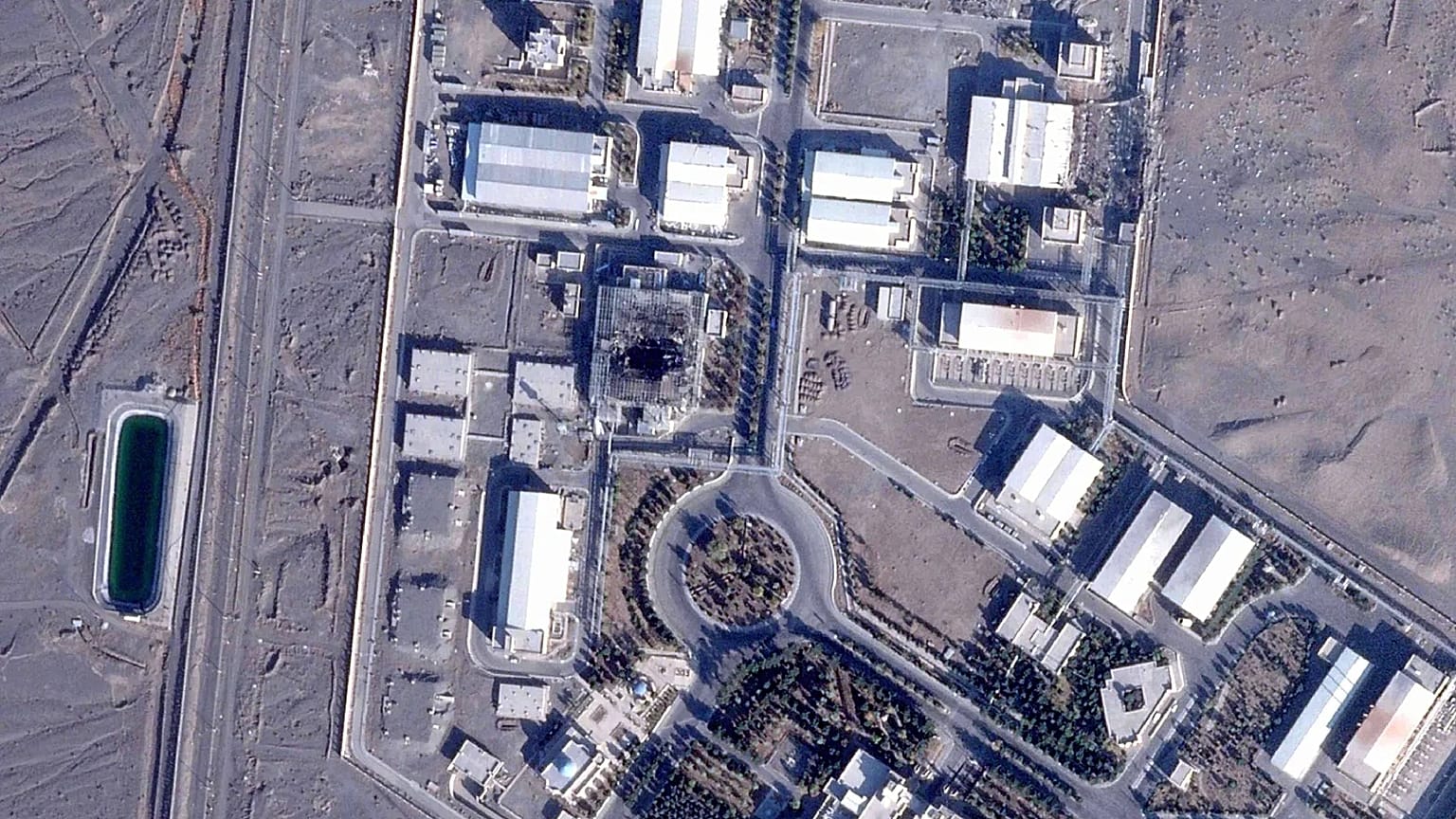
Satellite photos have recently captured activity near the nuclear facilities, prompting concern that Iran could be attempting to salvage or assess damage.
Israel has long called for Iran to cease all uranium enrichment, dial back its ballistic missile programme and cut ties to militant groups across the region.
Iran has always rejected those demands, saying it would only accept some limits on its nuclear programme in return for sanctions relief.
Washington has built up its military forces in the region, sending an aircraft carrier, guided-missile destroyers, air defence assets and more to supplement its presence.
Arab and Islamic countries, including Turkey and Qatar, have been urging both sides to show restraint, warning that any strike or retaliation could have destabilising consequences for a region already strained by the Israel-Hamas war in Gaza.
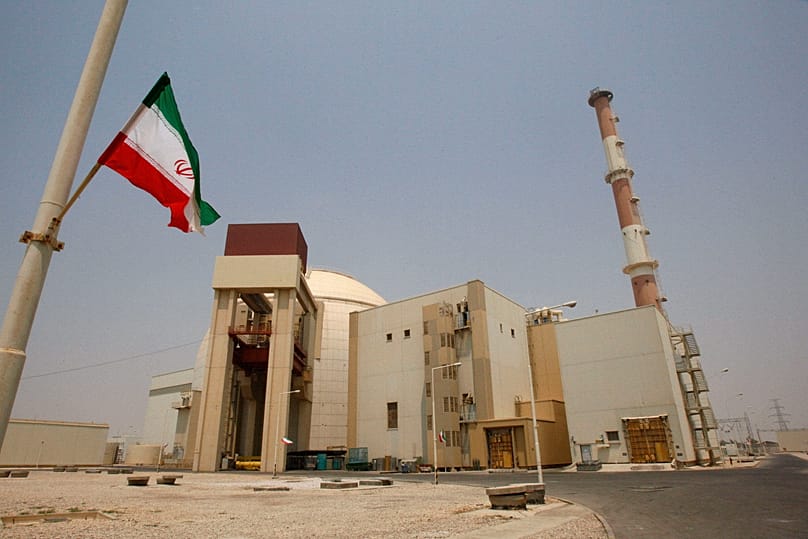
Before the conflict with Israel, Iran had been enriching uranium up to 60% purity, a short, technical step away from weapons-grade levels.
The UN nuclear watchdog, the International Atomic Energy Agency (IAEA), had said Iran was the only country in the world to enrich to that level that was not armed with a bomb.
Iran has been refusing requests by the IAEA to inspect the sites bombed in the June fighting.
Even before that, Iran has restricted IAEA inspections since Trump’s decision in 2018 to unilaterally withdraw the US from the 2015 nuclear deal with world powers.