

















Economic activity accelerated across Kazakhstan, Uzbekistan, the Kyrgyz Republic and Tajikistan in 2025, driven by investment, exports and consumption. Azerbaijan remained closely linked, through energy and trade corridors connecting the region to Europe and global markets.
Central Asia’s combined economy grew by more than 6% in 2025 compared with the previous year, according to regional GDP data.
 ADVERTISEMENT
ADVERTISEMENT
ADVERTISEMENT
Independent estimates place growth between 6.2% and 6.6%, reflecting different methodologies. The World Bank puts regional expansion at 6.2%, while the Eurasian Development Bank (EDB) estimates growth at 6.6%. The figures cover Kazakhstan, Uzbekistan, the Kyrgyz Republic and Tajikistan, with Turkmenistan excluded due to data limitations.
The growth compares with significantly slower projections for advanced economies. The EDB forecasts growth of around 1.6% for the United States and about 1.1% for the euro area in 2026, while China is expected to expand by roughly 4.6%.
Despite the strong headline numbers, economists caution that inflation, income disparities and reliance on external factors continue to shape daily economic realities across the region.
Kazakhstan: oil, industry and diversification
Kazakhstan, Central Asia’s largest economy, expanded by about 5.9% in 2025 and is forecast to grow by 5.5% in 2026, according to the EDB. The figures mark the strongest performance in more than a decade.
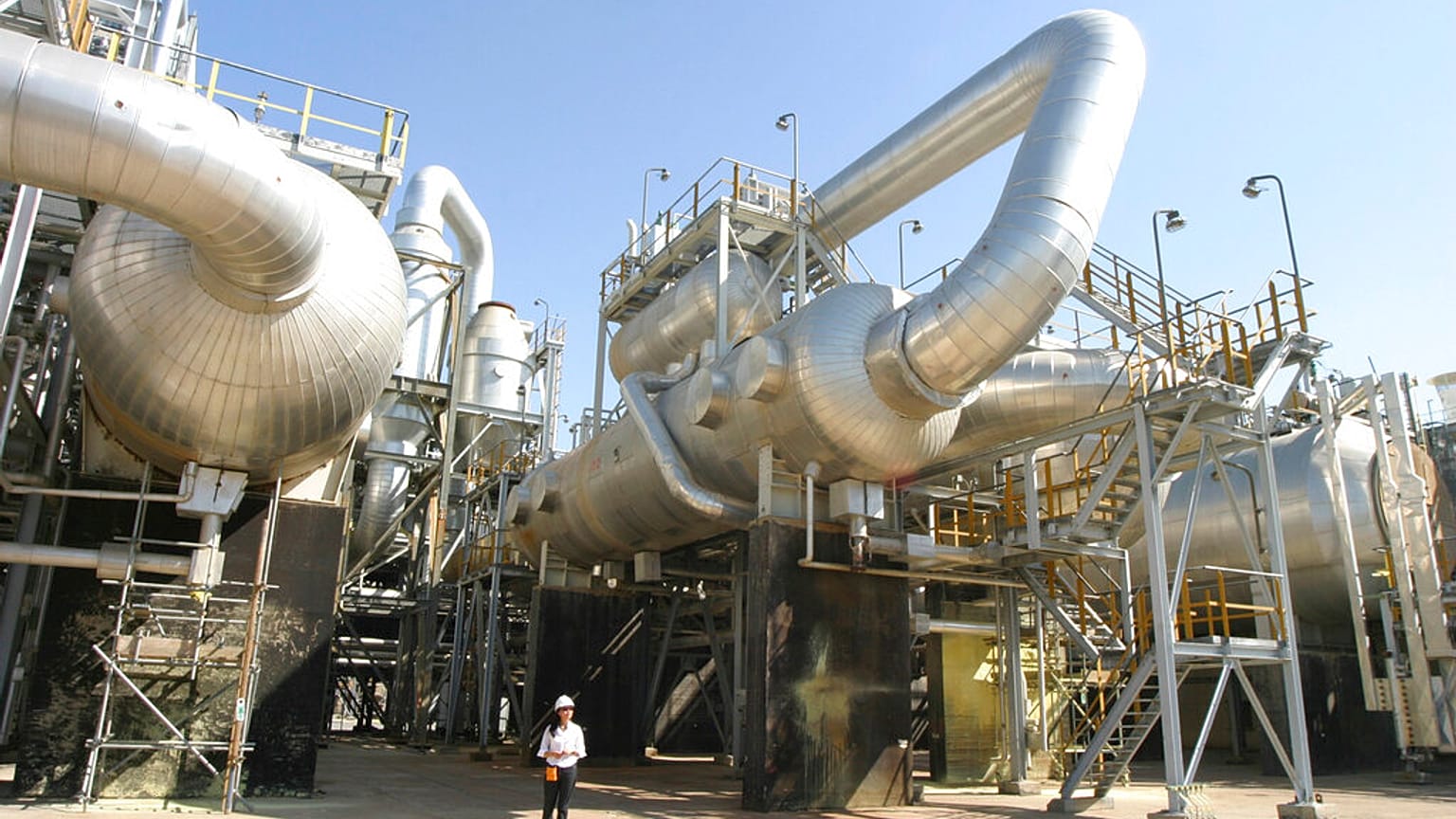
Oil remains the backbone of growth, supported by earlier-than-expected expanded output at the Tengiz oil field. At the same time, manufacturing has gained momentum, particularly in machinery and metals, with new factories opening in several regions.
“This is primarily due to the fact that the impact of unlocking investment potential turned out to be stronger than we had anticipated back in June,” said Aigul Berdigulova, Senior Analyst at the EDB’s Centre for Macroeconomic Analysis.
“In addition, industrial output has been growing rapidly this year, largely as a result of government measures aimed at diversifying the economy,” she added.
Rising incomes have supported mortgage and car lending, while domestic travel has increased. However, officials acknowledge the limits of an energy-led growth model and are investing in transport routes across the Caspian Sea and in processing industries to broaden sources of income.
Inflation, running at around 12.3% last year, continues to erode purchasing power, keeping interest rates high and constraining household spending.
Uzbekistan: fast growth and structural change
Uzbekistan recorded one of the strongest performances in the region, with GDP growth of 7.4% in 2025 and a projected 6.8% in 2026, according to the EDB.
The country’s GDP exceeded €133 billion in 2025, up from about €56 billion nine years earlier. Over the same period, GDP per capita rose from roughly €1,750 to about €3,220, almost doubling average income levels.
Investment in fixed capital increased by more than 15% year-on-year in the first nine months of 2025, while exports surged more than 33% in value.
Persistently high global gold prices played a major role, with export revenues from the precious metal rising by more than 70% year-on-year, according to data from Uzbekistan’s statistics agency cited by the World Bank and the Eurasian Development Bank.
“Even one sector, services, now contributes around €72.4 billion to GDP. Digital services are especially important. The ‘One Million AI Programmers’ project shows how new skills can create incomes several times higher than the average,” said Gulasal Madrahimova, Dean at the Tashkent Institute of Textile and Light Industry.
President Shavkat Mirziyoyev has said about five million people gained a stable source of income in 2025, while 1.5 million moved above the poverty line. Consumer indicators also shifted, with annual home purchases rising to about 270,000 and car sales reaching one million.
From the World Bank’s perspective, the next phase of growth will be more demanding.
“Uzbekistan has been recognised as one of the world’s top economic reformers since 2017,” said Pınar Yaşar, Country Economist at the World Bank Office for Uzbekistan. “Future growth should be based on a strong private sector, WTO accession and a genuine level playing field. Reducing state involvement where private firms can perform better will help attract investment and create better jobs.”
Kyrgyz Republic and Tajikistan: rapid but uneven expansion
The Kyrgyz Republic emerged as the region’s fastest-growing economy, with GDP estimated to have expanded by 10.3% in 2025 and forecast at 9.3% in 2026, according to the EDB. Tajikistan also benefited from strong remittances and public investment.
Analysts say part of the recent acceleration reflects the redirection of trade and logistics flows following Russia’s full-scale invasion of Ukraine.
Kubat Rakhimov, a Kyrgyz expert in infrastructural development in Central Eurasia, argues that for underinvested economies, high growth rates often reflect a catch-up phase rather than a structural breakthrough.
“For underinvested economies, growth of around 6% often reflects a catch-up phase, while in advanced economies growth of 1.5–2% can already be considered strong,” he said.
Rakhimov added that GDP growth alone does not fully capture living standards, pointing instead to real disposable income and labour productivity as more meaningful indicators of long-term progress.
Azerbaijan: energy hub linking Central Asia to wider markets
Azerbaijan, while not geographically part of Central Asia, is closely connected to the region through trade and energy infrastructure and posted more moderate economic expansion in 2025.
The International Monetary Fund projects Azerbaijan’s GDP to grow by about 3.0% in 2025, a slowdown from previous years, based on its latest country forecasts.
Other international forecasts vary slightly, with the World Bank projecting around 2.6% growth in 2025 and the Asian Development Bank estimating 2.4% growth for the same period.
While its growth rate is lower than those of several Central Asian economies, Azerbaijan plays a central role in connecting the region to global markets.
The economy remains heavily reliant on oil and gas exports, which provide fiscal stability but tend to deliver more gradual year-on-year changes. Energy revenues are being channelled into infrastructure projects, including transport corridors across the Caspian Sea that link Central Asia with Europe and Turkey.
Those routes have gained importance as trade flows between Asia and Europe have been reshaped in recent years, increasing Azerbaijan’s relevance as a transit and logistics hub for Central Asian exports, particularly hydrocarbons, metals and agricultural products.
Authorities are also investing in renewable energy and non-oil sectors in an effort to diversify income sources and reduce exposure to commodity price cycles, while maintaining close economic cooperation with Kazakhstan, Uzbekistan and other Central Asian states.
Inflation, income gaps and policy constraints
Despite rapid headline growth, inflation remains a key challenge across Central Asia.
According to estimates by the International Monetary Fund and the World Bank, inflation in 2025 remained elevated across Central Asia, standing at around 12% in Kazakhstan, about 9% in the Kyrgyz Republic and roughly 7–8% in Uzbekistan.
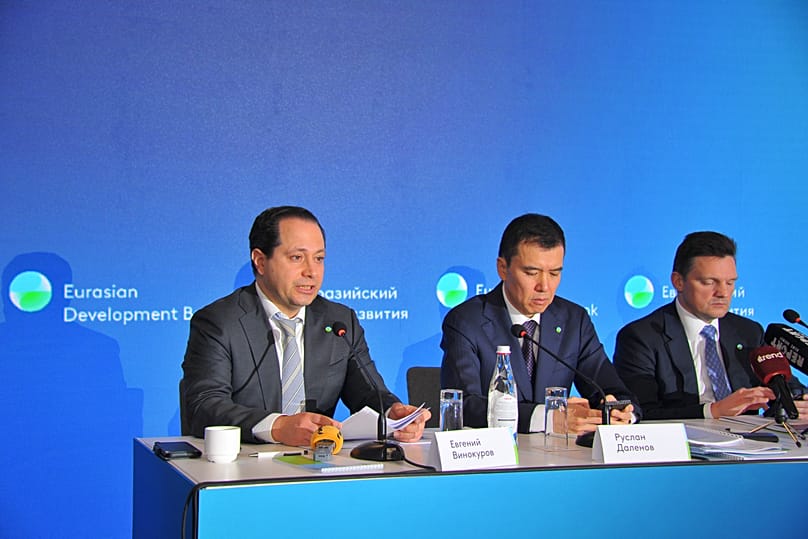
“Lower inflation will create conditions for interest rate cuts. We also expect most national currencies in the region to demonstrate broadly stable dynamics,” said Evgeny Vinokurov, Chief Economist at the EDB.
Until inflation eases, high borrowing costs continue to shape household behaviour, often overshadowing strong national growth figures.
World Bank data also underline large income gaps. Kazakhstan’s GDP per capita stood at about $14,154, compared with roughly $3,162 in Uzbekistan and around $2,420 in the Kyrgyz Republic. By comparison, GDP per capita in the United States exceeded $84,000.
Risks and the road ahead
Economists warn that the current momentum is vulnerable to external shocks, including a slowdown in China, changes in global demand for hydrocarbons and metals, or shifts in geopolitical dynamics.
The World Bank forecasts a sharper cooling than the EDB, projecting regional growth of about 5.0% in 2026 and 4.6% in 2027, citing uncertainty in global trade and weaker growth among key partners.
For Central Asia, the challenge will be turning a period of unusually fast growth into lasting gains in productivity, incomes and institutional strength — ensuring that strong GDP figures translate into durable improvements in everyday life.