




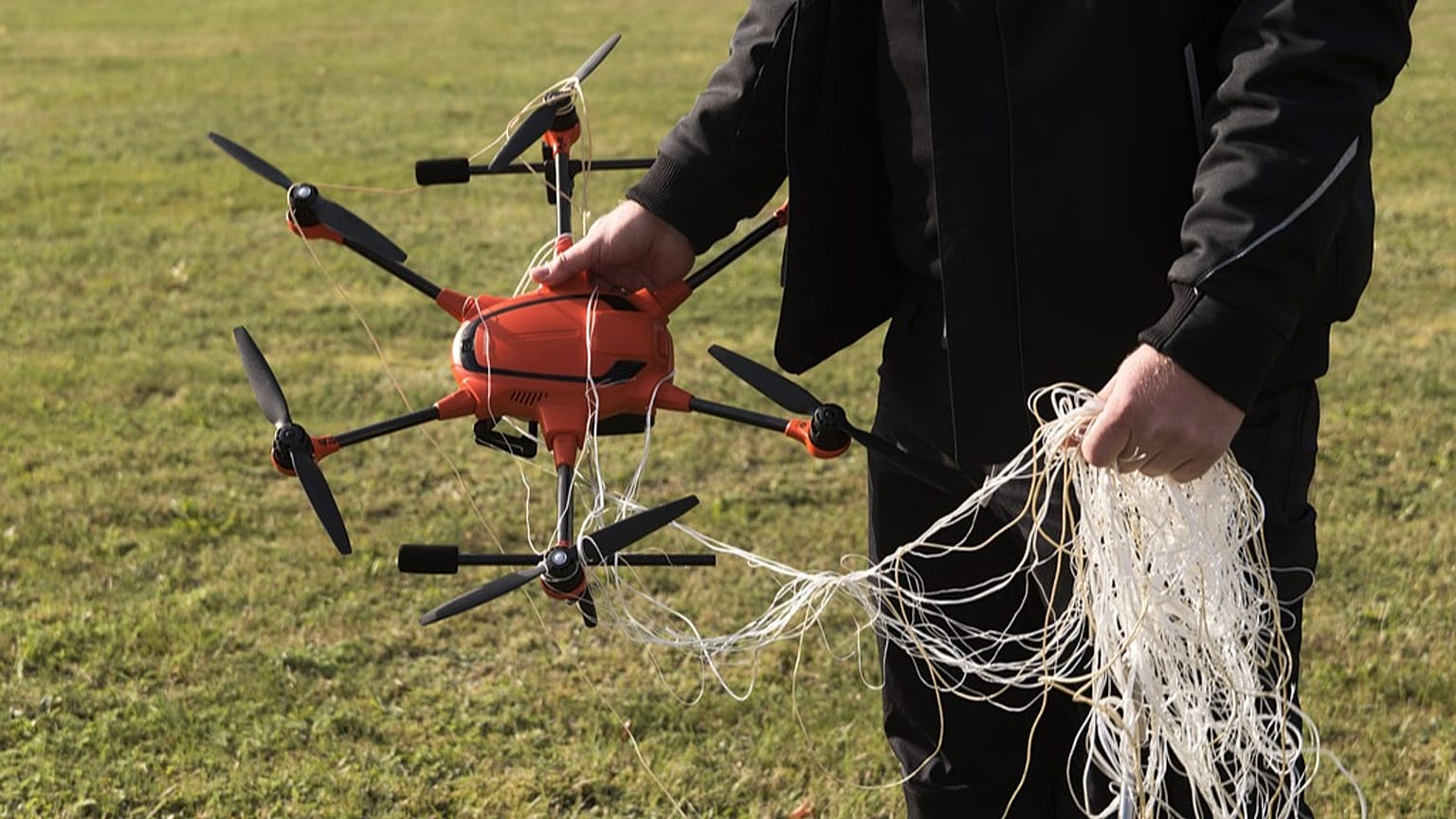













Countries like Germany are just as exposed in the hybrid conflict as NATO's eastern flank due to drone incursions, disinformation and sabotage, and Europe's deterrence is reaching its limits, OpenMinds founder Sviatoslav Hnizdovskyi tells Euronews.
Russia is waging a continuous hybrid war against Europe through coordinated disinformation campaigns, drone incursions, sabotage and cyberattacks, but European nations remain reluctant to explicitly acknowledge the scale of the confrontation, according to a security expert tracking Moscow's activities.
 ADVERTISEMENT
ADVERTISEMENT
ADVERTISEMENT
Sviatoslav Hnizdovskyi, founder of defence technology company OpenMinds, says Europe is already in a state of permanent low-threshold confrontation with Russia, even if political leaders avoid calling it that.
"Whether Europe wants it or not, it is already in that space," Hnizdovskyi told Euronews. "The steady combination of information operations, psychological pressure, cyber activity, jamming and repeated military signalling has created a reality of continuous confrontation."
"What remains unresolved is not the existence of this condition, but Europe's willingness to name it explicitly."

Russia is accused by Ukraine's Western partners of conducting hybrid warfare alongside its conventional military campaign in Ukraine.
The term describes covert, coordinated actions blending military force with cyberattacks, disinformation, economic pressure, sabotage and political influence operations aimed at destabilising societies without formally declaring war.
A recent OpenMinds report details how such activities have intensified across Europe since Russia's full-scale invasion of Ukraine in 2022.
Dozens of suspected Russian drone incursions and airspace violations have been recorded, alongside incidents of sabotage, espionage and intimidation.
Among the most prominent allegations are drone overflights of military sites and critical infrastructure, as well as disinformation campaigns linked to domestic politics.
These include efforts during Germany's recent federal election, such as the so-called "Be greener" campaign targeting Green Party chancellor candidate Robert Habeck.
Political unity over military readiness
Hnizdovskyi argues that while Europe has taken meaningful steps through sanctions, support for Ukraine and resilience efforts, the underlying Russian strategy has not been consistently identified or framed across the bloc. Meanwhile, internal divisions are a hindrance to decision-making.
Russia's repeated airspace violations with drones and fighter jets over Poland and the Baltic Sea are designed to test both NATO's military readiness and political cohesion, but political unity represents the more consequential target, according to Hnizdovskyi.
"Military readiness can adapt; political cohesion is harder to maintain under sustained, ambiguous pressure," he said.
"Russia does not need direct confrontation to achieve strategic effects. Creating hesitation, disagreement and internal friction within alliances can be sufficient."
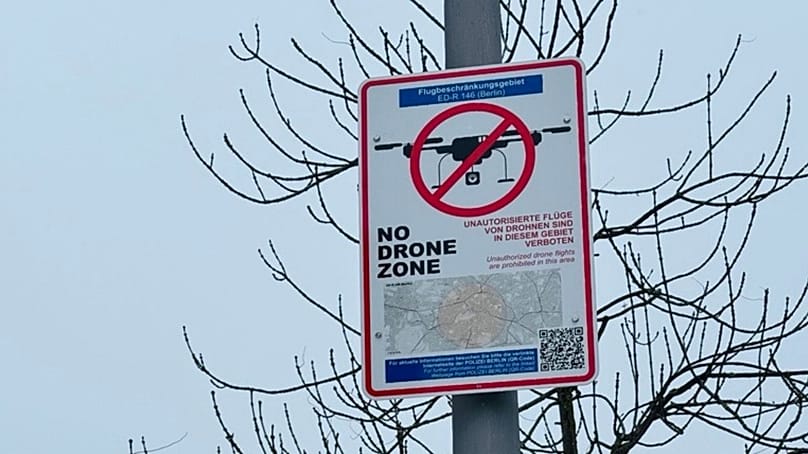
The OpenMinds research found that during 10 months of 2025, there were more airspace violation incidents than in the 2022-2024 period combined. The company attributes this partly to ambiguous Western reactions that Russia interprets as tolerance.
In 5% of cases analysed, Russian officials responded to airspace violations by claiming the incidents involved "unknown actors" or local "grassroot activists" rather than state operations.
Geographic proximity no longer main issue
At the same time, Hnizdovskyi rejects the assumption that countries bordering Russia face higher risks than those further west.
While partners in Poland and the Baltic states maintain higher alert levels due to proximity, Germany faces comparable exposure to information operations, psychological pressure, cyberattacks and jamming.
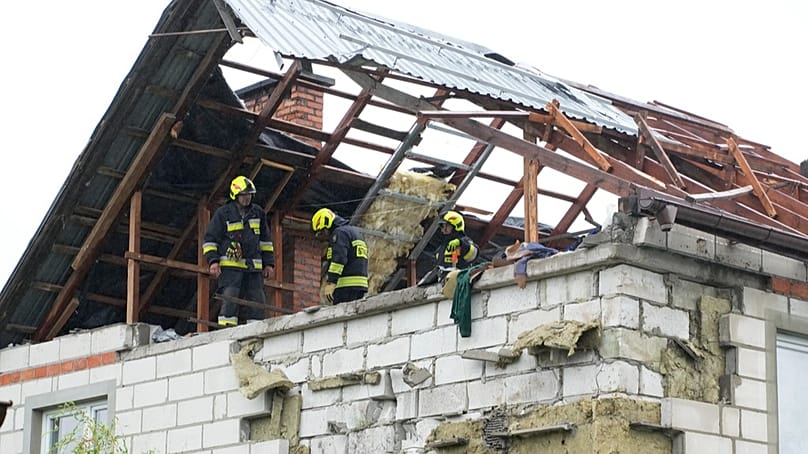
"In today's environment, geographic proximity is no longer the main determinant of vulnerability," he said, pointing to blackouts and sabotage attempts throughout Germany.
A credible European response would require explicit, collective red lines based on patterns of behaviour rather than single incidents, according to Hnizdovskyi. These should address sustained information warfare, coordinated interference or repeated pressure against critical infrastructure.
Crucially, credibility depends on reciprocity. Hybrid activities persist because they are perceived as low-cost and low-risk.
"For red lines to work, Europe must be prepared not only to name them, but to respond in kind across the hybrid spectrum through exposure, counter-messaging, coordinated attribution and other proportionate, non-kinetic measures," Hnizdovskyi said.
He suggested that Europe could demonstrate the capability and technological means to engage Russian citizens through fact-driven communication campaigns.
Without visible consequences or resilience measures, diplomatic engagement can be interpreted as tolerance, he warned. Over time, that perception incentivises continued pressure rather than de-escalation.
Focus on fracturing European unity
Moscow's increasing focus on Europe rather than the United States reflects a priority of fracturing European cohesion, according to Hnizdovskyi. Europe is where hybrid pressure can most directly influence sanctions, military support for Ukraine and alliance unity.
"Based on trends in Russian political leaders' and media rhetoric domestically, there is little indication of de-escalation. At minimum, we should expect continued pressure at current levels, with a risk of escalation - particularly as Europe relations with the US are rapidly deteriorating," Hnizdovskyi said.

Alternatively, Moscow may invest more heavily in election interference. In 2025, OpenMinds reported on suspected Russian influence operations in Germany, Romania and Moldova.
Crucial elections are approaching in 2026 in Hungary and Sweden, one of Ukraine's most vital strategic allies, Hnizdovskyi concluded.