




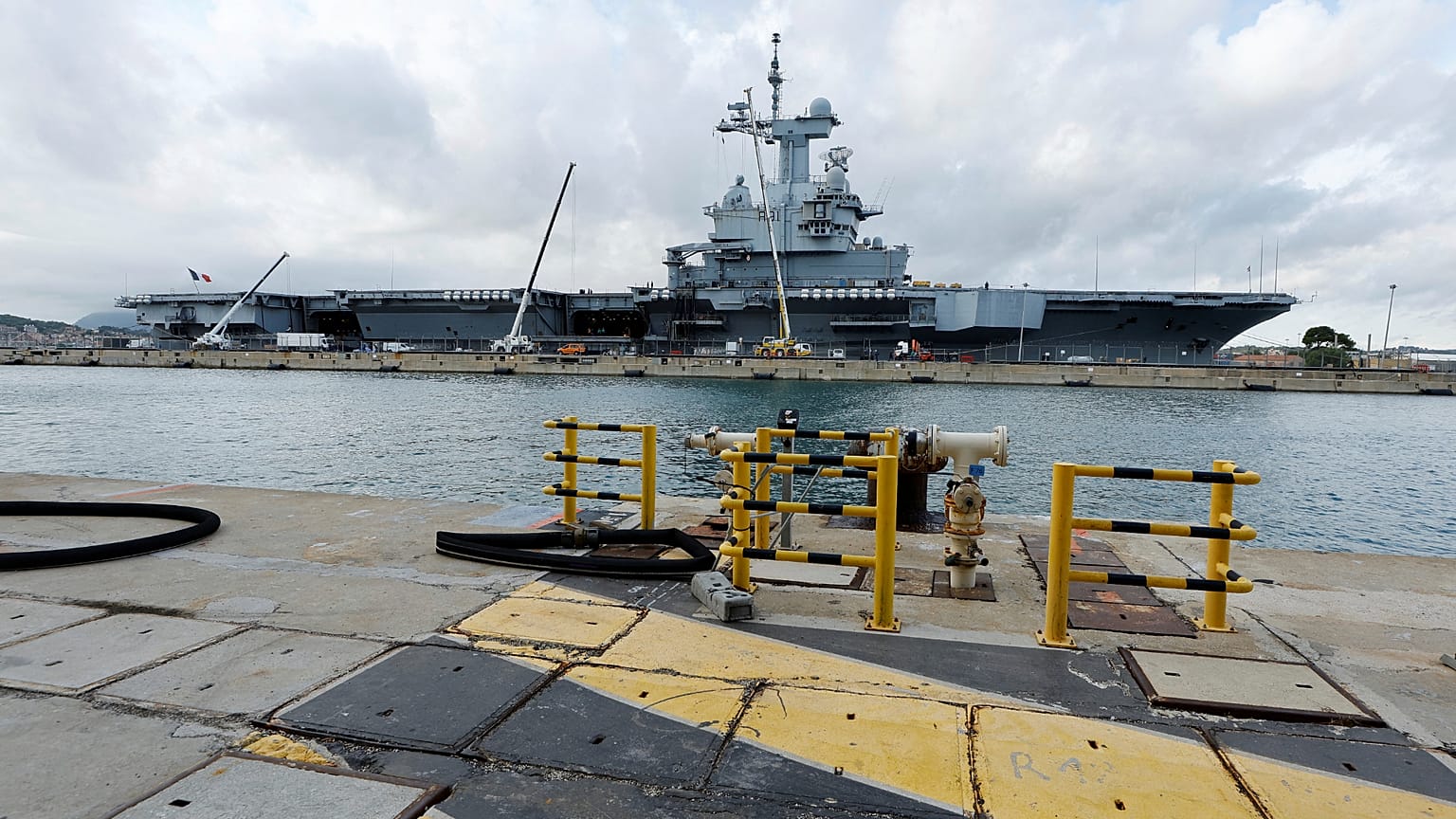














The Swedish army immediately activated a jamming system and put an end to the incident. At no time was the aircraft carrier in any danger, according to the Swedish Navy.
A drone neutralised on Wednesday in the proximity to the French aircraft carrier Charles de Gaulle during its stopover in Malmö could be of Russian origin, Swedish Defence Minister Pål Jonson said on Thursday.
 ADVERTISEMENT
ADVERTISEMENT
ADVERTISEMENT
According to Jonson, "a Russian military vessel was in the immediate vicinity at the time of the incident. This suspect vessel continued its route towards the Baltic Sea. He added that the Danish authorities had been contacted about the incident.
The incident occurred in the Øresund Strait, around 13 kilometres from the ship, which was anchored before joining NATO exercises in the Baltic Sea.
Although the aircraft carrier's radar systems had not seen it, a Swedish navy vessel spotted the drone during a patrol and activated an electronic jamming system to disrupt its navigation and sever the link with its operator. Contact was then lost.
It is not known whether it was able to return to the ship from which it came or whether it simply crashed at sea.
In the wake of this incident, the French armed forces' general staff has been at pains to reassure us of the solidity of military cooperation with Stockholm.
Paris officially confirmed that the Swedish detection and warning systems had "worked perfectly", demonstrating the growing interoperability between France and Sweden, a new member of NATO.
The French Navy insisted that this event had had no operational impact on the day-to-day life of the aircraft carrier and its crew.
War of nerves in the 'grey zone'
Four years after Moscow launched its invasion of Ukraine, Europe is facing an alarming upsurge in air intrusions over its most strategic sites.
These drone overflights, far from being isolated, are now part of a global pattern of harassment.
France has not been spared: last December, the army had to deploy its electronic jamming systems to neutralise a suspicious craft flying over the Île Longue base, home of nuclear-powered ballistic missile submarines and a pillar of the French national deterrent.
The stakes go beyond mere technical curiosity. For Moscow, the aim is to test the responsiveness of NATO's defences in real time, to identify flaws in the detection systems and, above all, to exert constant psychological pressure on European capitals.
By acting in this "grey zone", halfway between peace and open confrontation, Russia seems to be seeking to gradually weaken the cohesion and resilience of Kyiv's allies, while taking care not to cross the threshold that would provoke a direct military response.