




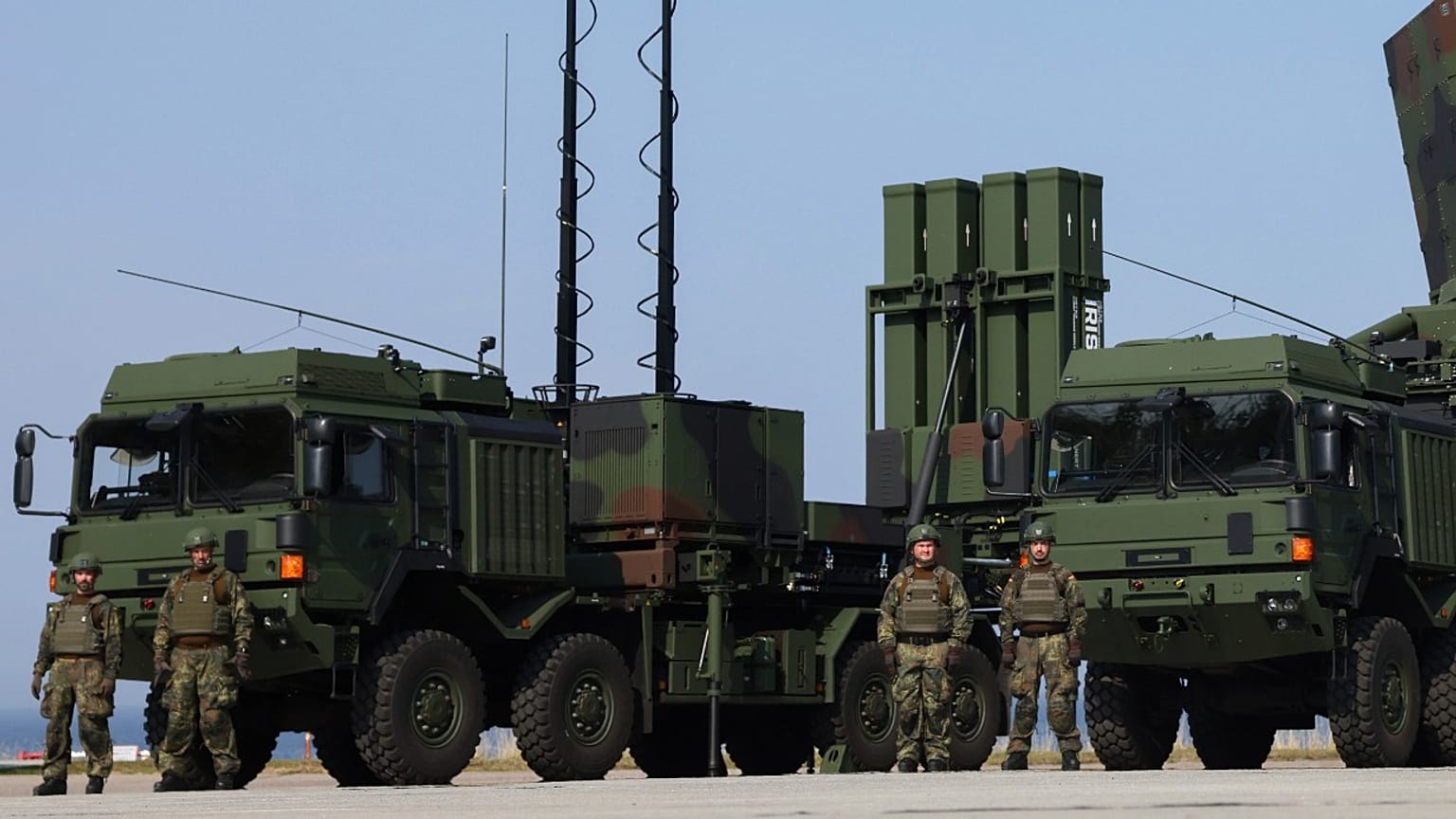













Germany is expanding its IRIS-T air defence system. Could the new SLM/X variant be Europe's answer to the US Patriot system?
Diehl Defence has unveiled a unified missile launcher that can fire both medium and long-range variants of Germany's IRIS-T air defence system — which, according to its capabilities, could be Europe's answer to the US-made Patriot.
 ADVERTISEMENT
ADVERTISEMENT
ADVERTISEMENT
The German defence company presented the launcher at Enforce Tac, Germany's leading trade fair for security and defence, bringing together the IRIS-T SLM medium-range system and the IRIS-T SLX long-range system. The new launcher can fire both missile variants, even mixed within the same battery.
The IRIS-T SLM system consists of a mobile command centre, a radar and several launch vehicles with interceptor missiles. The radar can detect targets up to 250 kilometres away, including drones, aircraft and cruise missiles.
The missiles can engage targets up to 40 kilometres away and at altitudes of up to 20 kilometres, according to several specialist media outlets. The IRIS-T SLX variant has an interception range of up to 80 kilometres.
Compared to the Patriot system, the IRIS-T SLM is more akin to an additional layer of defence rather than a direct replacement.
Unlike Patriot, the system is still primarily designed for ballistic missile defence. However, the IRIS-T system can already be used against drones, aircraft and cruise missiles.
What is so special about the US Patriot system?
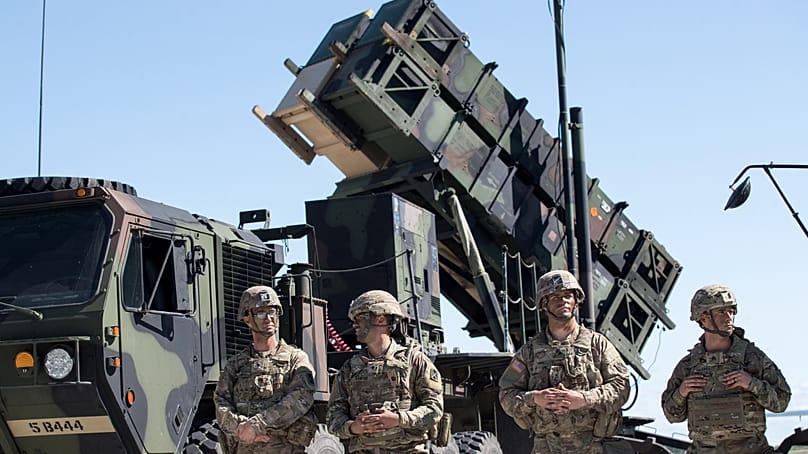
The Patriot air defence system was developed by the US during the Cold War to protect military bases and cities from air attacks. After its full-scale development began in 1976, the system has been deployed since 1984 and is now considered one of the most important air defence systems in the West.
The core of the system is a powerful radar that can detect targets up to 150 kilometres away and track multiple threats simultaneously. A Patriot battery consists of radar, a fire control centre, launchers, antennas and a power supply and can be deployed within a few hours.
Originally developed to defend against aircraft, Patriot was later modernised several times. With the Patriot Advanced Capability model, or PAC, the system can now also combat ballistic missiles.
The latest modernised version, PAC-3 MSE, destroys targets with a direct hit, also known as "hit-to-kill", and achieves significantly greater ranges and precision.
The system is technically very complex and expensive: a single battery costs over $1 billion, a modern interceptor missile around $5 million.
However, Russian ballistic missiles can be shot down with the PAC-3 MSE guided missiles. By comparison, the IRIS-T system is suitable for ballistic missile defence only to an extent due to its limited altitude range.
Air defence in high demand
The Russian war of aggression in Ukraine has shown that modern missiles can often only be intercepted by the US-made Patriot system. Several systems of this type are therefore required to provide comprehensive protection, especially for large cities.
According to reports, Ukraine has seven Patriot systems. Ukrainian President Volodymyr Zelenskyy has therefore repeatedly asked Kyiv's Western allies for more support with air defence.
Both the US and European countries have limited stocks, while demand is growing rapidly due to Russia's war in Ukraine.
Over the past four years, Germany has already delivered several MIM-104 Patriot systems to Ukraine. A replacement is not expected to be available until the end of the decade.
The Patriot system is in high demand worldwide and is supplied to 18 countries. A unit consists of a radar, a fire control centre, an antenna mast and three to eight launchers, and it usually takes around three years from order to delivery.
According to US outlet The Atlantic, the US government temporarily halted exports of these systems last year, citing a shortage and a desire to reserve them primarily for its own use.