



















Iran declared readiness for war after Trump repeated that the US would embark on military action over deadly protests.
Iran said Monday it is prepared for war after US President Donald Trump threatened military intervention over a crackdown on protests that activists say has killed at least 544 people.
 ADVERTISEMENT
ADVERTISEMENT
ADVERTISEMENT
"The Islamic Republic of Iran is not seeking war but is fully prepared for war," Foreign Minister Abbas Araghchi told a conference of foreign ambassadors in Tehran broadcast by state television.
"We are also ready for negotiations but these negotiations should be fair, with equal rights and based on mutual respect."
Trump said Sunday that Iran's leadership had called him seeking "to negotiate" after he repeatedly threatened to intervene militarily if Tehran killed protesters.
"The leaders of Iran called" the day before, Trump told reporters aboard Air Force One, adding that "a meeting is being set up ... They want to negotiate".
However, he added that Washington "may have to act before a meeting".
Hundreds, if not thousands dead
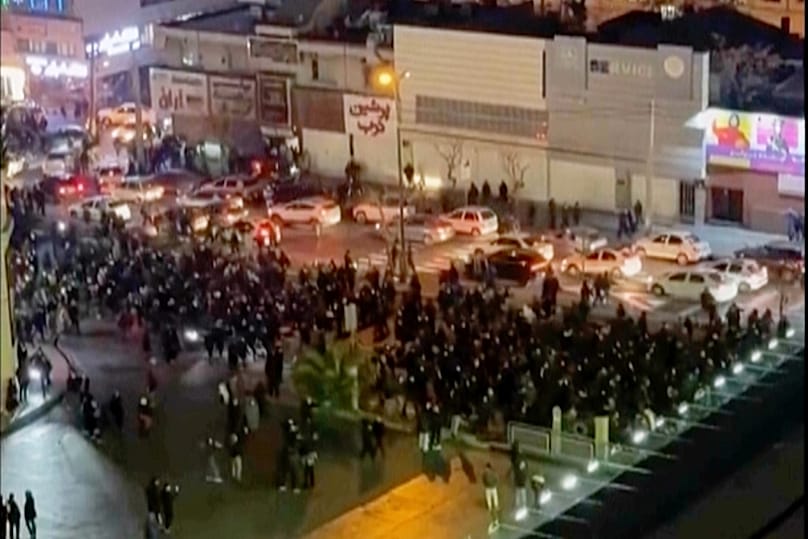
Over two weeks of protests initially sparked by economic grievances have turned into one of the biggest challenges yet to the theocratic system that has ruled Iran since the 1979 Islamic revolution.
The US-based Human Rights Activists News Agency reported that over 10,600 people have been detained over the two weeks of protests. Of 544 deaths reported, 48 were security personnel and 496 were demonstrators.
The Norway-based Iran Human Rights said it confirmed at least 192 protester deaths but the actual toll could be much higher. "Unverified reports indicate that at least several hundreds, and according to some sources, more than 2,000 people may have been killed," the group said.
The People's Mujahedin opposition group, banned in Iran, said more than 3,000 people have been killed according to its sources inside the country.
Iranian authorities have imposed an internet blackout lasting more than 84 hours, monitor Netblocks said. The blackout has severely affected Iranians' ability to post videos of mass protests that have rocked major cities since Thursday.
A video circulating Sunday showed dozens of bodies accumulating outside a morgue south of Tehran. The footage, geolocated by AFP to Kahrizak, showed bodies wrapped in black bags with what appeared to be grieving relatives searching for loved ones.
Foreign ministry spokesman Esmaeil Baghaei said a channel of communication is open between Araghchi and Trump's special envoy for the Middle East Steve Witkoff despite the lack of diplomatic relations.
"Messages are exchanged whenever necessary," he said, noting that while the United States has no diplomatic presence in Iran, its interests are represented by the Swiss embassy.
Oman's foreign minister, which has occasionally acted as a mediator, met Araghchi in Tehran on Saturday.
Trump, who backed Israel's 12-day conflict against Iran in June, said Tehran had indicated its willingness to talk. He said he thought Iranian leaders were "tired of being beat up by the United States".
The US president cautioned he may have to act before any meeting as reports of the death toll mount and the government continues to arrest protesters.
Asked about Iranian threats of retaliation Sunday, Trump said: "If they do that, we will hit them at levels that they've never been hit before. The military is looking at it, and we're looking at some very strong options."
Crown prince urges security forces to join protests
Mohammad Baagher Qalibaf, hardline speaker of Iran's parliament, warned during a parliamentary speech that "in the event of an attack on Iran, both the occupied territory and all American military centres, bases and ships in the region will be our legitimate targets".
Iranian lawmakers rushed to the dais shouting "Death to America".
It remains unclear how serious Iran is about launching a strike, particularly after its air defences were destroyed during the 12-day conflict in June with Israel. Any decision to go to war would rest with Supreme Leader Ayatollah Ali Khamenei, 86, who has been in power since 1989.
Iran targeted US forces at Al Udeid Air Base in Qatar in June 2025, in retaliation for US strikes on Iranian nuclear facilities on June 22 as part of the Iran-Israel conflict.
The government declared three days of national mourning for victims of what it has termed "riots". State television broadcast images of pro-Islamic republic rallies beginning in several cities with a march in Tehran expected later Monday.
The demonstrations began 28 December over the collapse of the Iranian rial currency, which trades at over 1.4 million to the dollar, as the country's economy is squeezed by international sanctions levied in part over its nuclear program. The protests intensified into calls directly challenging Iran's theocracy.
Reza Pahlavi, the US-based son of Iran's ousted shah, urged Iran's security forces and government workers to join the protests.
"Employees of state institutions, as well as members of the armed and security forces, have a choice: stand with the people and become allies of the nation, or choose complicity with the murderers of the people," he said in a social media post.
In London, protesters over the weekend replaced the Iranian embassy flag with a banner featuring a Persian lion used under the shah. The Iranian foreign ministry said it had summoned the British ambassador to Tehran over the incident.