


















US officials said the military will be ready to strike Iran within days as Donald Trump weighs action, even as Geneva nuclear talks expose wide gaps, according to reports by multiple US media outlets.
The US military will be ready for a possible attack on Iran from Saturday, senior national security officials have told President Donald Trump, according to multiple US media reports.
 ADVERTISEMENT
ADVERTISEMENT
ADVERTISEMENT
Trump has not made a final decision on military action and is discussing the matter with top advisers.
Meanwhile, the White House is assessing risks of escalating regional tensions and the political and military implications of holding back, but the rhetoric has escalated in recent days despite the talks between Washington and Tehran in Geneva.
“Should Iran decide not to make a deal, it may be necessary for the United States to use Diego Garcia, and the airfield located in Fairford, in order to eradicate a potential attack by a highly unstable and dangerous regime,” Trump wrote on Truth Social on Wednesday.
"(Trump) is getting fed up. Some people around him warn him against going to war with Iran, but I think there is 90% chance we see kinetic action in the next few weeks," one Trump adviser told Axios.
Any US military operation would likely be a massive, weeks-long campaign conducted jointly with Israel, sources told US media outlets, and the Trump administration was "closer than most Americans realise" to a major war in the Middle East.
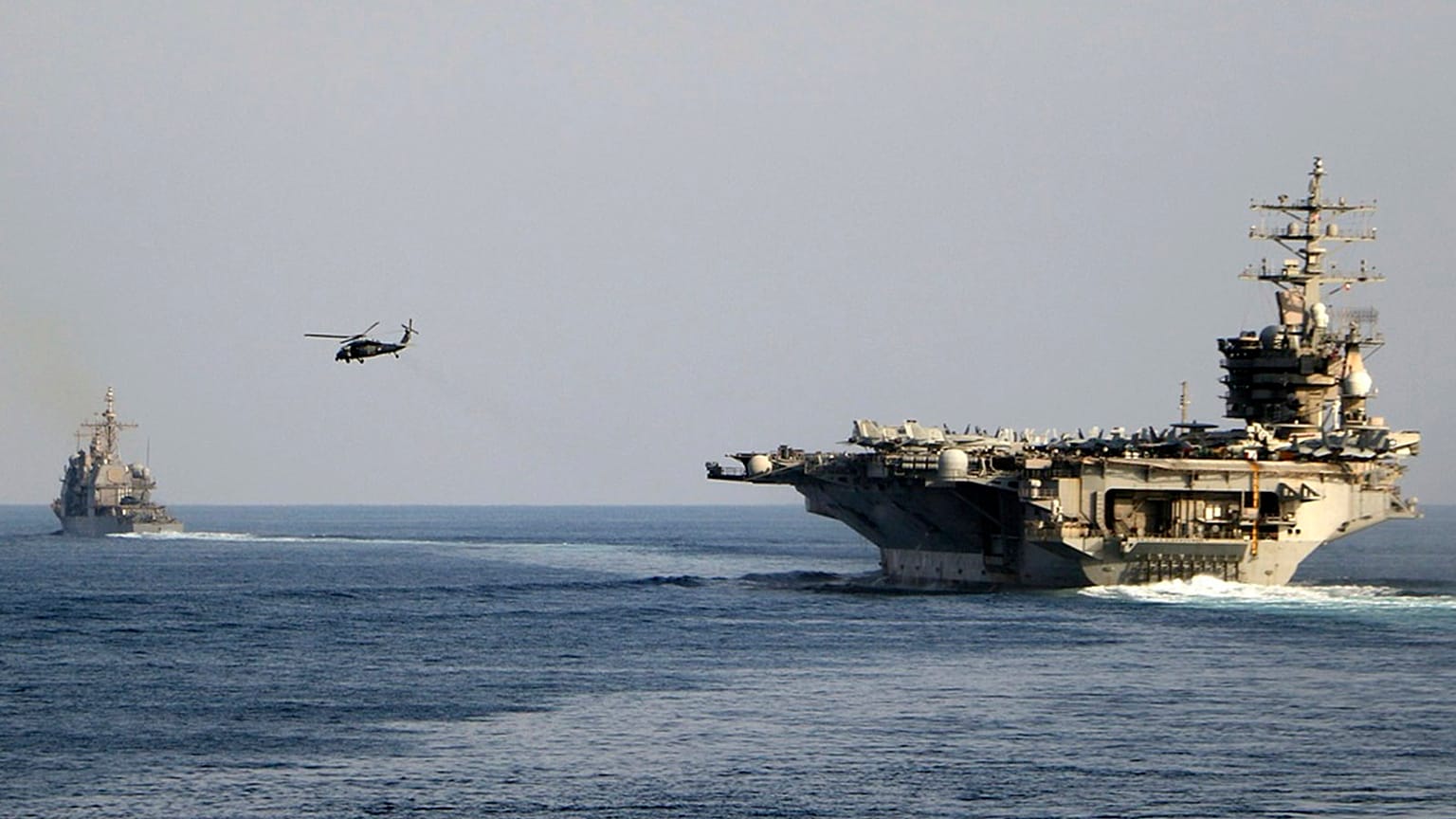
The arrival of aircraft carrier USS Gerald Ford in the eastern Mediterranean in the coming days will be a key factor in determining the timing of possible strikes, according to US officials.
Meanwhile, the Pentagon will temporarily withdraw some personnel from the Middle East to US or Europe within three days ahead of possible US action and potential Iranian retaliation, CBS reported, citing multiple US officials.
Wide gaps remain in Geneva talks
Trump's advisers Jared Kushner and Steve Witkoff met Iranian Foreign Minister Abbas Araghchi for three hours in Geneva on Tuesday. Both sides said the talks made progress but wide gaps remain.
Vice President JD Vance said the negotiations went well in some ways, but Trump had set red lines "that the Iranians are not yet willing to actually acknowledge and work through," Vance told “The Story with Martha MacCallum” programme.
White House spokeswoman Karoline Leavitt said on Wednesday there were "many arguments one can make in favour of a strike against Iran" while stressing Trump prefers diplomacy.
"Iran would be wise to make a deal with President Trump and his administration," she said.
Following talks in Geneva, Iran's atomic energy chief Mohammad Eslami said no country can deprive the Islamic Republic of its right to nuclear enrichment.
"The basis of the nuclear industry is enrichment. Whatever you want to do in the nuclear process, you need nuclear fuel," said Eslami, according to a video published by Etemad daily on Thursday.
"Iran's nuclear programme is proceeding according to the rules of the International Atomic Energy Agency, and no country can deprive Iran of the right to peacefully benefit from this technology."