




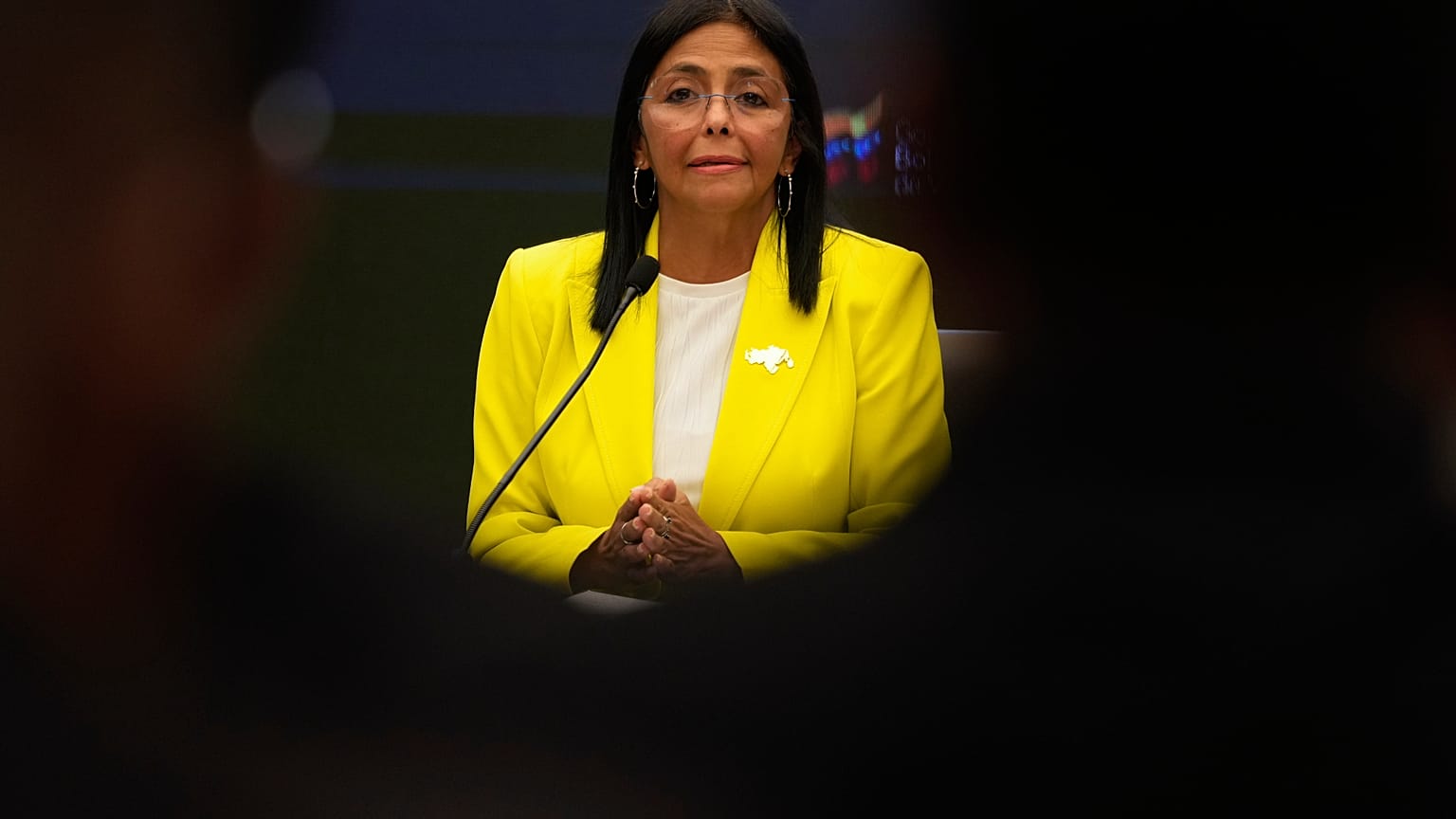













Venezuela's interim President Delcy Rodríguez evolved from a Chávez-era civil servant into a key player under the recently-ousted Nicolás Maduro.
The swearing in of Delcy Rodríguez as Venezuela's interim president following Washington's ouster of Nicolás Maduro marks the latest twist in the country's socialist "Chavismo" movement.
 ADVERTISEMENT
ADVERTISEMENT
ADVERTISEMENT
But who exactly is Rodríguez, and what can be gleaned from her family background and political ties?
The 56-year-old lawyer has risen rapidly through the ranks of power in Miraflores Palace over the past decade. Yet her political ascent is inseparable from her family history —above all from the legacy of her father, José Antonio Rodríguez.
José Antonio Rodríguez, the patriarch of a family that would later come to shape the trajectory of Venezuela’s socialist journey, was an active student leader and militant within several left-wing armed movements.
He later co-founded the Socialist League, a marginal political party that rejected electoral politics and actively promoted abstention and the null vote.
In February 1976, José Antonio Rodríguez allegedly coordinated the abduction of William Niehous, a US executive who headed the Venezuelan operations of the glassmaker Owens-Illinois and whom the guerrilla movement accused of being a CIA agent.
Five months later, José Antonio Rodríguez was arrested by officers of the Directorate of Intelligence and Prevention Services (DISIP). He died in police custody after what his family alleges was torture. His youngest daughter, Delcy, was seven at the time.
Both Delcy and her brother Jorge — also a child when their father was killed — have spoken publicly about the impact of these events, describing their father's death as a defining personal and political trauma.
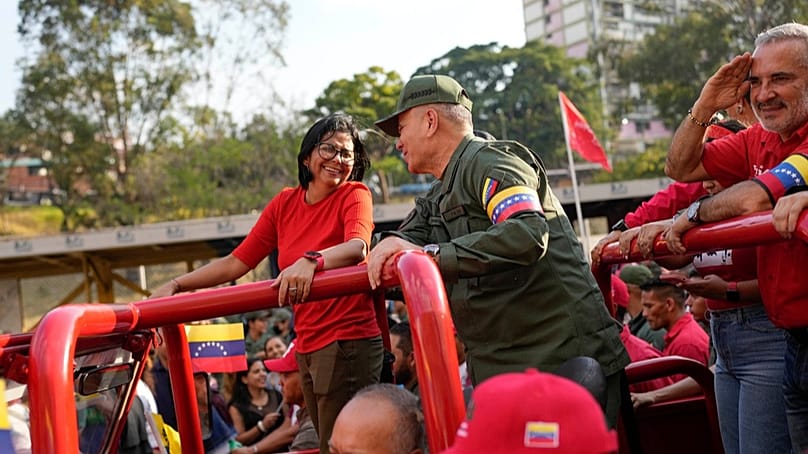
The Rodríguez siblings completed their secondary education at a public high school in Caracas affiliated with the Central University of Venezuela (UCV), an institution that served as an incubator for generations of Marxist activists, including their father.
Both later enrolled at UCV in the late 1980s and early 1990s. Delcy Rodríguez graduated in law, while Jorge Rodríguez trained as a psychiatrist. Despite their different academic paths, both would eventually enter national politics following the rise of Chavismo.
According to official government biographies, Delcy Rodríguez later pursued postgraduate studies abroad, completing degrees in labour law at Paris Nanterre University and in social policy at Birkbeck, University of London.
However, there is no publicly available documentation from either institution confirming these qualifications.
From Chávez to Maduro
The Rodríguez siblings entered public life during Hugo Chávez’s first presidential term, which began in 1999.
Delcy Rodríguez initially occupied technical and bureaucratic roles rather than overtly political ones.
From 2003 onwards, she worked in positions such as the General Coordination Office of the Vice Presidency and the Directorate of International Affairs at the Ministry of Energy and Mines.
Her career took a decisive turn a decade later, following Chávez’s death in 2013 and Maduro’s consolidation of power.
From that point on, Delcy Rodríguez moved into explicitly political roles and became one of the most influential figures within the executive.
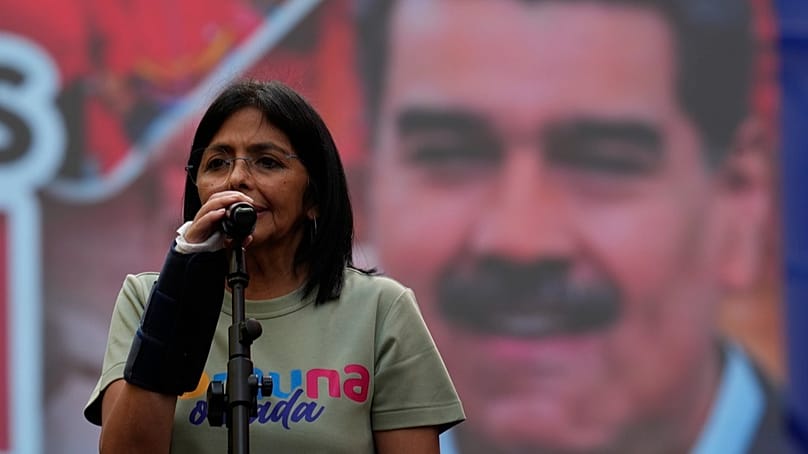
She served as Minister of Communication and Information between 2013 and 2014, then as Minister of Foreign Affairs from 2014 to 2017, before becoming president of the National Constituent Assembly in 2017.
That final role proved particularly consequential. Under her leadership, the Assembly granted itself sweeping, plenipotentiary powers over the other branches of government, ostensibly to draft a new constitution — a process that was never completed.
In 2018, the presidency of the Constituent Assembly passed to Diosdado Cabello, Venezuela’s interior minister and the other central figure — alongside Rodríguez — in the country’s current de facto executive structure.
Maduro once praised her international role, saying she defended Venezuela’s sovereignty and his socialist government "like a tigress". Announcing her as vice president in 2018, he described her as "brave … revolutionary and tested in a thousand battles".