
















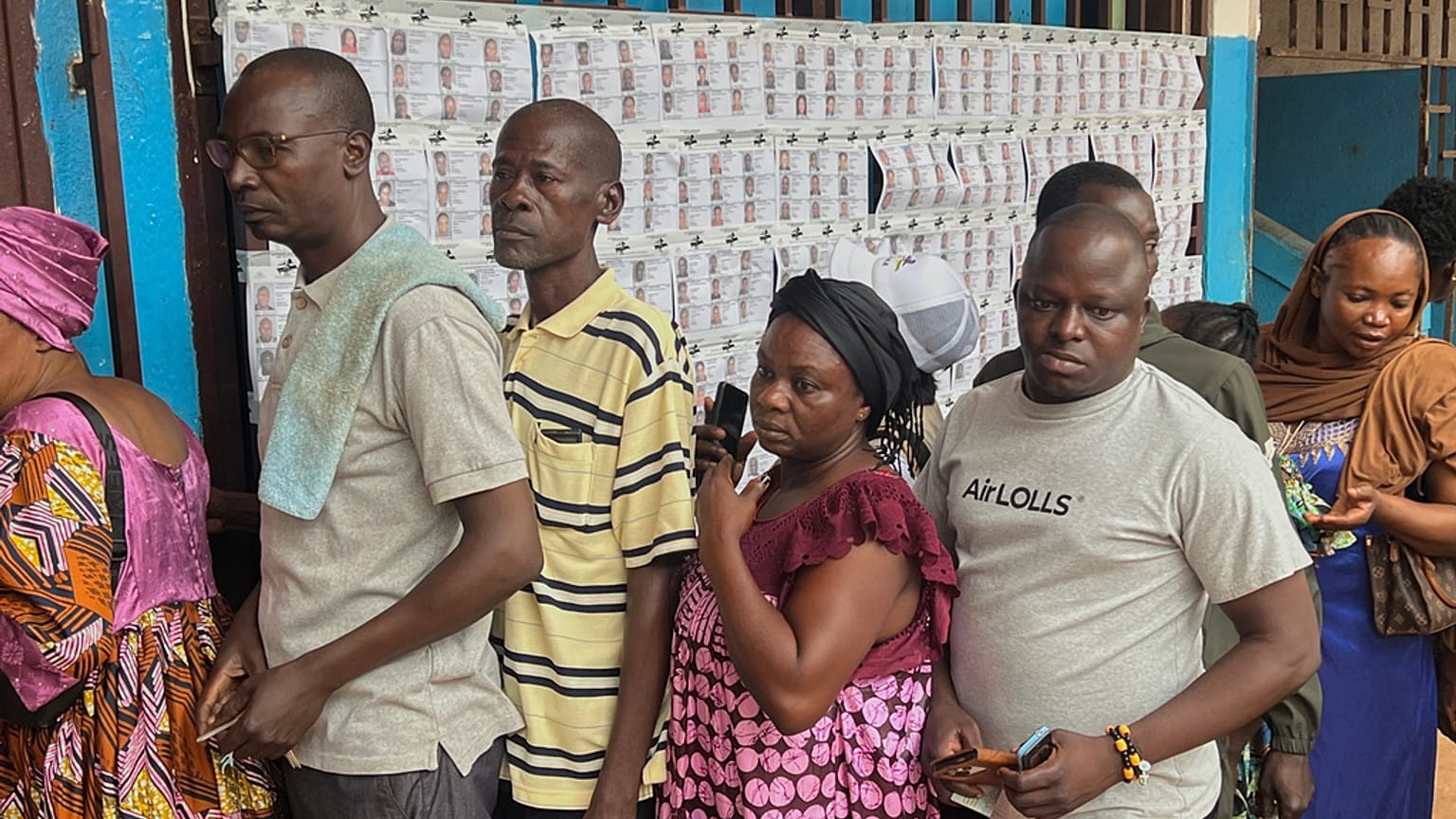














Voters in the Central African Republic take to the polls in unprecedented quadruple elections, combining the presidential, legislative, regional, and municipal ballots. Incumbent, Russian-backed President Faustin-Archange Touadera is seen as the favourite by analysts.
Voters in the Central African Republic are electing a new president and federal lawmakers on Sunday.
 ADVERTISEMENT
ADVERTISEMENT
ADVERTISEMENT
One of Russia’s closest allies in Africa, Incumbent President Faustin-Archange Touadera is seen as likely to win a third term after a controversial referendum in 2023 that allowed him to serve additional terms.
Analysts say a third-term win for him would likely consolidate Russia’s security and economic interests in the country. The Central African Republic was among the first in Africa to welcome Russia-backed forces, with Moscow seeking to help protect authorities and fight armed groups.
Touadera faces challenges from six candidates, including prominent opposition figures Anicet-Georges Dologuélé and Henri-Marie Dondra, both former prime ministers.
About 2.4 million voters are registered for Sunday’s unprecedented elections, which combines presidential, legislative, regional, and municipal ballots.
The election is being held without the Republican Bloc for the Defence of the Constitution, the main opposition coalition, which said in October that it will boycott the election after denouncing what it called an unequal political environment. Neither Dologuélé nor Dondra are part of it.
Results are expected by January 18th meanwhile provisional results are expected in a week. A runoff will be held if no candidate wins over 50%.
The country of about 5.5 million people has experienced fighting between pro-government forces and armed groups, particularly since 2013 when predominantly Muslim rebels seized power and forced then President François Bozizé from office. A peace deal signed in 2019 only partially slowed down the fighting, and some of the 14 armed groups that signed it later withdrew from the agreement and continued their fighting.