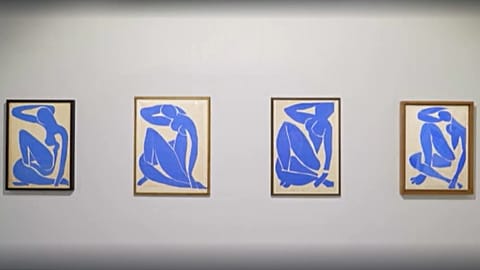
















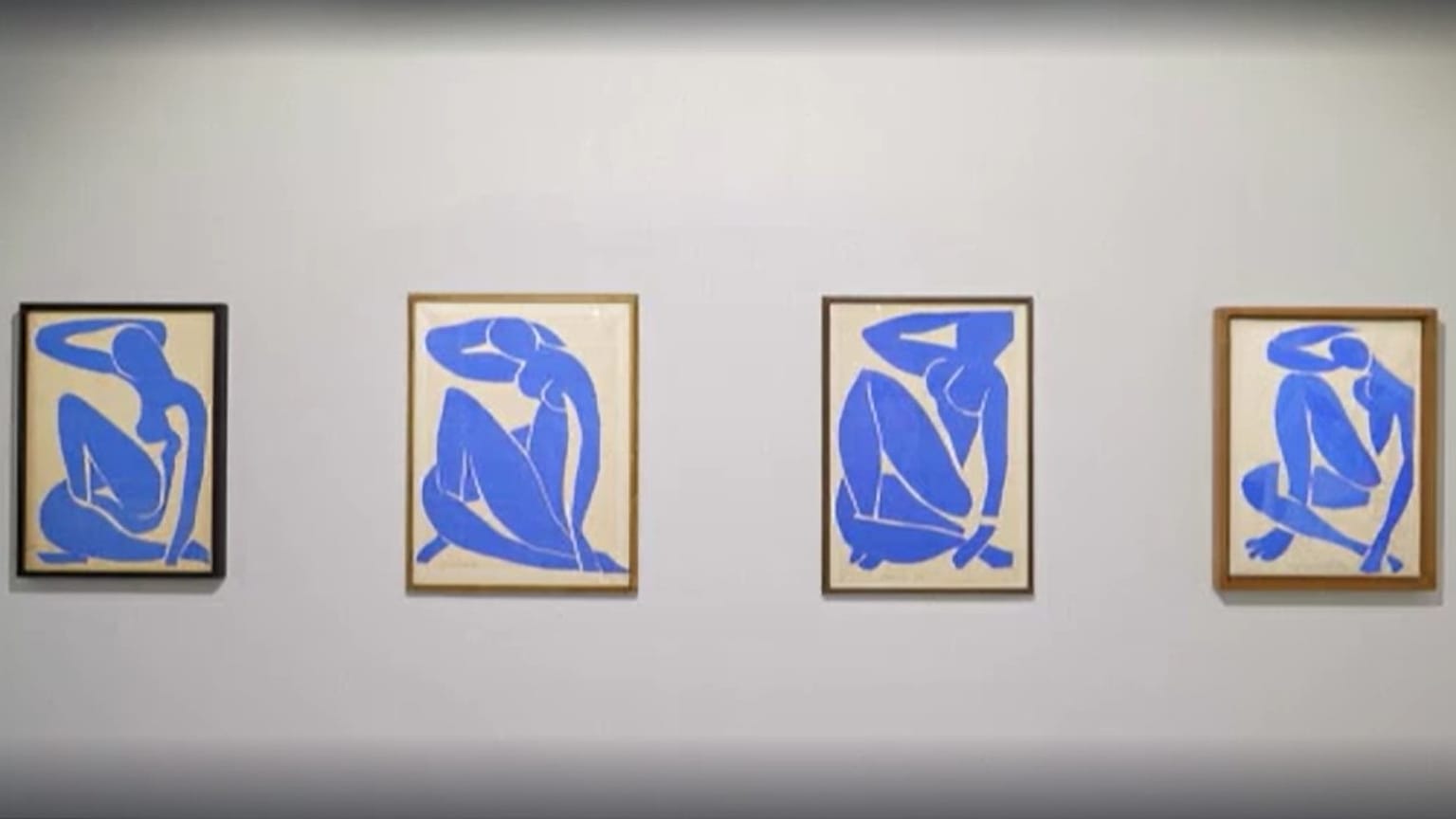














The exhibition "Matisse 1941-1954" opens at the Grand Palais in Paris. Over 300 paintings, drawings, books and cut-out gouaches trace this pivotal, and most prolific, period in the artist’s life.
"It is often wrongly said that during this period Matisse stopped painting and did nothing but gouache cut-outs... Well, no, Matisse painted 75 paintings between 1941 and 1954", explains Claudine Grammont, curator of the exhibition "Matisse 1941-1954".
 ADVERTISEMENT
ADVERTISEMENT
ADVERTISEMENT
In that period, he also created "more than 230 sheets of cut-out gouached paper", she adds. "In 1950 alone, 40 works were produced. That is a lot for an 80-year-old man."
The exhibition, which spans two floors, brings together the key works from this period: the final series of twelve paintings known as the Vence Interiors (1946-1948), the album "Jazz" (1947) and its maquette, as well as brush-and-ink drawings.
They are presented in an atmosphere inspired by the artist's studio, as he was known for working at night because of his insomnia. "What we wanted to recreate in the exhibition is this sense of intimacy with the studio", the curator explains. "It is about being able to walk into Matisse's studio and find yourself face to face with the works, in a kind of 'immersion'."
Among these works, several come from the collection of the Centre Pompidou. They are complemented by loans from private collections and from national and international institutions, including the Museum of Modern Art in New York and the National Gallery of Art in Washington.
The exhibition "Matisse 1941–1954" brings together the painter’s best-known works alongside pieces that remain little known in France and runs until 6 July.