














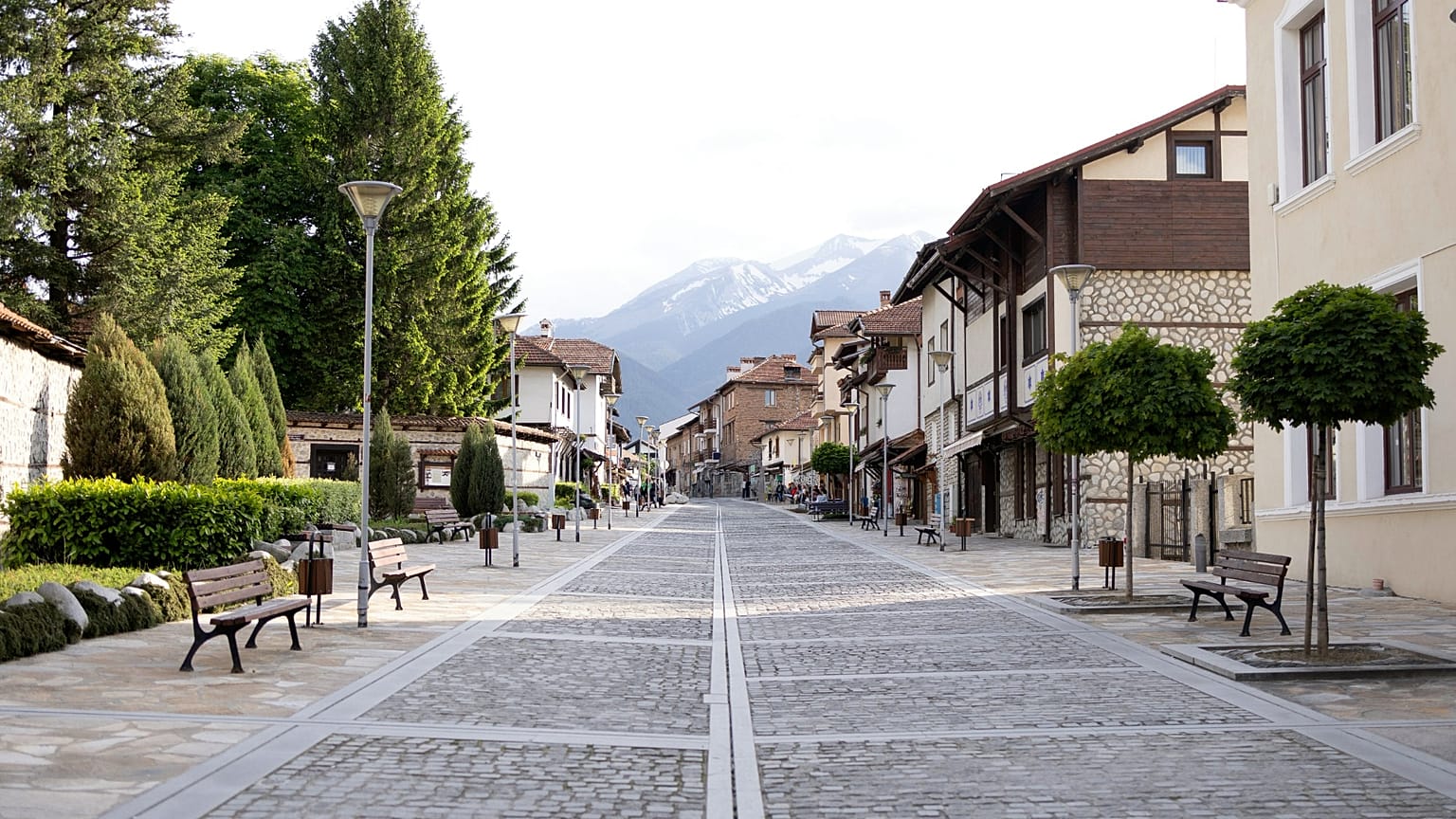













A cosmopolitan community of digital nomads have been drawn to Bansko by its co-working spaces, high-end restaurants and active lifestyle.
Climate change may threaten the value of Bansko's prime ski slopes, but the Bulgarian resort has found an all-season solution to boost its economy, drawing in a cosmopolitan community of digital nomads.
 ADVERTISEMENT
ADVERTISEMENT
ADVERTISEMENT
Three centres offering hundreds of co-working spaces to online workers have sprung up in the town in recent years, supported by a fast internet connection and improved infrastructure.
"I read that this was the best place to start as a digital nomad," says Oscar Train, a 25-year-old Dane who since 2021 has worked remotely from Bansko for about six months of the year. "I came here to kind of learn how to do it and meet like-minded people," he added. "You've got people from all over the world, all different kinds of professions."
Train, who grew up in Britain and works for an insurance company there, pays about 15% in taxes here – including social contributions. If he was still in the UK, he said, it would be 45%, without social contribution.
The main draw for him however, is the lifestyle.
In winter, thanks in part to the one-hour time difference with London, he starts his day with two hours of skiing on Bansko's 75 kilometres of slopes, which have hosted World Cup races. Then he can dust off the snow and go to work.
In summer too, he enjoys a cultural calendar including events specifically tailored to people like him, such as the week-long Nomad Fest that celebrates the "remote lifestyle" with community-led activities and networking.
‘Significant’ economic impact
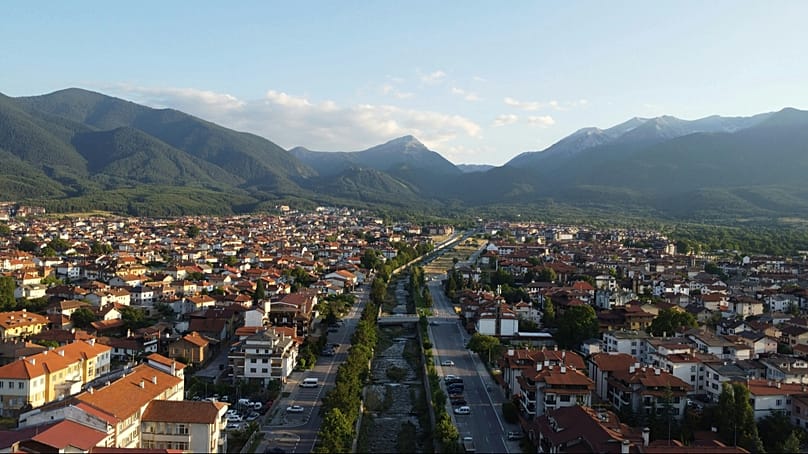
Bansko sits among the Karst peaks of the Pirin range. Look up from your computer screen and you can see Mount Vihren, towering over the town at almost 3,000 metres (10,000 feet) high.
The 10,000-inhabitant town is surrounded by hot springs and is just two hours' drive from the capital Sofia – and two and a half hours from the Greek coast.
Along with the relatively new co-working spaces, high-end restaurants and coffee shops have also popped up amid the resort's stone houses and cobbled streets. A bike lane is also under construction.
Bansko Mayor Stoycho Banenski could not give an exact number of foreigners who have moved to the town, but their economic impact was "significant", he said – especially given climate change was increasingly undermining winter sports.
Tourism helped the local economy bounce back strongly after the shutdown during the Covid pandemic, said a February report by the Sofia-based think tank Institute of Market Economics. The arrival of foreigners helped smooth out seasonal fluctuations in income, it added.
"But perhaps the most important thing is the change they bring," said Banenski, a mountain rescuer by profession. "It is extremely important that people from all over the world live here and that we can exchange ideas, opinions and different perspectives on the world."
‘The town has become international’
Many of those who first came to Bansko as travellers have settled there. Today, hundreds of families from all over the world live in the town.
French couple Anne Dupal, 47, and Christian Rudnicki, 53, both former graphic designers, have opened a micro-bakery since moving to Bansko in early 2022.
They find Bansko has changed from what they found when they first arrived, said Dupal: "Flashy lights, like a sex club, techno music, touts for the restaurants".
Today, Rudnicki welcomes the town's community spirit. "It's wonderful having the grandmother from next door come over to bring me tomatoes or herbs and then meeting an Indonesian family at the bakery," he said.
The downside is the rise in the cost of living, which has also affected house prices.
"There is gentrification which is linked, unfortunately I think, to people like us, but also to many Bulgarians who are leaving the big cities," said Dupal.
Some locals however, are glad of the improved infrastructure and the vibrant atmosphere.
"The town has changed – it has become international," said Nikola Kalistrin, 29, a ski mountaineering racer born and living in Bansko. "Young people are benefiting from this."
How to become a digital nomad in Bulgaria
Aside from being a great base for travelling around Europe, Bulgaria is well-placed to welcome the laptop-tapping crowd. Introduced in December 2025, Bulgaria’s digital nomad scheme is open to non-EU, non-EEA and non-Swiss citizens who wish to live in the country while working remotely for employers or clients based outside Bulgaria.
Applicants must fall into one of three categories: Remote employees of companies registered outside the EU, EEA and Switzerland; business owners or shareholders holding at least 25% of a company registered abroad; or freelancers or independent professionals who have been providing services to non-Bulgarian clients for at least one year prior to applying.
Applicants must also demonstrate sufficient financial means. The income threshold is set at 50 times Bulgaria’s monthly minimum wage. With the minimum wage currently €620 per month, this equates to a required annual income of approximately €31,000. In addition to meeting the income requirement, applicants must show that their income is derived from sources outside Bulgaria.
How to apply for Bulgaria’s digital nomad scheme
The application process involves two stages. First, applicants must obtain a Type D long-stay visa from a Bulgarian embassy or consulate in their country of residence. Processing typically takes between four and eight weeks. This visa allows entry into Bulgaria for the purpose of applying for long-term residence.
After arriving in Bulgaria, applicants must apply for a digital nomad residence permit with the local migration authorities, usually within 14 days of entry. Required documents generally include: Proof of accommodation in Bulgaria (rental agreement, hotel booking or proof of ownership); evidence of income meeting the minimum threshold; valid health insurance covering Bulgaria; a clean criminal record certificate from the applicant’s country of residence; and official translations of foreign documents into Bulgarian, apostilled where required.
The residence permit is typically granted for one year, with the possibility of renewal if eligibility conditions continue to be met.