
















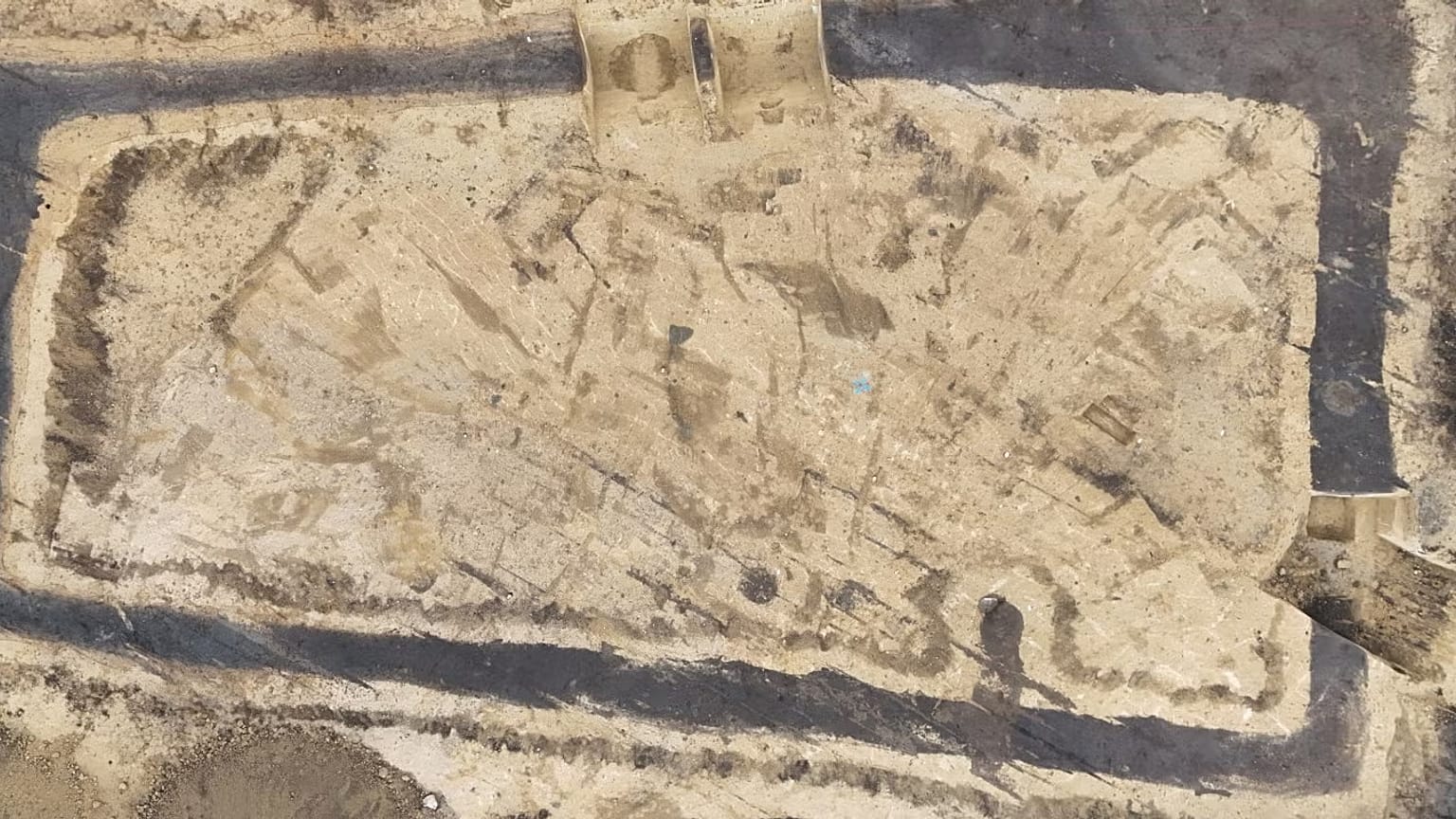













Archaeologists in Germany have discovered a corridor system from the late Middle Ages in a burial site dating back to the 4th millennium BC.
The small central German village of Dornberg in the Harz Mountains was meant to welcoming wind turbines but instead, it's the centre of attention over a fascinating discovery made during preliminary archaeological investigations.
 ADVERTISEMENT
ADVERTISEMENT
ADVERTISEMENT
On a flat hill to the east of the village in Saxony-Anhalt, excavations unearthed a site which has revealed traces of several prehistoric periods.
Among them, a trapezoidal ditch from the Baalberg culture dating back to the 4th millennium BC, poorly preserved burial stools from the late Neolithic period and the remains of what was probably a Bronze Age burial mound.
Researchers also noticed a pit about two metres long and up to 75 centimetres wide. A large stone slab initially suggested a grave. Further excavation, however, revealed a different picture: the layers of the backfill sloped downwards to the north and led unexpectedly deep into the light-coloured, solid loess subsoil.
Shortly afterwards, they discovered a passage about two metres long and up to 0.7 metres wide, which is about 1.25 metres high.
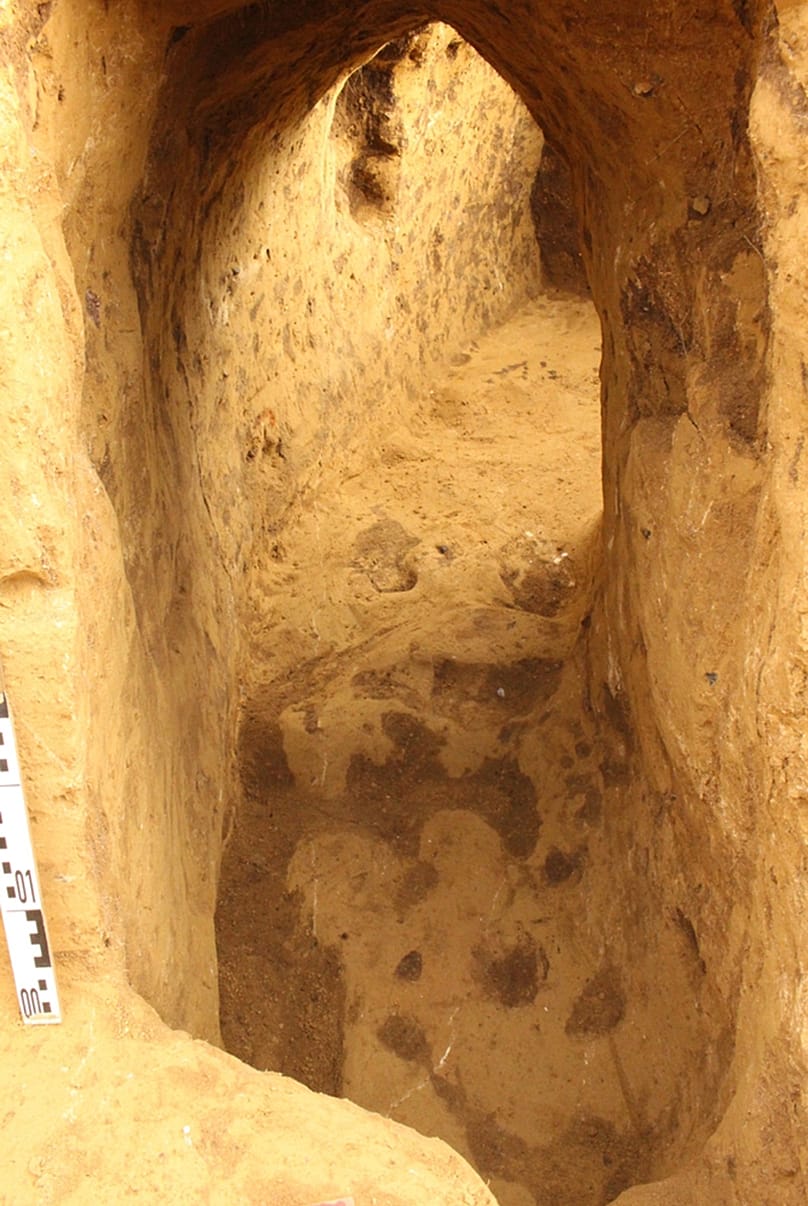
The ceiling of the secret passage was designed as a pointed gable in places. In the soil that filled the passageway they found pottery remains from the late Middle Ages, charcoal remains, a horseshoe, small animal bones and a fox skeleton.
As the underlying soil did not show any typical red colouring, the experts concluded that it was the remnants of a fire that had only been burning for a short time.
At the narrowest point of the entrance, an accumulation of large stones stacked on top of each other stood out, which could indicate that the passageway was deliberately closed.
There is a step that can be used to enter the secret passage. Scientists call these passages "earth stables". Burrows are man-made underground passage systems, some of which have chamber-like extensions.
Burrows are particularly well documented in an area from southern Germany to Austria, the Czech Republic and Slovakia. They were probably dug into the ground between the 12th and 15th centuries. The passages are often labyrinthine and extend over several levels beneath old farms, churches or cemeteries.
According to experts, it is conceivable that the Neolithic complex was still clearly visible above the Earth's surface in the Middle Ages. People generally avoided places like this, especially if they were located under graves.
There is no definite information, however, about their exact use - for example as a refuge in the event of raids or for religious purposes.