

















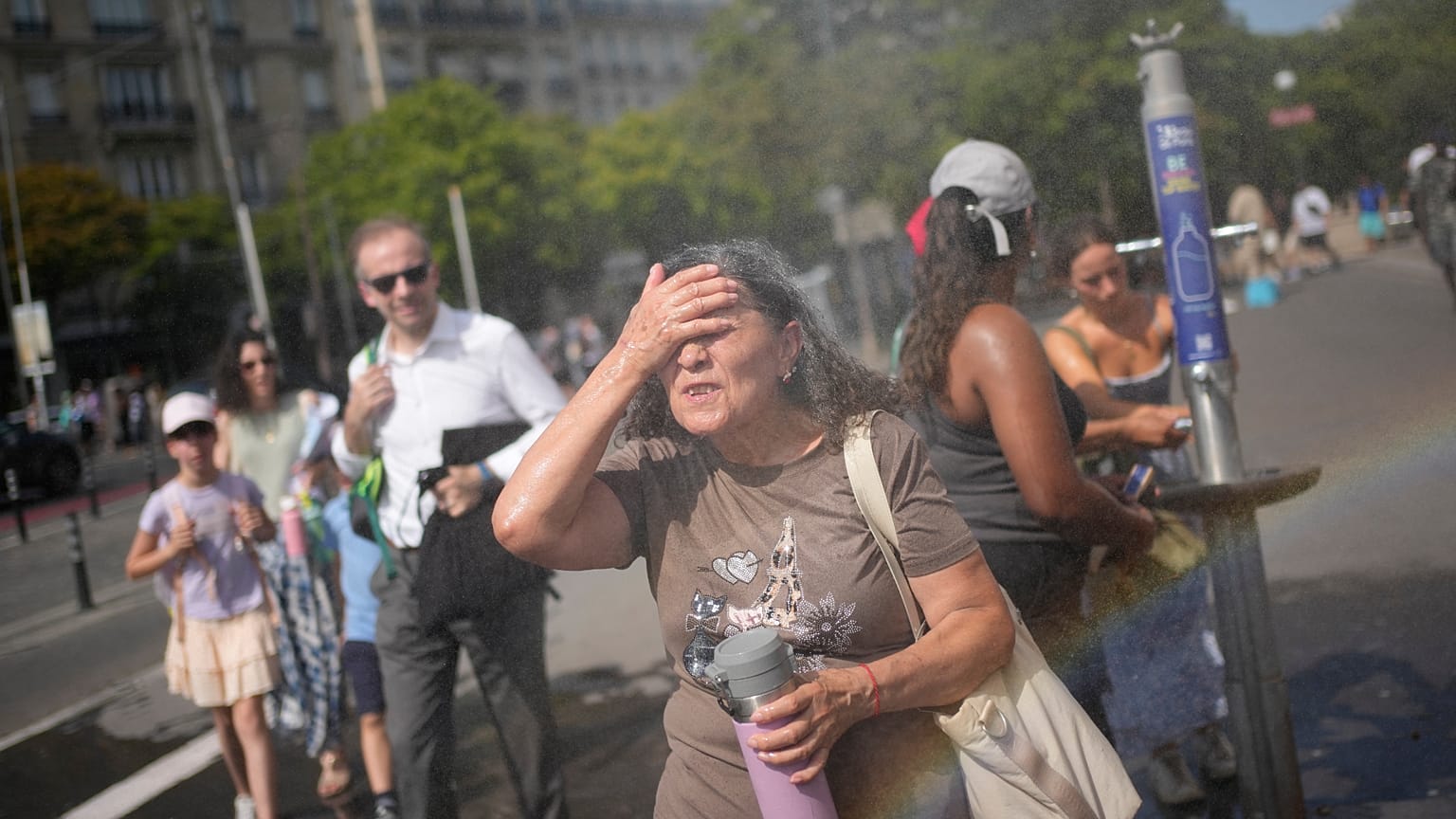













As Europe accelerates its green transition, the debate over air conditioning has become emblematic of a broader challenge. Climate policy is no longer judged solely by its environmental ambitions, but also by whether it can reduce emissions without deepening social inequalities.
Once considered an unnecessary luxury across much of Europe, air conditioning has become one of the continent's most politically charged household appliances after nearly two weeks of extreme and deadly temperatures.
 ADVERTISEMENT
ADVERTISEMENT
ADVERTISEMENT
For decades, Europe distinguished itself from hotter parts of the world by relying on thick masonry buildings, shutters, tree-lined streets and mild summers. Air conditioning remained relatively uncommon, particularly in northern and western Europe but climate change could alter that reality.
Summers that once brought occasional discomfort now routinely produce prolonged periods above 35°C, with urban neighbourhoods experiencing 41°C temperatures due to the "heat island" effect.
A clash between two urgent priorities is emerging: the climate emergency and widening class divide, most recently highlighted by the shutdown of air-conditioning in the lower floors of the European Commission's headquarters for EU staff, according to an internal message seen by Euronews.
Climate advocates and government officials warn that widespread adoption of air conditioning risks creating a vicious cycle. More cooling requires more expensive electricity, increasing demand during heat waves when power systems are already under strain.
Unless supplied by clean energy, they argue, additional electricity consumption can lead to higher emissions, making future heat even worse since air conditioners also use refrigerants that, if improperly managed, can have powerful greenhouse effects.
EU lawmaker Jutta Paulus (Greens/Germany) said that air conditioning systems "will undoubtedly" play a greater role in an increasingly hot Europe, but noted that such appliances should meet the "highest efficiency standards, be powered by renewable electricity and definitely operate without climate-damaging F-gases."
However, the debate over air conditioning moved into the spotlight after French lawmaker Marine Le Pen (Front National) called for a mass, subsidised roll-out of the cooling appliance, with traditionally hostile Greens conceding that some air-conditioning may now be inevitable.
The leader of the French Greens, presidential candidate Marine Tondelier, acknowledged on BFM TV that air conditioning, which was "not necessary a few years ago, is becoming so."
Climate emergency becomes a class war
Millions of Europeans are facing increasingly dangerous heat, prompting them to consider the quickest and cheapest way to cool their homes. That choice is increasingly becoming a question of class rather than technology.
Wealthier households are adapting by installing efficient heat pumps that provide both heating and cooling as well as upgrading insulation. Employers with modern offices maintain comfortable indoor temperatures. Those with second homes or the means to travel escape the hottest weeks altogether.
But lower-income Europeans often have fewer options. Many live in poorly insulated apartments, top-floor flats beneath dark roofs or dense urban neighbourhoods with little green space.
Renters frequently cannot install permanent cooling systems without landlord approval, while rising electricity prices make operating even portable units an expensive proposition.
"This heat is not only a climate emergency, but it is also a class war. The rich burn the planet, then buy air conditioning, private pools and second homes while workers are left in overheated flats, unsafe jobs, failed public services and burning cities," reads a statement from the left-wing European political alliance DIEM25, led by former Greek Finance Minister Yannis Varoufakis.
Health emergency
Public health experts warn that heatwaves are more than uncomfortable—they are deadly.
France experienced one of its most intense heatwaves on record in June, with widespread temperatures near or above 40°C. The country has also reported around 1,000 excess deaths associated with the event, mostly among older adults. Spain recorded 327 heat-related deaths.
"The problem is the worst in the south, of course, that's where we see most of the accidents. At the same time, though, we have been recording the highest increases in accidents in central and northern Europe," said Andreas Flouris, professor of physiology at the University of Thessaly in Greece.
He added that rising accident rates in central and northern Europe suggest that “the centre and the north are catching up.”
According to a recent European Trade Union Institute report, around 130 million workers across Europe are exposed to workplace heat stress, resulting in 277,000 related injuries and 230 deaths annually.
Green EU lawmaker Lena Schiling (Austria) said the latest deadly heatwave in Europe is the result of "global failure to tackle the climate crisis" and warned that the most vulnerable groups need greater protection.
"The answer cannot be to leave people alone to cope with unbearable heat by expecting everyone to buy an aircon. People need protection from extreme heat. During heatwaves, aircons can be essential, especially for older people, children, in schools, hospitals and care homes," Schiling told Euronews.
EU lawmaker Ondrej Knotek (Czech Republic/Patriots for Europe) emphasised that the focus must be on "adaptation measures".
"One of these measures could be the promotion of air conditioning to help European citizens and their economy," Knotek told Euronews.
The American Model: Pros and Cons
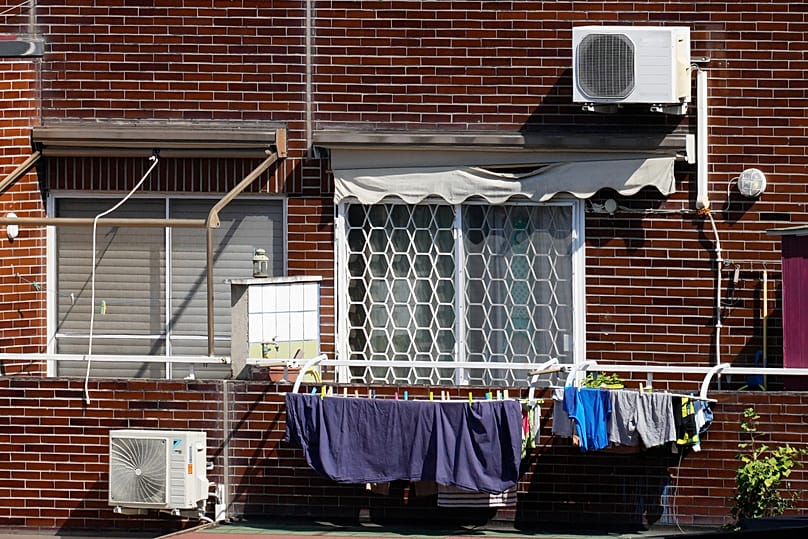
Air conditioning ownership has surpassed 1.5 billion units globally, according to the International Energy Agency (IEA), yet usage varies widely across regions. While 90% of homes in the United States have air conditioning units, the figure is just 20% in European homes, the IEA said.
Some environmental voices argue Europe should avoid following the American model of universal mechanical cooling, and instead prioritise better insulation, reflective roofs, trees, ventilation and architecture that minimises heat gain.
However, critics argue that such measures, while essential, often require years of investment and do little to help residents enduring today's record temperatures.
This tension has fuelled accusations that climate policies sometimes ask ordinary citizens to make sacrifices while wealthier Europeans remain largely spared from the consequences.
Belgian Defense Minister Theo Francken recently made waves after he encouraged people to "enjoy the beautiful weather" and promised to his followers that he would send later pictures of a pool, a Stella (beer) and a barbecue when Brussels was hit by 32°C on 19 June.
"It's been hot for two days and we're all going to die again, exactly," Francken ironically wrote on social media.
The controversy echoes wider debates over carbon taxes, low-emission zones, home renovation mandates and rising energy costs — all policies that can disproportionately burden households with fewer financial resources.
Expensive, clean alternatives
Many experts note that the technologies needed to reconcile climate goals with cooling already exist. The catch, however, is their costly investment.
Modern electric heat pumps can cool homes efficiently while replacing fossil-fuel heating in winter. Combined with renewable electricity, improved building standards, district cooling systems and urban greening, Europe could expand cooling without dramatically increasing emissions.
“As Europe moves towards electrification, it is important to recognise that air-conditioning systems are already part of the solution. They are heat pumps that can deliver both cooling and efficient heating, especially when combined with better building design and renewable electricity,” Sofie Sap, a spokesperson for Daikin, the leading air-conditioning manufacturer, told Euronews.
Yet deploying those solutions requires substantial investment and the distribution of costs remains politically contentious.
District cooling is presented as another efficient and sustainable collective solution in which chilled water is produced centrally and distributed through underground pipes to multiple buildings. It must be planned in collaboration with local authorities, after which residents and building owners can choose to connect if the network is available nearby.
France's power utility EDF plans to invest €80 million in district cooling systems for schools, nurseries and daycare centres in response to increasingly deadly heatwaves.
"This allows cities to harness renewable and locally available sources of cooling, cutting emissions and reducing peak electricity demand, rather than relying solely on thousands of standalone units," Pauline Lucas, policy director at the international network Euroheat & Power, told Euronews.
In the years ahead, the success of the EU's green transition may be judged not only by how much the bloc cuts carbon emissions, but also by whether it can do so without creating a society in which comfort, health and protection from extreme heat become privileges reserved for those who can afford them.