





























Eco construction techniques keep buildings cool and produce less emissions.
With millions sweltering in heatwaves that started earlier than ever this year, the buildings we live and work in have come under the spotlight. Northern Europeans have found that most homes are designed to trap heat rather than stay cool, making them saunas when temperatures rise.
 ADVERTISEMENT
ADVERTISEMENT
ADVERTISEMENT
But there are solutions available. Eco construction is an approach to building that prioritises techniques which keep buildings cool, while creating less carbon emissions by, for instance, using local materials that don't have to be shipped across the world. According to the European Environment Agency (EEA) the building sector is responsible for 35 per cent of the EU's greenhouse gas emissions
Eco construction keeps buildings cool even when temperatures rise
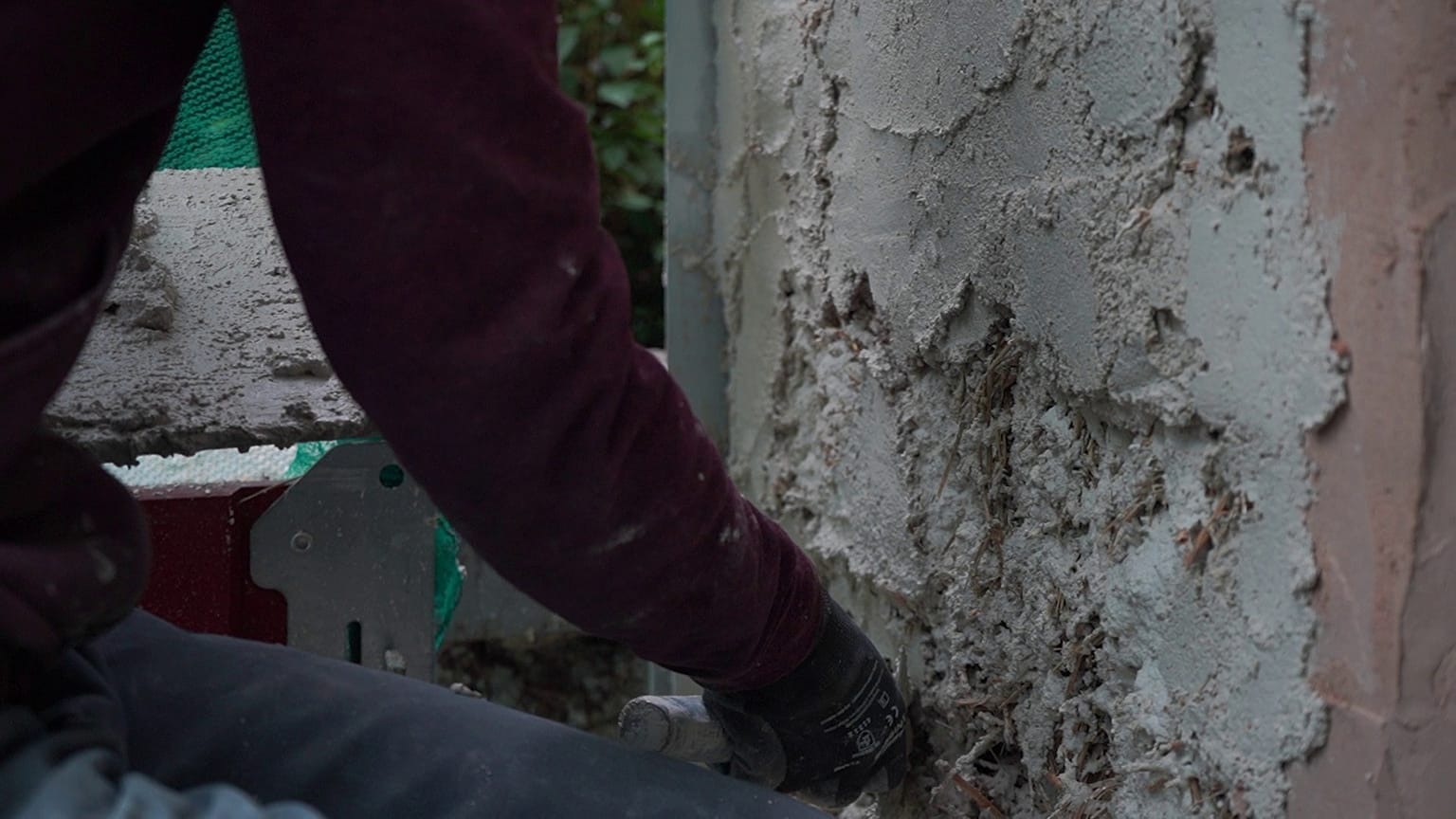
Adrien Poullain is an eco-construction architect and builder and founder of Les Grands Moyens. He explains the field as “a whole range of techniques based on natural materials." Often using "locally sourced materials, which are generally installed with few tools or with equipment that requires little electrical or mechanical energy. This can include construction using raw earth, timber, straw, or stone.”
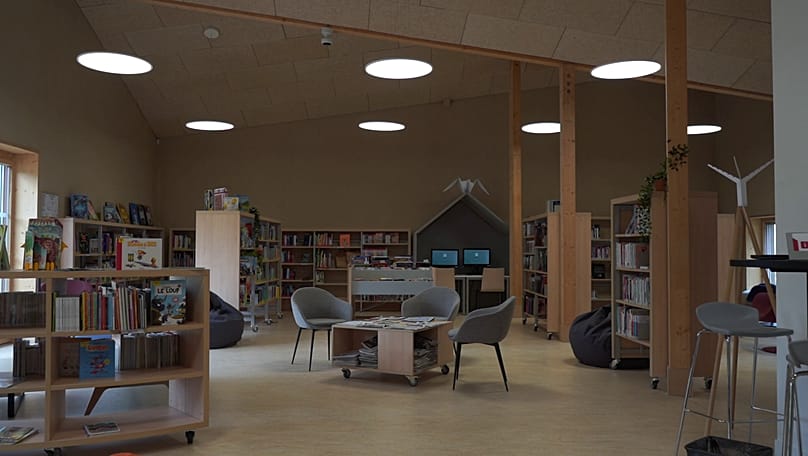
The Simone Veil Library, in Le Chesnay-Rocquencourt on the outskirts of Paris, was built using eco construction principles - and they paid off during France's June heatwave. The building stayed open despite not having air conditioning.
Gaëlle Ledoré-Montier, director of the library, describes that while temperatures outside reached “up to 35/36 degrees outside" they "managed to maintain an indoor temperature of 23.5 degrees or 25.5 degrees." Ledoré-Montier added that even "with the unprecedented heatwave that occurred during the week, when temperatures reached a maximum of 41/42 degrees, on Saturday evening, we reached at most 32 degrees. That is a lot, but we still remained about 10 degrees lower than outside.”
Nearly 75% of Europe's building stock is energy inefficient
To protect people during extreme heat, governments across the EU advise residents to keep their homes cool. France's official public health guidance, for example, recommends staying in cool indoor spaces whenever possible. Yet this advice is difficult to follow for many Europeans. According to the EU, nearly 75 per cent of Europe's building stock is energy inefficient, while more than 85 per cent of today's buildings are expected to remain in use in 2050. Despite this, renovation rates have remained at only about 1 per cent per year.
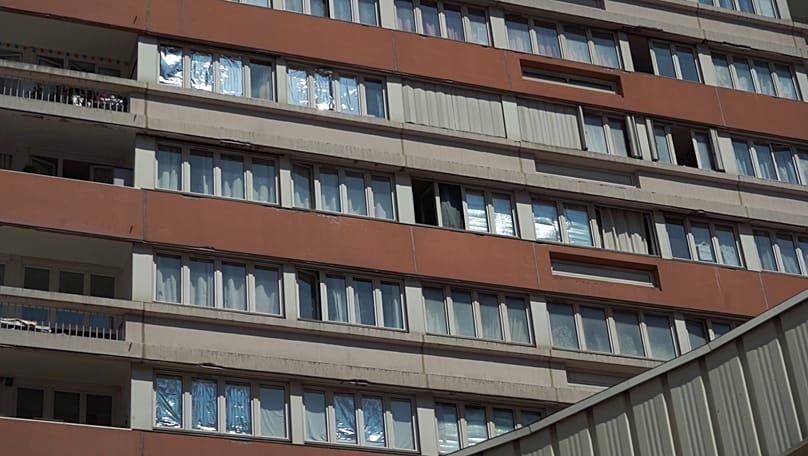
The condition of Europe's buildings is not only a public health issue but also a climate one. Poorly insulated buildings require more energy for both heating in winter and cooling during increasingly frequent summer heatwaves.
Sustainable builder Poullain explains why green construction generates less greenhouse gas emissions,“Green building has the advantage of being low carbon, meaning that it requires much less energy in its manufacturing processes, as well as in the materials used, which require less transport and less processing. Therefore, it helps to meet the commitments made under the Paris Agreement”.
In 2015 the European Union signed the Paris Agreement, which aims to maintain “the increase in the global average temperature well below 2°C above pre-industrial levels” all while limiting “the temperature increase to 1.5°C above pre-industrial levels.”
Meanwhile, according to the EEA buildings account for 42 per cent of energy use in the EU, much of it for heating and cooling, making design key to keeping indoor spaces at comfortable temperatures.
Eco construction costs more
One of eco construction's major challenges is cost. Poullain projects that it is often 15–20 per cent more expensive than conventional construction, therefore green builders face a disadvantage in the bidding process because clients often prioritise the lowest upfront cost, even if sustainable buildings will in most cases save money over time.
For example, Marie Heckenbenner, resident in a raw earth brick apartment building in the Paris suburb town of Bagneux, says that they have not needed to turn the heating on since they moved in two years ago.
Paris has switched to bio-based insulation
According to Jacques Baudrier, Deputy Mayor of Paris for Housing and Energy Retrofit, Paris is already adapting. Since 2020, the city has used only bio-based insulation materials to renovate public buildings and housing.
Baudrier explains that it is ”particularly because of their ability to provide thermal time lag." He adds, "This includes wood, wool, hemp, straw, and cellulose wadding - only bio-based materials. We have already undertaken the full insulation of 80,000 social housing units”.
But for the Deputy Mayor the biggest challenge is getting private renovators on board, more specifically second-home owners: “Nearly 30 per cent of private housing consists of vacant homes or second residences. So there are many owners of second homes in the heat traps, in the old neighbourhoods in central Paris where there are many thermal sieves. Since they do not live there, they vote against renovation work being carried out.”
Baudrier believes there should be financial incentives to switch to eco construction: "apply a reduced 5.5 per cent VAT rate to bio-based and geo-sourced materials.” As well as advocating for “eco-conditionality, whereby certain types of funding - particularly public funding from the State - would be increased for construction or renovation projects that incorporate sustainable, eco-friendly materials.”