





























A Wehrmacht motorbike is recovered from the Danube; underneath are the remains of two German soldiers with ID tags, one likely Waffen-SS. Experts now study the bones: how old were they and did they drive over a mine?
For more than eight decades, the remains of two German soldiers lay in the mud of the Danube. Only the exceptionally low water level of the river in Budapest has brought their story back to light.
 ADVERTISEMENT
ADVERTISEMENT
ADVERTISEMENT
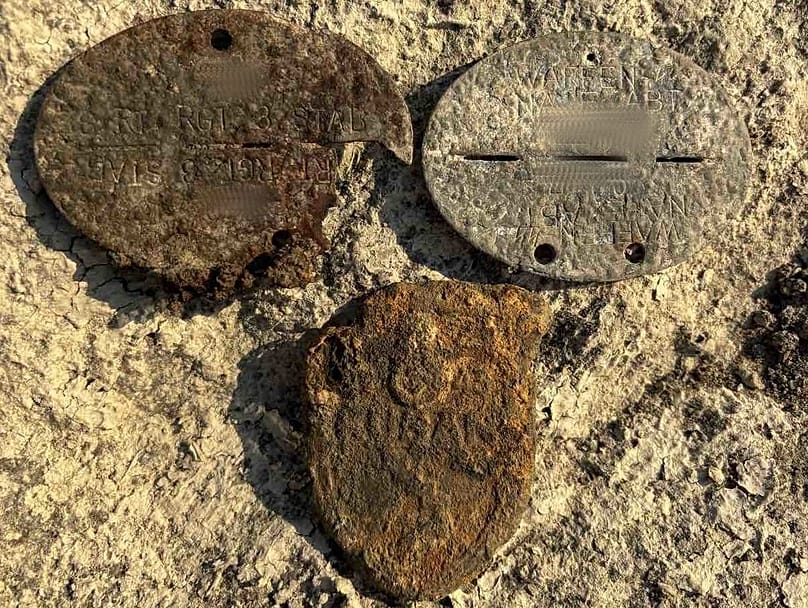
Both bodies still carried intact German identity discs, giving investigators an unusually good chance of identifying the men more than 80 years on.
The discovery is closely linked to a remarkably well-preserved DKW NZ 350-1 motorcycle found at the beginning of August on the Buda bank of the Danube.
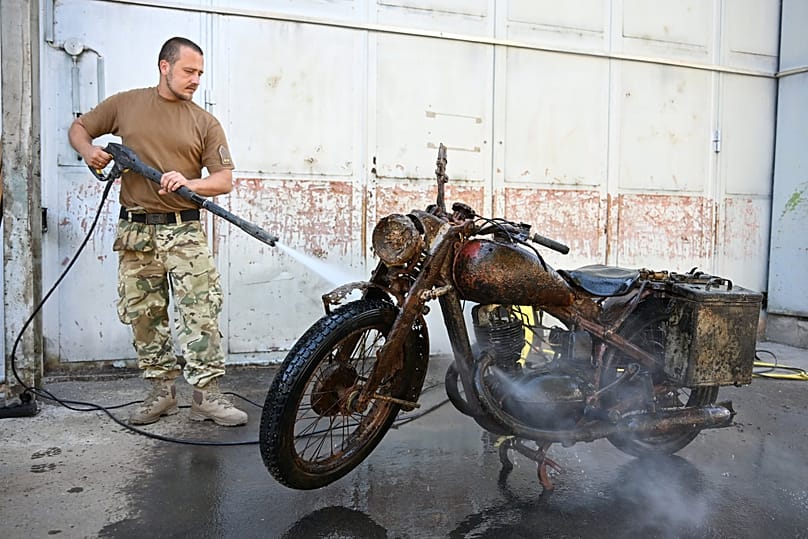
Under or right next to the motorcycle, staff from the Hungarian Institute and Museum of Military History came across the human remains. Volksbund employee Gábor Kohlrusz recovered the bones of the two men from the exposed riverbed.
For many years Kohlrusz has been working in Hungary for the Volksbund, reinterring war dead. His duties include searching for, recovering and documenting German war dead, as well as securing personal belongings and identity discs. Together with historians and local partners, he helps to establish the identities of the fallen and shed light on long-unresolved wartime fates.
Two dead men who were likely still recorded as missing
In the Second World War, the identity disc of a fallen German soldier was split in two: one half remained with the body, the other was sent to the Wehrmacht information office in Berlin so that deaths could be registered and relatives informed.
Because both identity discs recovered from the Danube were still complete, this suggests that their families probably waited in vain for any official notification.
Alongside the identity discs, a wedding ring and a Kuban sleeve shield were also found. If the badge can be definitively attributed to one of the two dead men, it could provide an important clue to his military career. The Kuban Shield was awarded to German soldiers who served in 1943 at the Kuban bridgehead in the south of the Soviet Union. The decoration was instituted in September that year.
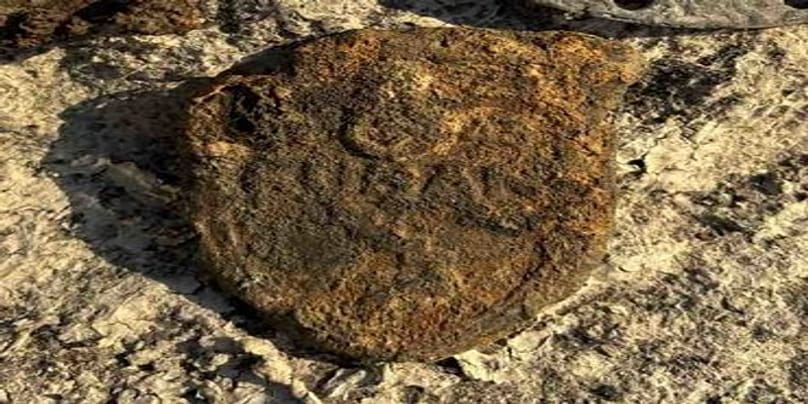
If it is confirmed that one of the two soldiers wore the shield, it would suggest that he had been serving on the Eastern Front for several years before his death.
Arne Schrader, head of the Department for War Graves Service and International Relations, knows how difficult such an attribution can be. Several examinations are needed to establish whether the two identity discs really belong to the bodies that have been found. The names of the original bearers may be determined relatively quickly. But that alone is far from sufficient to confirm their identities.
Identifying the dead is a painstaking process
The starting point is a detailed examination of the remains. Even the length of individual bones can provide clues to the deceased's height. Wherever possible, different bones are used for this – for example, lower and upper leg bones. Taken together, these findings gradually build up a picture that can be compared with the known data on the possible bearers of the identity discs.
There are various anatomical indicators for the age of the soldiers, which allow experts, with a high degree of probability, to assess whether a bone belonged to someone under 20, between 20 and 25, or an older person up to and over 40.
How old the two soldiers were is not yet known. The anthropological analysis of the remains is intended, among other things, to use bones, epiphyses and wisdom teeth to determine their approximate age.
"Here, among other things, the sacrum and the epiphyses on the long bones can be evaluated, and the wisdom teeth can also provide information," explains Arne Schrader. Dental fillings can also give clues to a person's origins: teeth filled with amalgam indicate that the deceased probably came from Western Europe.
One of the identity discs found on the Danube belonged to a Wehrmacht soldier, the second to a member of the Waffen-SS.
It still has to be clarified whether the discs in fact match the two bodies that were recovered. Any provisional identification by the Volksbund would subsequently have to be officially confirmed by the Federal Archives.
Around 900,000 people served in the Waffen-SS over the course of the war. They included committed National Socialists and foreign volunteers, but also, especially towards the end of the conflict, conscripts and minors. The Waffen-SS was responsible for numerous war crimes and took part in the Holocaust; in 1946 the Nuremberg war crimes tribunal declared it a criminal organisation.
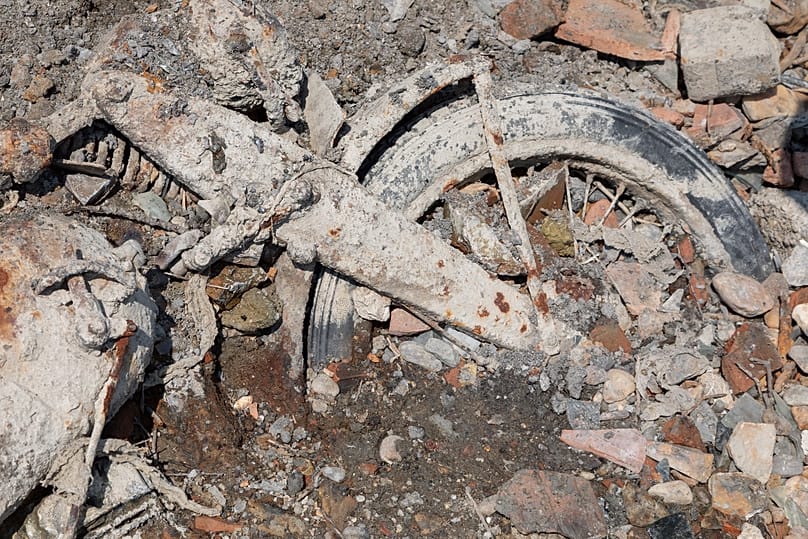
The site lay in an area where harbour sludge had accumulated, mixed with gas oil. These unusual conditions apparently helped to preserve both parts of the motorcycle and the identity discs in remarkably good condition.
The Volksbund can now compare the details on the discs with military records, missing-person reports and its own "Gräbersuche online" service, a database that now contains around 5.4 million entries.
What does the DKW NZ 350-1 have to do with the soldiers?
According to current knowledge, the motorcycle is a DKW NZ 350-1 manufactured in Saxony. This model was developed from 1944 specifically for wartime use.
However, the mere fact that the motorcycle was found together with the two dead men does not prove that the soldiers were actually travelling on it.
Several scenarios are conceivable: the two men may have ridden the motorcycle themselves, one as the driver and the other as passenger. It is equally possible that the DKW belonged to one unit, while the two soldiers came from a different context. The motorcycle might also have reached the site only after the men's deaths. The machine could have ended up in the Danube during the fighting, or been deliberately sunk there later.
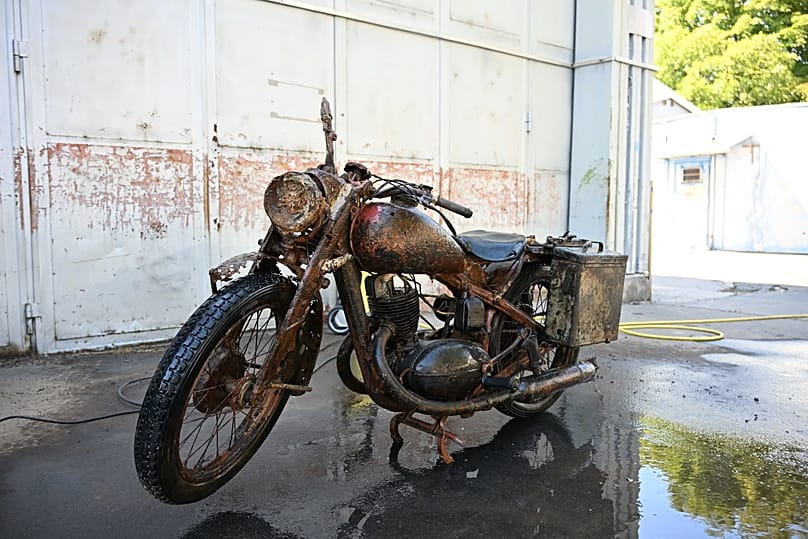
Ammunition was also lying on the riverbed
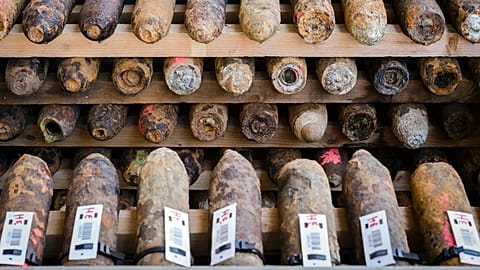
The bomb disposal service had to be called in during the recovery work because, in addition to other pieces of equipment, Type 35 Teller mines were discovered – German anti-tank mines from the Second World War.
The Hungarian Military History Institute (source in German) (source in Hungarian) considers it possible that the site is a dumping ground for war materiel and rubbish created after the end of the siege. It is not yet possible to say definitively whether the items were deliberately disposed of at this spot, or under what circumstances.
A link to the Battle of Budapest?
Historically, a connection with the fighting for Budapest is plausible.
The Battle of Budapest lasted from the end of October or beginning of November 1944 until 13 February 1945 and was among the bloodiest and most hard-fought battles of the final phase of the Second World War in Hungary. Budapest was defended by German and Hungarian units against the Soviet Red Army and Romanian forces. After the city was encircled at the end of December 1944, the battle turned into a protracted siege, ending with the capture of Budapest by Soviet troops on 13 February 1945.
The fighting was extremely fierce and claimed numerous lives on both sides.
Today the German-Hungarian war cemetery at Budaörs, west of Budapest, is the largest burial site for German and Hungarian war dead in Hungary. It is the final resting place mainly for those killed in Budapest and in the areas east of the Danube. According to the Volksbund, 16,630 dead have now been buried at Budaörs.
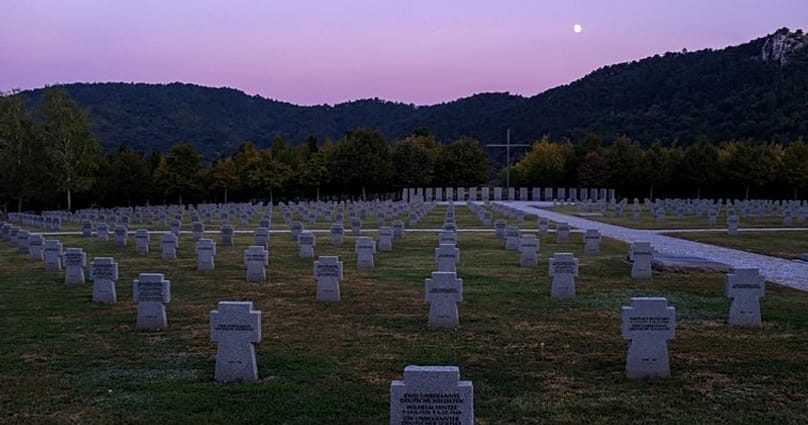
Whether the two men from the Danube actually fell during the Battle of Budapest is something only future research will show. What is already certain is that their remains will be laid to rest at the Budaörs war cemetery.
The discovery shows how many traces of the past are still hidden today in Europe's rivers. The Danube has been an important transport and trade route not only in times of war.
The Volksbund explicitly expects that the current low water level could also lead to more war dead being recovered from emerging shipwrecks.
The find in Budapest may therefore not be the last of its kind.