




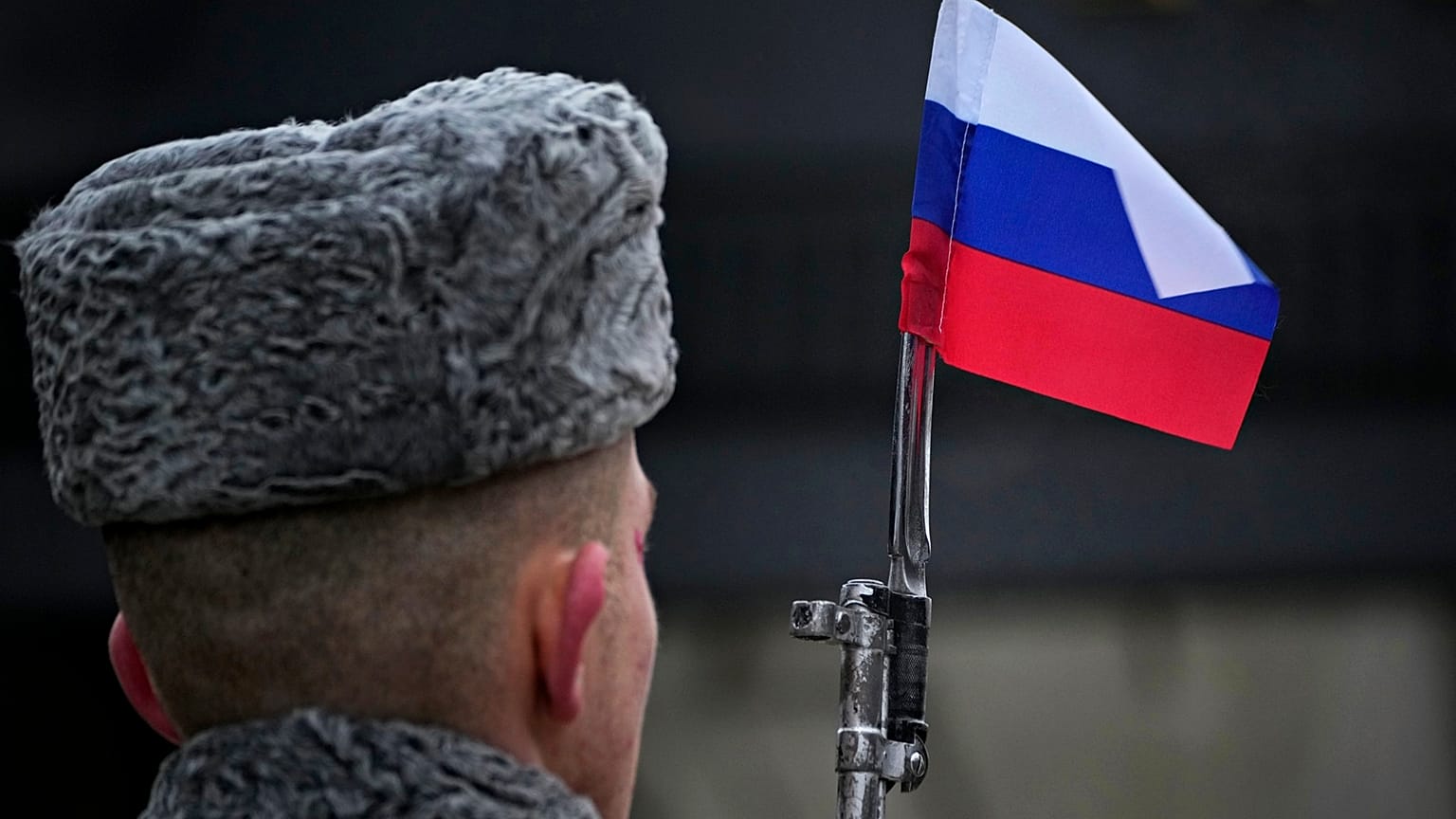













"There can be no path from Bucha to Brussels," the Estonian foreign minister said as he called for an EU-wide entry ban on former Russian soldiers.
The European Union has begun considering a new proposal to ban the entry of Russian soldiers who have fought in the war in Ukraine, fearing security risks.
 ADVERTISEMENT
ADVERTISEMENT
ADVERTISEMENT
The plan, which is still in under development, was put up for discussion by Estonia during a meeting of foreign affairs ministers on Thursday.
"We have close to one million combatants in Russia. They're mainly criminals. They are very dangerous people," Estonian Foreign Minister Margus Tsahkna said upon arrival. "I'm sure, and we have information, that most of them will come to Europe after the war. And Europe is not ready for that."
Tsahkna argued it was necessary to have a "well-coordinated" common policy at the EU level to systematically blacklist Russian veterans in a post-war scenario.
Earlier this month, Estonia imposed a permanent entry ban on 261 Russian soldiers who had taken part in the full-scale invasion of Ukraine.
"We need to protect European security, and we need to do it together," Tsahkna added. "There can be no path from Bucha to Brussels. This is the main message."
At the end of the meeting, High Representative Kaja Kallas said that "many member states", which she did not name, had expressed support for the Estonian plan.
"It poses a clear security risk to Europe," Kallas said. "We agreed to take this proposal further and test the appetite of the member states."
Kallas added that the question of Russian veterans will come up if a ceasefire in Ukraine is ever reached, and said the EU needs to "have answers" before that happens. Both Kyiv and Moscow have reported progress in recent rounds of negotiations, even if a peace deal remains a distant prospect due to Russia's relentless bombardment.
"This is one of the steps that we need to prepare for," Kallas said. "What do we do? What are the risks then? Because the risks also change."
The next steps in the process are not immediately clear. The European Commission is the institution in charge of coordinating visa policy; last year, it tightened rules to prevent holders of Russian passports from obtaining multiple-entry visas to the Schengen area. Now, they are only entitled to single-entry permits.
Though the matter has an obvious foreign policy dimension, it technically falls under the migration remit, which means decisions only need a qualified majority to be approved.
Russian President Vladimir Putin said in December that about 700,000 Russian soldiers were fighting in Ukraine. Blacklisting such a large number of individuals could confront European authorities with serious logistical complications.