
















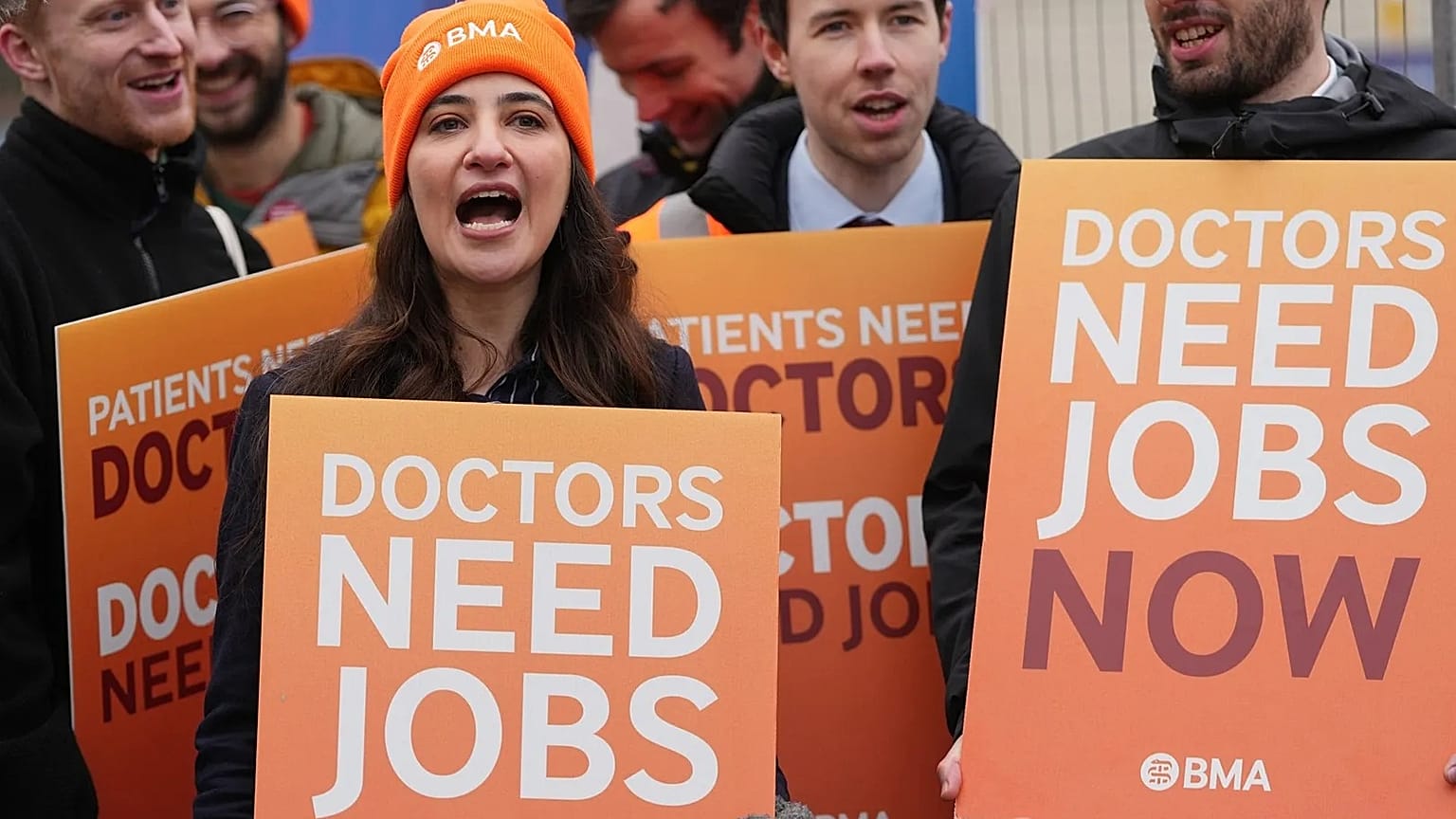













Doctors are increasingly striking across Europe, demanding better pay, improved working conditions and more recognition of responsibilities.
Resident doctors in England will stage a four-day walkout in June, which will be the 16th round of industrial action in ongoing salary negotiations.
 ADVERTISEMENT
ADVERTISEMENT
ADVERTISEMENT
The walkout will start at 7 am BST on Monday 15 June until 6:59 am on Friday 19 June.
This decision came after a meeting earlier this week between the UK’s new Health Secretary James Murray and the British Medical Association (BMA). Murray took over from Wes Streeting in early May.
Murray has already revealed that he was not open to further salary negotiations, claiming that what the union was asking was “unrealistic and unaffordable”.
Currently, starting salaries for resident doctorsin England are a little over £40,000 (€46,150) according to the Department of Health and Social Care, while senior resident doctors get a basic salary of around £76,500 (€88,295).
Doctors have already gotten pay hikes of 33% in the last four years, along with a 3.5% raise this year. They can also earn significantly more if they put in additional hours or work late, as well as during weekends.
However, according to the BMA, doctors are still being paid less than they were in 2008, once inflation is factored in. This claim is based on the UK Retail Prices Index (RPI) measure of inflation.
“We were prepared to give Mr. Murray time to settle into his role before completing the work his predecessor left unfinished,” BMA resident doctor leader Dr Jack Fletcher, said, as reported by the BBC.
“Instead, we are hearing the same tired line – vagueness on new jobsand no further money on the table. We cannot be asked to negotiate in good faith for weeks, only to be told there is nothing left to negotiate about on pay and no further details at this stage on jobs.”
The BMA also highlighted that junior resident doctors often have significant student debt, with rapidly rising interest rates, which worsens their financial burden.
Additionally, there are also concerns that without adequate pay, doctors may choose to emigrate to places like Australia and Canada, exacerbating the strain on the National Health Service (NHS).
However, the UK government has insisted that the pay rises offered to doctors in the last four years are among the highest in the public sector and any more would detract from patient care and other NHS waiting list initiatives.
It also believes that the RPI should no longer be used, as it is no longer a national statistic. Instead, when considering the Consumer Prices Index (CPI), which is the standard metric now, the dip in real pay is much less.
Doctor strikes continue across Europe
The UK isn’t the only nation dealing with doctor strikes at the moment, with other European countries like Germany, Spain and Portugal also facing similar issues.
In Germany, university hospital doctors, represented by the Marburger Bund association, are currently trying to negotiate new salary contracts. The primary demand is an 8% salary increase over a 12-month period.
As progress has stalled following the second round of talks in late May, warning strikes could be imminent if an agreement isn’t reached soon, which could impact non-emergency treatments, scheduled surgeries and check-ups. However, further talks are scheduled for early June.
Similarly, intermittent nationwide doctors’ strikes are also taking place in Spain, with the next planned one due from 15-19 June.
This is mainly to protest the government’s proposed reform of the Estatuto Marco framework statute, which influences working conditions. However, medical staff now want a separate statute specifically for doctors, with a cap of 35 working hours per week and improved recognition of responsibilities and training.
In Portugal, the National Federation of Doctors (FNAM) and other healthcare unions are protesting against what is considered the ongoing “destruction” of the National Health Service (SNS).
This is mainly due to the SNS being unable to attract or retain young doctors because of poor incentives and pay, worsening the strain on remaining staff. These often face extreme understaffingand abusive extra shifts, threatening care quality.