














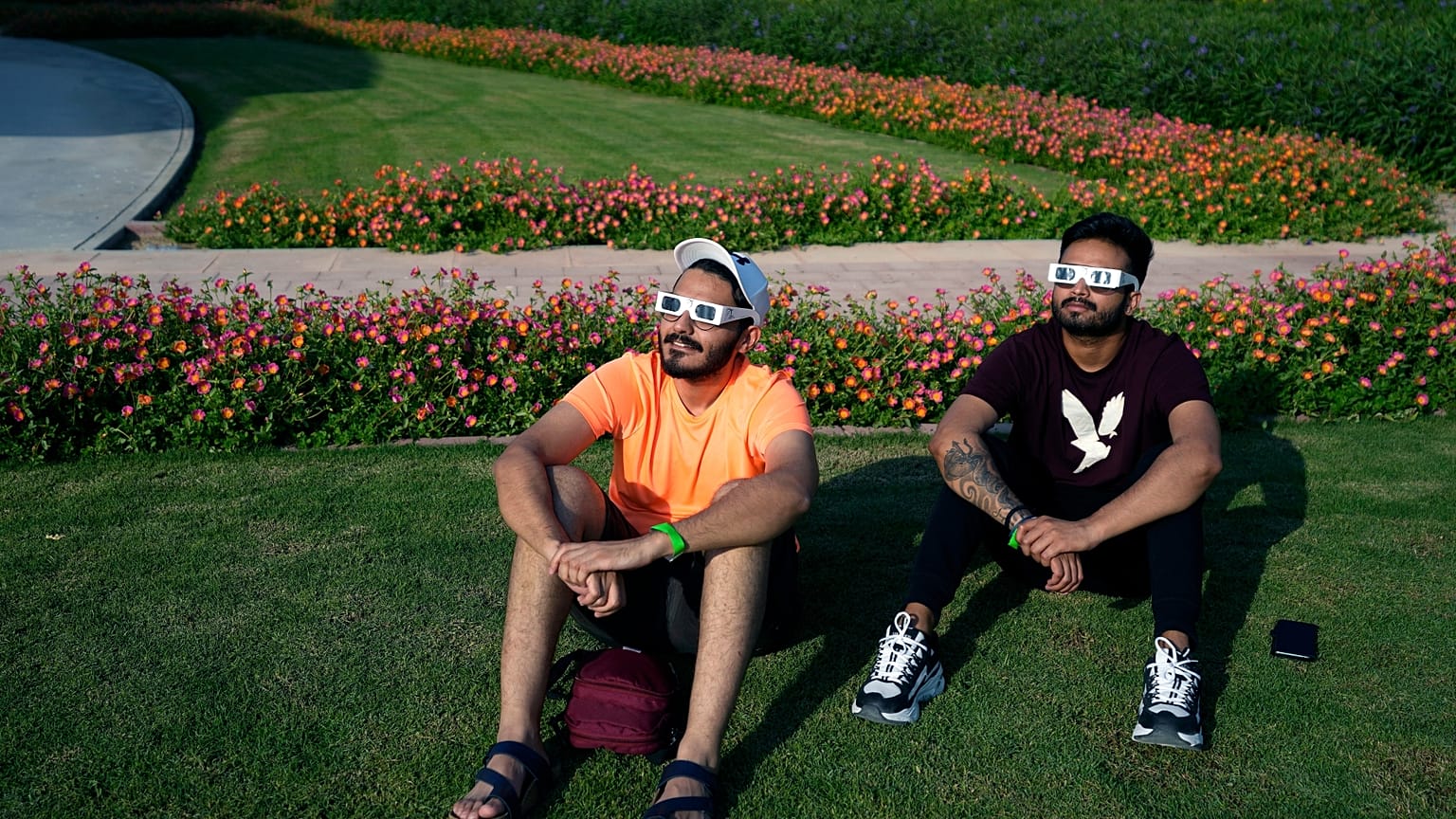














As thousands of people prepare to watch a solar eclipse on 12 August, eye-health experts are urging viewers to use proper protective eyewear to avoid potentially serious damage to their vision.
Europe is set to witness a rare celestial event on August 12, when the Moon will pass between the Earth and the Sun, casting its shadow across parts of the continent.
 ADVERTISEMENT
ADVERTISEMENT
ADVERTISEMENT
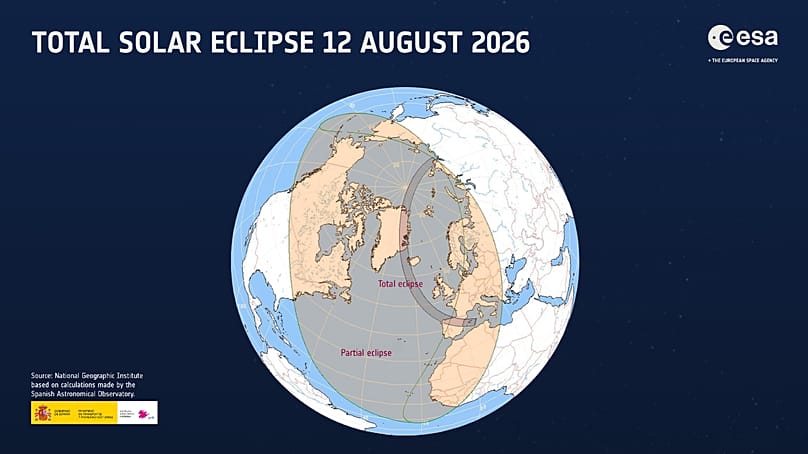
The total eclipse will be visible in Greenland, Iceland, Spain and a small area of northeastern Portugal. Other parts of Europe will experience a partial solar eclipse.
In Spain, the eclipse will cross the country from west to east before continuing over the Balearic Islands. It will be the first total solar eclipse visible from mainland Spain since 1905 and the first of three total solar eclipses that will be visible from the country between 2026 and 2028.
“This kind of eclipse happens quite often on Earth, but at different places. However, it happens in a specific place only every 400 years,” Philippe Escoubet, Space Plasma Scientist at the European Space Agency_,_ told Euronews. “So if you have an eclipse passing by your village or your city, it will not come back [for] 400 years, so it's almost a lifetime event that you want to see.”
But watching the eclipse safely requires proper eye protection.
What glasses should you use?
For those who are going to watch it, eye health experts remind people to wear proper glasses, which comply with the ISO 12312-2 international safety standard.
Gabriëlle Janssen, president of the European Council of Optometry and Optics (ECOO), told Euronews that consumers should not rely solely on the ISO number printed on a product.
“The ISO number printed on the glasses does not by itself guarantee that they have been properly tested,” she said.
Janssen advised viewers to buy eclipse glasses from a reputable supplier and check them for scratches, holes or other damage before use.
The glasses should be put on before looking towards the Sun and removed only after looking away from it.
“Children should be supervised carefully,” she said.
People who do not have suitable eclipse glasses should not look directly at the Sun. Instead, they can follow the eclipse through a livestream, such as one provided by the European Southern Observatory (ESO).
Ordinary sunglasses are not a safe alternative, even if they appear very dark, as they "do not provide sufficient protection against the intense visible, ultraviolet and infrared radiation from the Sun,” Janssen said.
What about cameras, binoculars and telescopes?
Looking at the Sun through a camera, binoculars or telescope can also be dangerous unless the equipment has been fitted with a specially designed solar filter.
“Wearing eclipse glasses while looking through these devices is not sufficient, because the concentrated sunlight can damage both the filter and the eyes,” Janssen said.
Older methods sometimes suggested for viewing eclipses, including CDs and photographic negatives, should also be avoided.
“They don't block enough [light], and then some light is passing by. This can be very dangerous for your eyes,” Escoubet said.
Why is it important to protect the eyes?
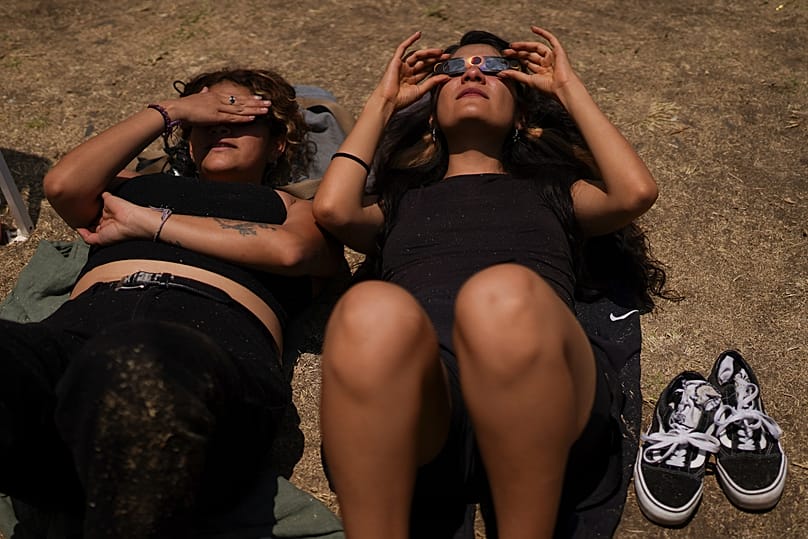
Although the total phase of an eclipse lasts only a few minutes, looking directly at the Sun can cause permanent damage to the retina – a thin, light-sensitive layer of tissue that lines the back inner part of the eye.
Looking directly at the Sun can cause solar retinopathy, a photochemical injury to the retinal tissue. The macula, the part of the retina responsible for sharp, detailed central vision, is particularly vulnerable.
“The retina has no pain receptors. This means that the damage can occur without pain and without the person immediately realising that anything is wrong,” Janssen said, adding that symptoms often only become noticeable several hours later.
Symptoms of solar retinopathy can include blurred or reduced central vision; a dark, blurred or blind spot in the centre of the visual field; distorted vision, with straight lines appearing bent; changes in colour perception; and increased sensitivity to light.
“Anyone who notices blurred, reduced or distorted vision after looking at the Sun should avoid any further exposure and seek prompt assessment from an optometrist, ophthalmologist or other appropriate eye-care professional,” Janssen said.
While those with mild damage usually “experience gradual improvement over the following weeks or months,” full recovery “is not guaranteed,” she said.
A central blind spot, reduced visual acuity or distorted vision can persist if retinal cells are permanently damaged, she said, adding that “currently no proven treatment that can reverse solar retinal damage” exists.
“Prevention through correct eye protection is therefore essential,” she said.