














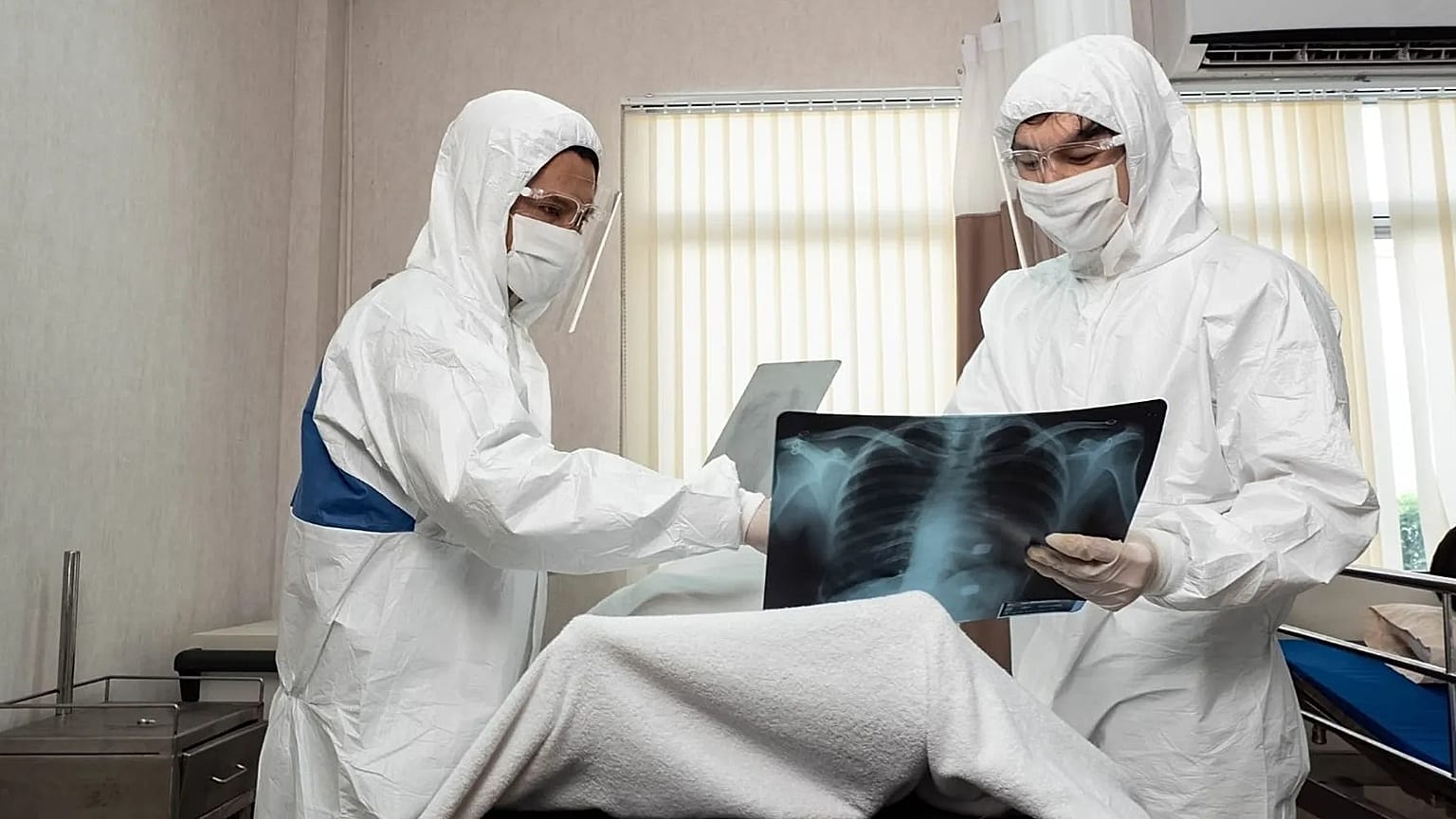













From X-ray machines to anatomy laboratories, a new study has found that nearly a third of Europe's health and social care workers are regularly exposed to cancer-causing risks.
Health and social care workers in Europe are exposed to a wide range of avoidable factors that can contribute to cancer, a new study has found.
 ADVERTISEMENT
ADVERTISEMENT
ADVERTISEMENT
Cancer remains the leading cause of work‑related deaths in the European Union, accounting for 100,000 fatalities annually and exposing millions of workers to cancer risk factors in their daily jobs, according to the European Agency for Safety and Health at Work (EU-OSHA).
Now, the Workers' Exposure Survey, conducted by the EU-OSHA, has found that 47.3% of assessed workers across all sectors were exposed to at least one cancer risk factor during the last working week.
The survey included 24,402 telephone interviews from 2022 to 2023 with workers in Finland, France, Germany, Hungary, Ireland, and Spain.
Among health and social care workers, 29.5% reported being exposed to one or more cancer risk factors, and 7.8% to two or more.
“Despite their relevance, risks associated with exposure to carcinogens in the health and social care sector have historically been less visible than in other economic sectors,” said Michelle Turner, senior author of the study at the Barcelona Institute for Global Health (ISGlobal).
“This study highlights the need to develop prevention strategies adapted to real working conditions in this field.”
Health and social care is one of the largest sectors in Europe, employing 11% of the total workforce – more than 21.6 million people. It includes jobs in formal care settings such as hospitals, nursing and care homes, medical practices, and workers who provide home care.
What are the main risks among healthcare workers?
The study estimated worker exposure to 24 known cancer risk factors relevant in the EU working context, such as industrial chemicals, physical risk factors, process-generated substances, and mixtures.
Among health and social care workers, the most common exposures were to ionising radiation (7.4%), diesel engine exhaust emissions (6.2%), solar ultraviolet radiation (6.1%), formaldehyde (5.2%), and benzene (4.8%).
Formaldehyde and ethylene oxide were the exposures most frequently estimated to occur at a high level; both are chemical compounds used for disinfection and sterilization.
How are workers exposed?
People can be exposed to multiple cancer-contributing factors over the course of their working lives.
Workplace exposure is a key priority for cancer prevention, as it brings together large groups of people exposed to high concentrations of hazardous substances over extended periods, notes the European Code Against Cancer.
For health and social workers, risks range from cleaning chemicals to medical procedures involving hazardous chemicals.
Working with X-ray machines and radioisotopes increases exposure to ionising radiation, which, in close proximity and without the necessary protections, can cause cell damage.
The study pinpointed several specific working situations: diesel vehicle drivers and mechanics were most at risk from diesel engine exhaust emissions (DEE), gross anatomy laboratory workers from formaldehyde, and dental technicians making crowns, false teeth, or bridges from respirable crystalline silica (RCS).