
















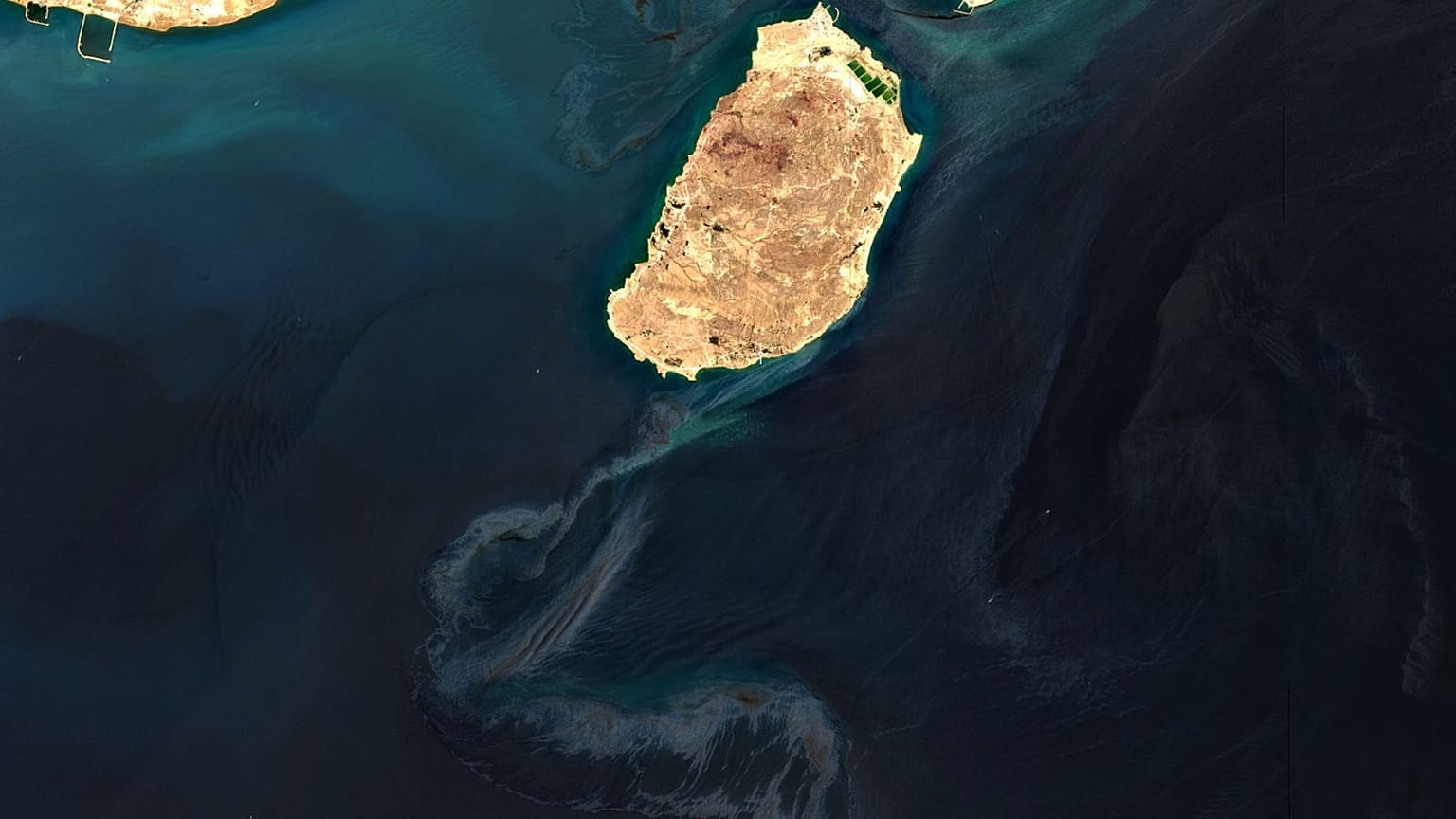













Oil residues from a struck bulk carrier reached Iran's Qeshm Island and its protected mangrove forests, while a sanctioned Russian shadow fleet tanker grounded off Oman has leaked a slick that has grown to more than 2,000 square kilometres, fouling 40 kilometres of Omani coastline.
An oil spill has reached Iran's Qeshm Island and a separate, far larger spill from a stricken Russian shadow fleet tanker is fouling Oman's southern coastline, as the war in the Gulf produces its first significant environmental fallout.
 ADVERTISEMENT
ADVERTISEMENT
ADVERTISEMENT
Dark oily residues appeared along the shores of Qeshm Island earlier this week, spreading from Soza beach to the Shib Deraz area and the Hara mangrove forests near the village of Naqasheh.
Iran's environmental officials said cleanup operations had largely cleared the slick by Wednesday evening, although monitoring continues.
Iran's Foreign Ministry said preliminary evidence pointed to a foreign bulk carrier as the source and called for compensation from those responsible.
"Restoring the marine ecosystem of the Strait of Hormuz, the Persian Gulf and the Sea of Oman, and preventing further pollution, must be part of any future management arrangements for the Strait of Hormuz," Iran's Foreign Ministry spokesperson Esmail Baghaei said.
"All parties that benefit from commercial shipping in this waterway have a legal and moral responsibility to address the environmental damage," he added.
Baghaei said the incident was "only one example" of decades of pollution, claiming it caused "trillion-dollar damage to Iran’s coastal areas."
"Who is responsible for compensating for these losses and damages: the countries that consume the region’s cheap exported energy, shipping insurance companies, or the aggressor parties and their partners," Baghaei asked.
TankerTrackers, a maritime monitoring service, said satellite imagery showed the slick most likely originated from the Minoan Pioneer — a Liberia-flagged, Greek-managed bulk carrier struck by a projectile on 3 August approximately 20 nautical miles northeast of Khasab in Oman's Musandam Governorate.
The attack triggered a fire, caused a complete engine room blackout and left one crew member missing. Multiple maritime security firms attribute the attack to Iranian forces, citing historical patterns in the area. Iran has neither confirmed nor denied involvement.
"The spillage then drifted across the strait over to Iran," TankerTrackers said on X, describing it as "a self-inflicted wound by Iran."
International compensation rules complicate Iran's position: the International Oil Pollution Compensation Funds explicitly exclude liability for damage caused by an act of war or hostilities.
Qeshm is the largest island in the Persian Gulf, with an area of around 1,500 square kilometres. The Hara mangrove forests cover an estimated 20,000 hectares and serve as breeding and feeding grounds for fish, migratory birds and marine mammals.
The island's southern coasts are nesting grounds for the hawksbill sea turtle, listed as critically endangered by the International Union for Conservation of Nature.
Oman: Russian shadow fleet tanker sending oil ashore
Another environmental crisis is unfolding 500 kilometres to the south-east, where the Caroline Bezengi — a Suezmax tanker carrying approximately 1 million barrels of Russian crude — has been leaking since running aground on the Hallaniyat Islands off Oman's Dhofar coast in June.
The vessel left Russia's Black Sea port of Novorossiysk in April and was hit by an explosion on 8 June while off the coast of Yemen. The crew was taken off without injury. The tanker subsequently grounded on rocks off Jazirat Al Qibliyyah.
No party has claimed responsibility for the explosion. The EU and UK have sanctioned the Caroline Bezengi for transporting Russian crude. Its registered owner and operator are both based in China.
The spill has grown fast. From covering 45 square kilometres on 26 July, the oil spread to around 150 square kilometres by 2 August, 390 square kilometres by Oman's own assessment on Monday, and more than 2,000 square kilometres according to satellite imagery analysis done by Reuters on Wednesday.
Oil reached beaches at Ras Madrakah on the Omani mainland, fouling up to 40 kilometres of coastline. The IMO confirmed the oil had reached shore on Wednesday.
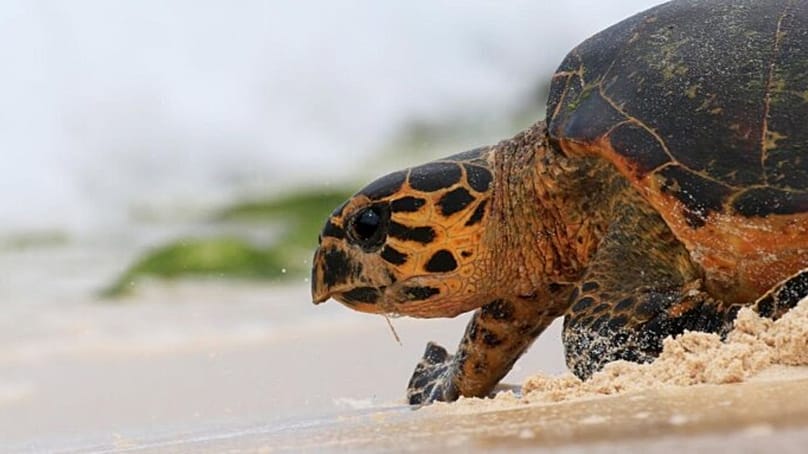
The Hallaniyat Islands, designated a nature reserve by Oman's Sultan Haitham bin Tarik last year, support Arabian Sea humpback whales, Socotra cormorants, endangered sea turtles and coral reefs.
The monsoon season brings unpredictable sea and weather conditions to the region from June to September.
Russia's shadow fleet consists of several hundred ageing tankers, allowing Moscow to continue exporting oil despite Western sanctions imposed after its full-scale invasion of Ukraine in early 2022.