





























International Mother Language Day: Speaking and playing in a second language has no impact on mother-child brain synchrony, a new study has found.
Talking in a second language doesn’t affect neural synchrony between bilingual mothers and children, a new study has found.
 ADVERTISEMENT
ADVERTISEMENT
ADVERTISEMENT
The researchers analysed whether the language used between mothers and children in bilingual families affected their interactions. They compared situations where they interacted in the mother’s native language with those in which they talked in English to see if multilingualism could be a barrier to parent-child communication and bonding.
The study, published in Frontiers in Cognition, found that this synchrony doesn’t seem to get lost even when changing languages.
“Here we show that the brains of bilingual mums and their kids stay just as ‘in sync’ through neural synchrony irrespective of whether they play in the mum’s native language or in an acquired second language,” said Efstratia Papoutselou, first author of the study and research fellow at the University of Nottingham.
Neural synchrony is the simultaneous activity of neural networks across the brains of people who are socially interacting. It is thought to be key to healthy bonding between parents and children.
How was the study done?
The research team analysed fifteen mother-child couples. Mothers were all non-native English speakers but proficient in it as a second language.
Children were bilingual in their mother’s language and English.
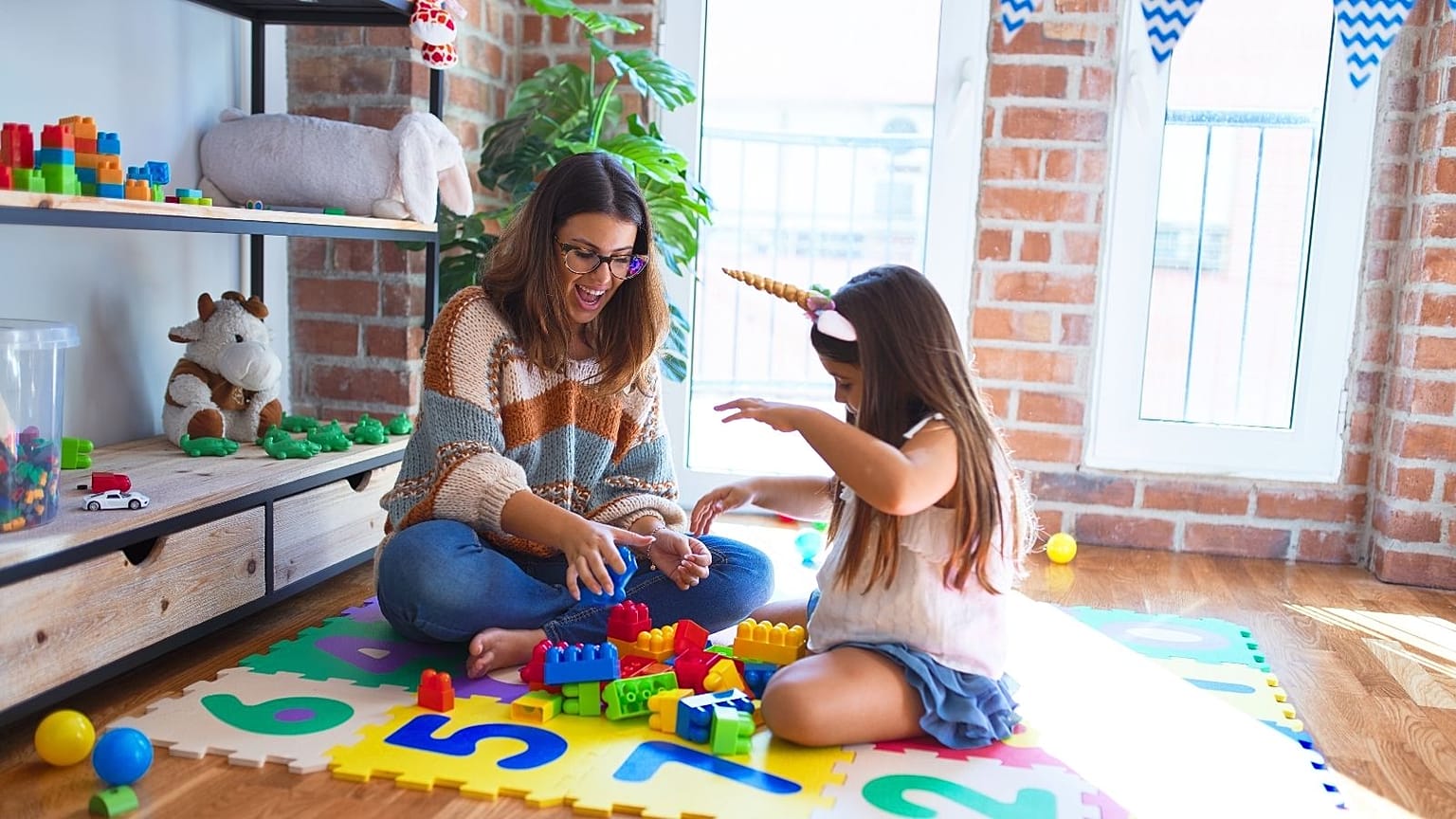
For the study, they took part in a 45-minute playing session, divided into three different parts: at first, they interacted in the mother’s native language, then they continued in English, and finally, they played independently in silence.
Both mother and child wore a cap that measured changes in the oxygen concentration across the brain’s blood vessels.
They found that neural synchrony was stronger during interactive play than when mother and child were playing independently.
Synchrony was especially strong in the brain’s frontal cortex, where decision-making, planning, reasoning, and emotions take place.
The authors concluded that talking in a second language did not affect the mother’s ability to synchronise with the child during playtime.
Does bilingualism affect our interactions?
While the study found that switching languages does not disrupt neural synchrony between mothers and children, broader research shows that using a second language shapes how people communicate.
In Europe, three out of five people can have a conversation in a language other than their mother tongue, according to the latest Eurobarometer data from 2024, a 3-point increase since 2012.
Research found that for adults who have learned a second language later in life, interaction may differ from their mother tongue, especially in emotionally charged or cognitively demanding contexts.
“Second-language speakers often report a sense of emotional distancing when using their non-native language, which may influence how they express affection, discipline, or empathy in parent-child interactions,” the authors wrote.
They concluded that future research should look at families with different levels of language proficiency, including when a parent is less fluent in the second language, or where the child is not bilingual from birth.
They added that it would also be important to analyse other types of interactions outside the family, such as child-teachers or child-strangers.