












Sensors in looser clothing outperform tight wearables in tracking body metrics, according to new research.
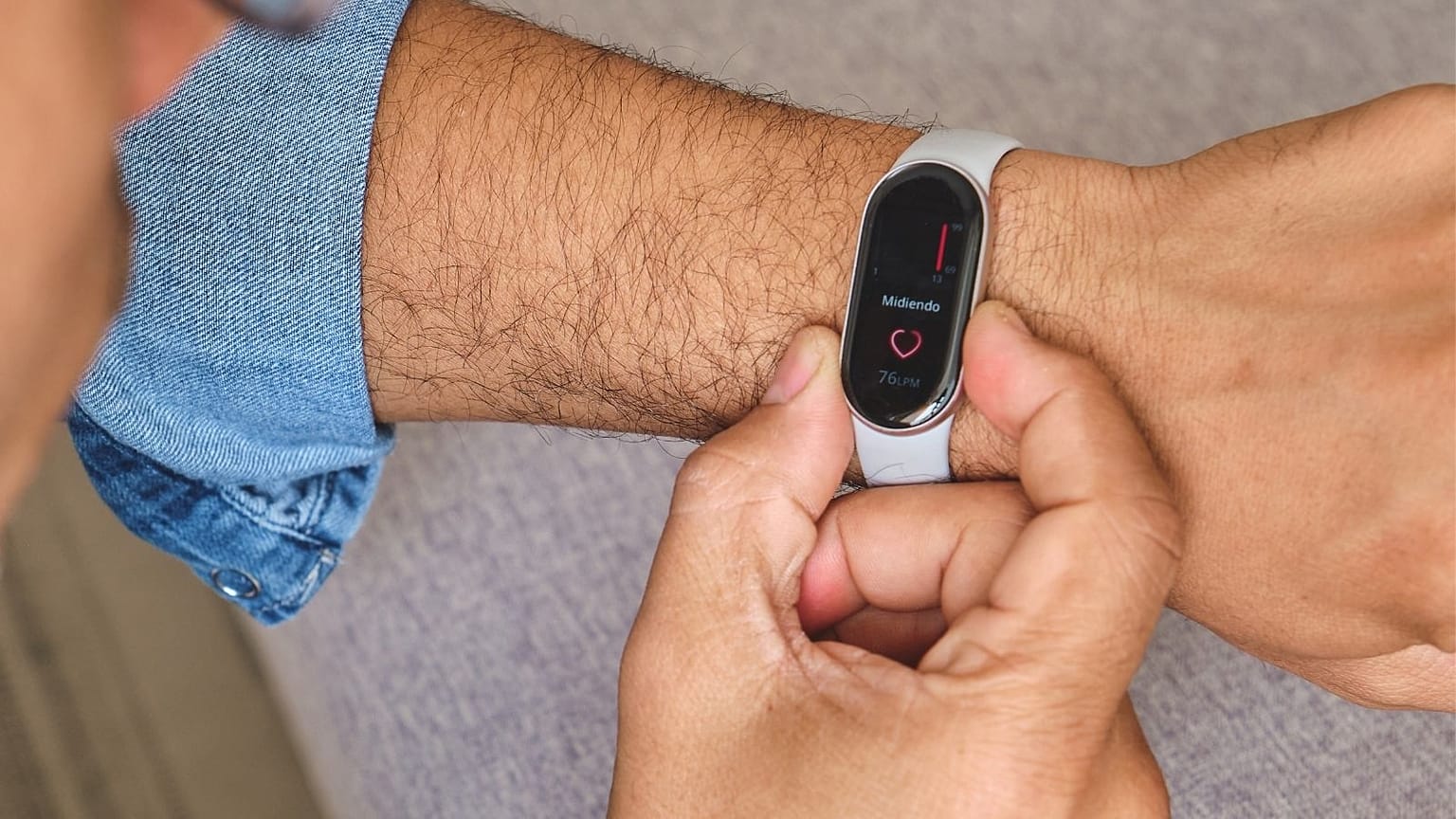
Most health and fitness trackers take the form of a strap around the wrist or the body. But new research has found that looser clothing can track movement more accurately.
 ADVERTISEMENT
ADVERTISEMENT
ADVERTISEMENT
Loose fabric can predict and capture the body’s movement with 40 percent more accuracy and using 80 percent less data, the results published in the journal Nature Communications showed.
Current wearables are tight to the skin, measuring raw movement and vital signs, and converting them into more concrete metrics such as steps, calories, or sleep stages.
The researchers have debunked the common belief that if a sensor is loose, the data will be “noisy” or messy. In fact, loose, flowing clothing makes motion tracking significantly more accurate.
“Meaning, we could move away from 'wearable tech' that feels like medical equipment and toward 'smart clothing' - like a simple button or pin on a dress - that tracks your health while you feel completely natural going about your day,” said Matthew Howard, co-author of the paper and reader in engineering at King’s College London.
He added that when someone moves their arm, a loose sleeve doesn’t just sit there; it folds and moves, reacting more sensitively than a tighter-fitting sensor.
The team at King’s College tested sensors on different fabrics, using both human and robot subjects doing a variety of movements.
They compared the findings from loose fabrics with standard motion sensors attached to straps and tight clothing and found that the fabric-based approach detected movements more quickly, more accurately, and with less data.
Researchers found that the sensor accuracy was not affected by its location in the clothes or the distance from where the fabric touches the body.
Accurate for subtle movements
Sensors in looser clothes could also help sense small movements that current wearables often miss, such as Parkinson's tremors.
“Through this approach, we could ‘amplify’ people’s movement, which will help capture them even when they are smaller than typical abled-bodied movements,” said Irene Di Giulio, co-author of the study at King’s College.
She added that this could allow tracking people from their own homes or care homes while in their everyday clothing by adding the sensor to buttons on shirts.
“It could become easier for doctors to monitor their patients, as well as medical researchers to gather vital data needed to inform our understanding of these conditions and develop new therapies, including wearable technologies that cater for these kinds of disabilities,” Di Giulio said.
Limitations of current trackers
Current wearables have proven useful for measuring steps and movement during exercise; however, they have limitations in clinical metrics, such as heart rate variability, blood pressure, and oxygen levels.
Recent research has found that wearables such as Apple Watches accurately measure heartbeats at rest; however, they show inconsistency and large errors in measuring energy expenditure – especially during activity.