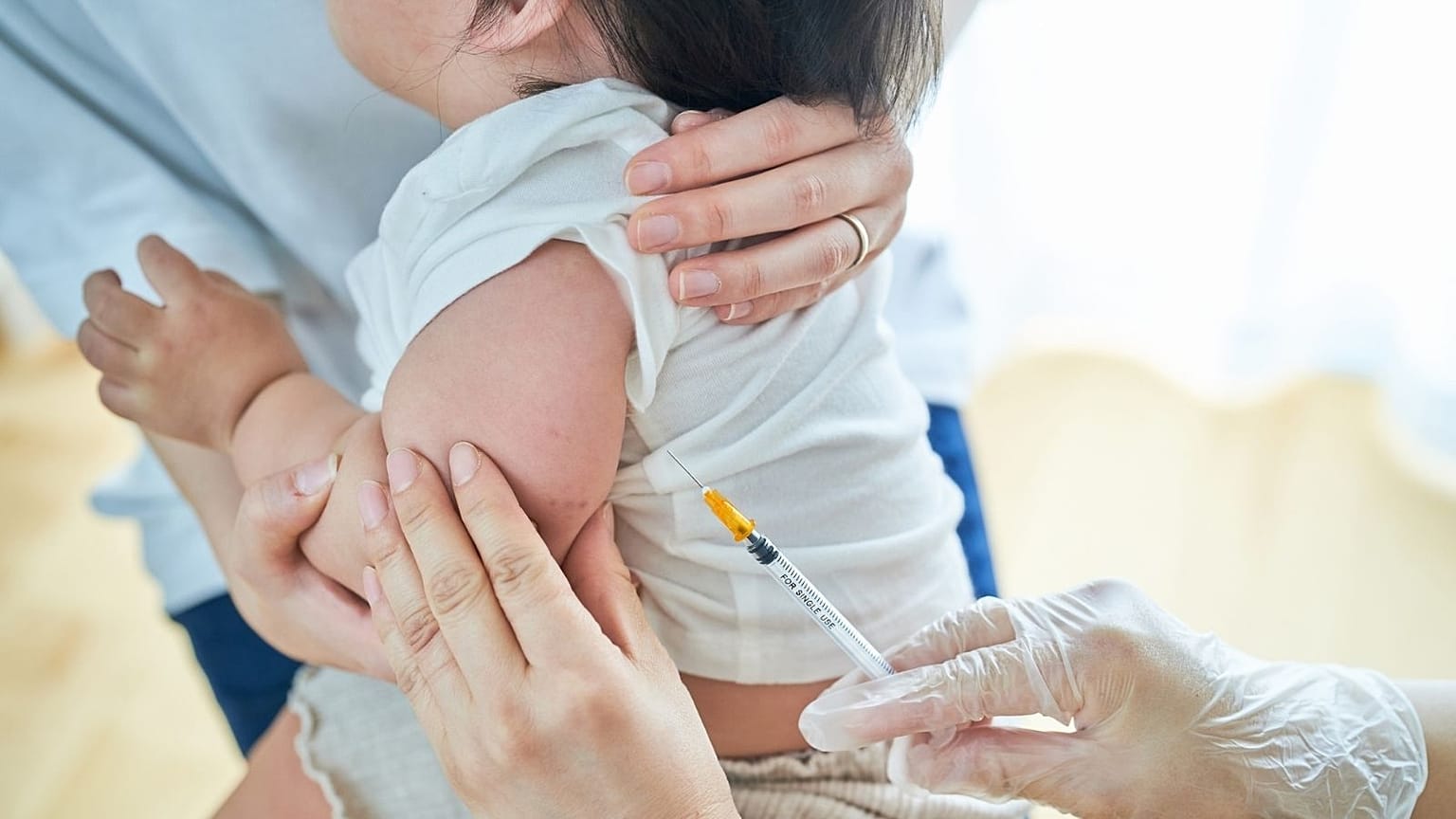













Armenia, Austria, Azerbaijan, Spain, the United Kingdom, and Uzbekistan are no longer recognised as measles-free following a spike in cases in 2024.
Measles is far from being a disease of the past with cases surging across Europe as countries fail to reach vaccination targets.
 ADVERTISEMENT
ADVERTISEMENT
ADVERTISEMENT
Armenia, Austria, Azerbaijan, Spain, the United Kingdom, and Uzbekistan have re-established endemic measles transmission based on the number of cases in 2024, the World Health Organization (WHO) announced on Monday.
A country loses its measles-free status if the virus returns and transmission is sustained continuously for more than a year.
“Through strengthened surveillance, improved outbreak response, and focused efforts to reach under-vaccinated communities, all countries can achieve and sustain elimination,” Bhanu Bhatnagar, WHO Europe spokesperson, told Euronews Health.
The international agency warns that measles is often the first disease to re-emerge when vaccination rates drop, showing the urgent need for increased political and financial commitment from countries and international organisations.
New countries showing outbreaks
In 2024, England recorded 2,911 laboratory-confirmed measles cases, the highest number of cases recorded annually since 2012.
The latest data of 2025 accounts for 957 cases – most of them were in children aged 10 and under.
“Persistent immunity gaps led to a region-wide resurgence in measles and other vaccine-preventable diseases in 2024 and a decrease in the number of countries that have achieved or sustained measles elimination status, " Bhatnagar said.
In Spain, cases are rising year on year. According to government data, in 2025 the country registered around 400 cases, doubling from 2024 and a sharp increase from 11 in 2023.
Austria also saw a spike in measles cases in 2024. Health authorities reported 542 cases, a sharp rise compared to the 186 cases the year before.
Endemic in Europe
The situation is not better in other parts of Europe.
In 2024, a total of 35,212 measles cases were reported across the European Union – a tenfold increase from the previous year, according to data from the European Centre for Disease Prevention and Control.
Babies under the age of one were the most affected group, followed by children aged one to four.
Measles is endemic in twelve countries: Bosnia and Herzegovina, France, Georgia, Germany, Italy, Kazakhstan, Kyrgyzstan, Poland, Romania, Russia, Türkiye, and Ukraine.
Romania reported most of the cases, with numbers reaching 30,692 in 2024, up from 3,371 in 2023.
With the vast majority of cases among unvaccinated people, the WHO notes the need to maintain at least 95 percent coverage with two doses of the measles vaccine.
What is measles, and how is it treated?
Measles is extremely infectious, and it is estimated that 90 percent of non-immune people exposed to an individual with the infection will contract the disease.
Symptoms usually appear after 10-12 days of infection and range from cold-like signs such as a runny nose, cough and a mild fever to light sensitivity, fever, and a red rash that spreads over the entire body.
The virus is transmitted from person-to-person via respiratory droplets produced when infected people cough and sneeze.
There is no cure and no specific treatment for measles, and it usually lasts around two weeks without complications – it is efficiently prevented by two doses of vaccination.