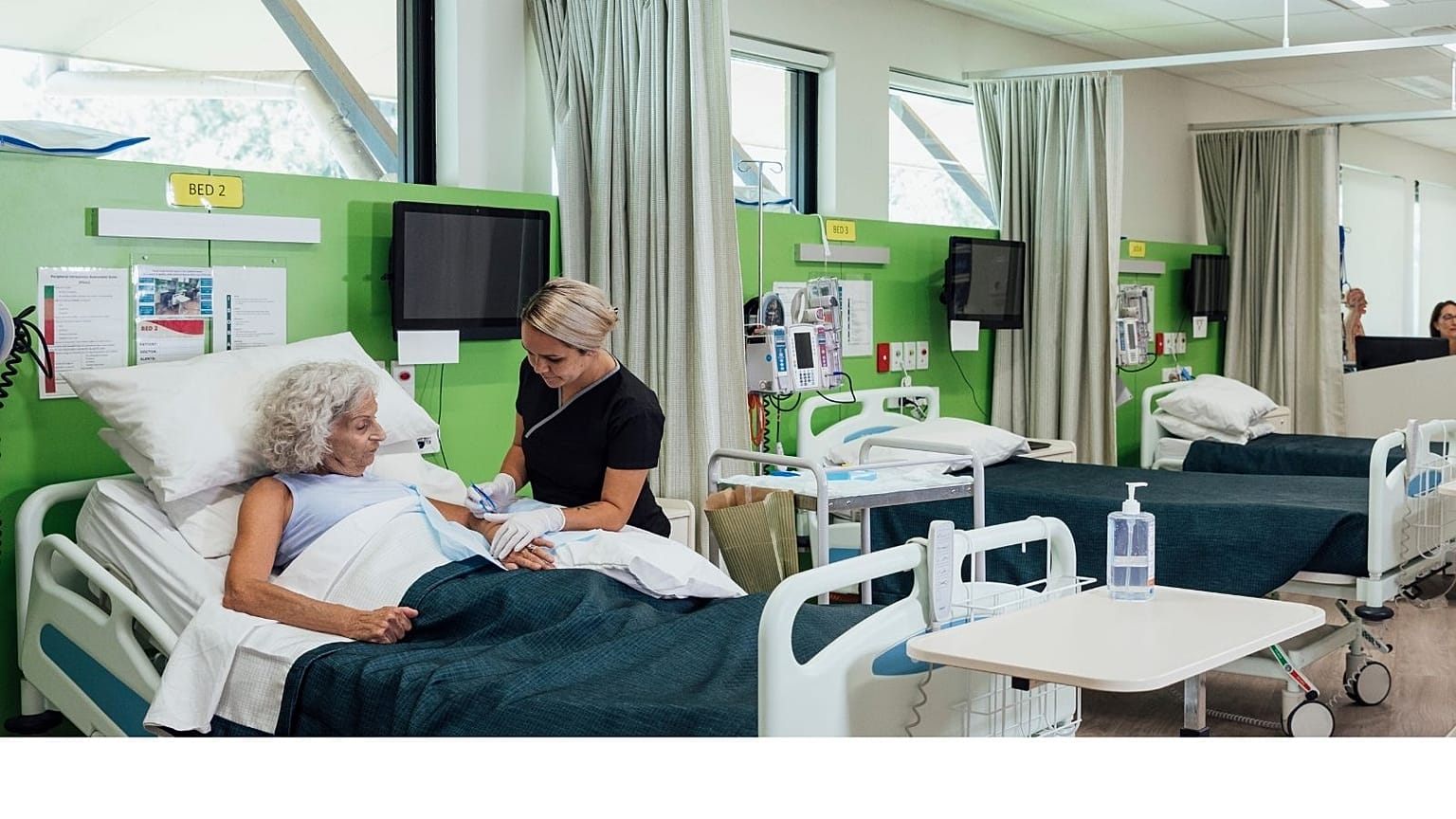













Collectively, women lose approximately 75 million years of healthy life each year – equivalent to a week of health lost per woman annually, according to a new report.
Women and girls make up 49 percent of the global population, and while they live longer than men, they spend 25 percent more of their lives in poor health or living with a disability.
 ADVERTISEMENT
ADVERTISEMENT
ADVERTISEMENT
Yet investment in women's health remains disproportionately low and narrowly focused on just a handful of therapeutic areas.
Women's health receives only six percent of total private healthcare investment, and companies focused exclusively on women’s health attract less than one percent, according to a new report by the World Economic Forum (WEF) and Boston Consulting Group (BCG).
“Gender equality has advanced, yet the gap between health outcomes for men and women remains substantial”, Trish Stroman from BCG and Shyam Bishen from WEF wrote in the report.
In health tech, the gap is broader. An analysis by international financial services firm Alantra found that women’s health companies captured just two percent of the $41.2 billion (€35.1 billion) in venture health-tech funding in 2023.
Research by BCG showed that proper screening and better care for women in the United States, focusing only on four conditions – menopause, osteoporosis, Alzheimer’s disease, and cardiovascular disease– could unblock more than $100 billion (€85 billion) in market value.
Limited investment, combined with research design, clinical data and access to care, continues to entrench this divide. “The result is not only a public-health shortfall but a market inefficiency on a historic scale,” reads the report.
A disproportionate disease burden
Many diseases affect women uniquely, differently and disproportionately. Women suffer from gender-specific conditions such as endometriosis, menopause, polycystic ovarian syndrome, and certain cancers.
Collectively, women lose around 75 million years of healthy life each year, equivalent to a week of health lost per woman, per year, according to the report.
Five gender-specific conditions – endometriosis, maternal health, premenstrual syndrome (PMS), menopause, and cervical cancer – account for 14 percent of the female disease burden but have received less than one percent of relevant research funding in recent years.
Women on the sidelines of healthcare funding
There is a clear misalignment between private-sector funding flows and disease burden, the new report says.
Between 2020 and 2025, total healthcare private-sector funding totalled $2.87 trillion (€2.45 trillion). Of this, women’s health received $175 (€149 billion) – six percent.
Funding remains heavily concentrated in reproductive health, women’s cancers and maternal care, which account for roughly 80 percent of identified funding events and 90 percent of identified capital between 2020 and 2025.
By contrast, high-prevalence, women-specific conditions – such as endometriosis, menopause, polycystic ovary syndrome and menstrual health – represent less than two percent of the identified women’s health budget.
When considering therapeutic areas that affect women differently and disproportionately, including mental health, endocrine, and cardiovascular conditions, the disparity is even clearer.
Across these areas combined, only approximately one percent of identified funding events and even less than that of identified capital flows, went to women’s health.
How to move forward
The report identifies robust evidence as the main driver to fuel innovation and investment.
Realising the full potential of women’s health will require targeted, cross-sector leadership.
To identify evidence-based investment opportunities, it is essential to develop a deeper understanding of women’s health conditions, which requires them to be studied, researched, and analysed in clinical trials.
However, reality shows this is easier said than done.
Despite regulatory mandates and policy initiatives, women remain systematically underrepresented in clinical trials across major disease areas.
Harvard Medical School researchers analysing 1,433 clinical trials involving 302,664 participants, found that women comprised only 41.2 percent of participants on average – below their representation in most disease populations.
Yet, the path doesn’t end there.
“The challenge is that you have to translate science and evidence into policy and then policy into pilots and then pilots into scalable delivery”, said Sania Nishtar, from Gavi, the Vaccine Alliance, during a panel on women’s health at the World Economic Forum in Davos 2026.
She added that innovation has to be matched with delivery capability and if you do not have that delivery capability and the sustainable financing, you're unable to use innovations for the impact that they're intended to have.