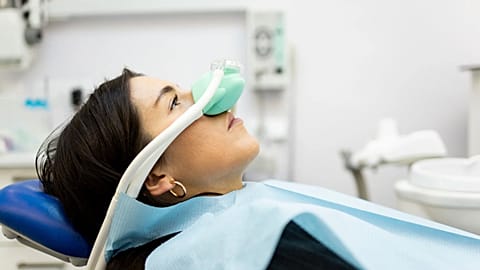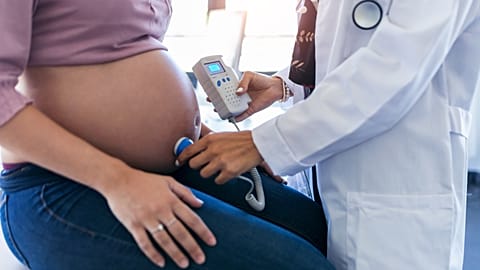






























Women are more likely than men to seek medical help when they feel unwell, yet many believe they receive poorer treatment, according to a new report.
Women in Europe live longer than men – and while they take fewer risks, such as smoking or excessive drinking, they spend less time in good health, a new analysis has found.
 ADVERTISEMENT
ADVERTISEMENT
ADVERTISEMENT
Women also make more frequent visits to doctors, but they often believe their problems are dismissed compared to men’s, according to the report from the European Institute for Gender Equality (EIGE).
“For women's health issues or conditions that particularly affect women, many feel that these aspects are neglected, and that they are more likely to experience gender-based discrimination when accessing health services,” Blandine Mollard, a researcher from EIGE, said in a press conference presenting the report.
Researchers looked at how gender affects not only how individuals access and experience health care, but also how they are perceived and treated within health systems.
The institute’s annual gender equality index, published on Tuesday, reveals that 22 per cent of women think men receive preferential treatment from medical staff.
This perception is even more pronounced among young people: 28 per cent of girls and young women aged 15 to 24 believe men are treated better, compared with just 16 per cent of boys and young men who believe the same.
According to EIGE, this trend may indicate that younger women are increasingly aware of, or directly confronted with, gender bias in health care.
Germany, Croatia, and Sweden report the highest levels of scepticism. In Sweden, nearly half of women (46 per cent) and almost one-third of men (30 per cent) believe men are better treated by medical staff.
At the other end of the spectrum, Malta has the strongest perception of equality: Some 85 per cent of respondents said women and men receive the same level of care.
EIGE warned that gender stereotypes within health care can lead to real harm. When medical staff, consciously or unconsciously, reproduce gender biases, it can result in skewed health assessments and misdiagnoses that are based on biased assumptions rather than on individual patients’ symptoms and needs.
Progress on gender equality in health has stalled
Despite health care appearing the most gender-equal among the six domains assessed by the Gender Equality Index – which also examines work, money, knowledge, time, and power – progress has slowed since 2020.
EIGE tracks indicators such as self-perceived health, life expectancy, and unhealthy habits like smoking and alcohol consumption to analyse gender gaps across the EU.
Most countries score above 80 out of 100, yet the European average has barely shifted since 2015 and remains unchanged from 2020.
Some countries have even seen setbacks, with Malta, Croatia, and Romania experiencing the largest declines in gender equality in health care.
The report suggests these setbacks stem from the gendered impacts of recent health crises, including the COVID-19 pandemic, along with ongoing inequalities in access to care and mounting pressure on national health systems.