

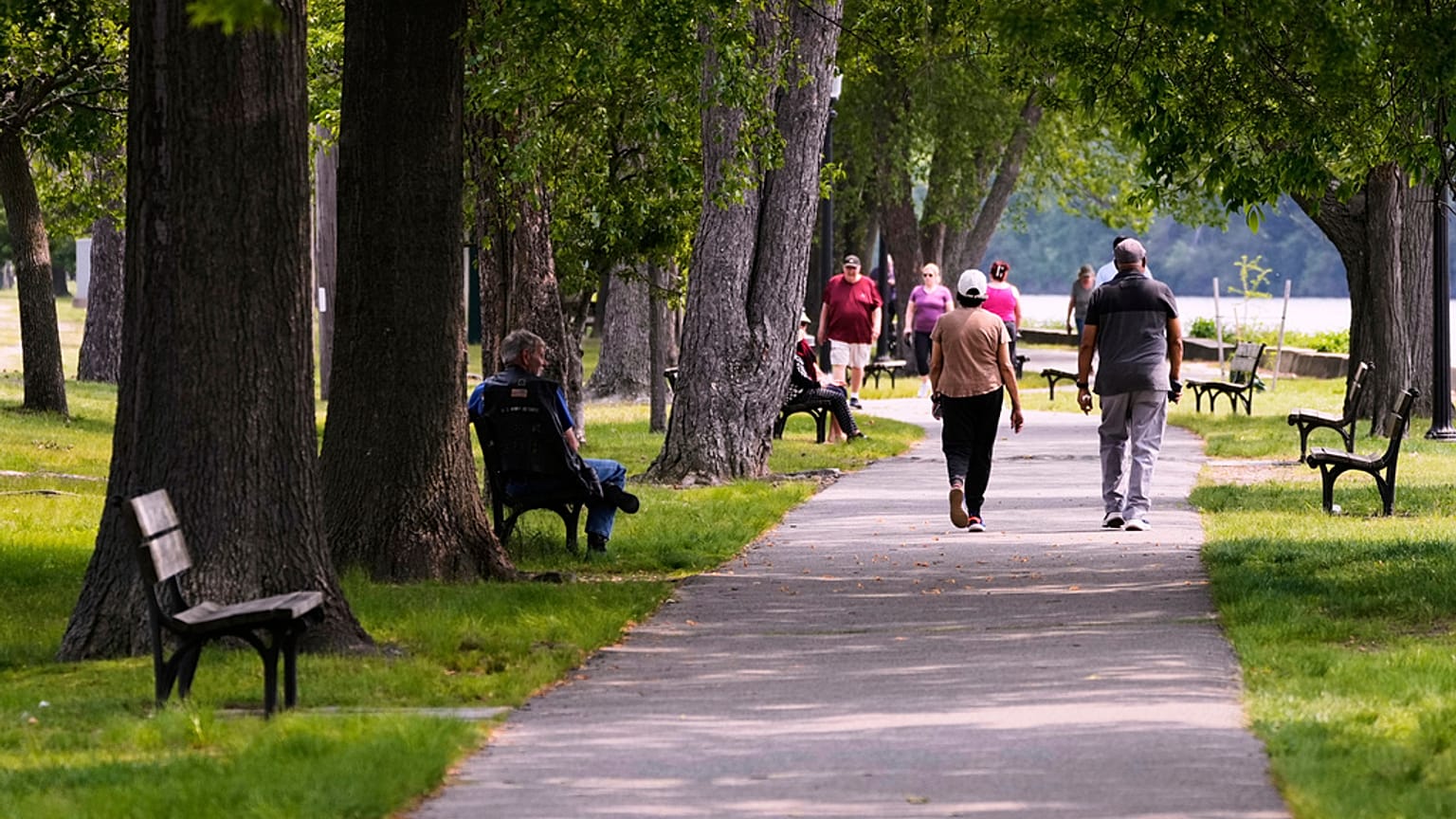













An extra five minutes of exercise and sleep, and half an hour less of sitting could significantly improve people’s lifespan and reduce mortality, according to two new studies.
Small lifestyle changes, such as five extra minutes of exercise or half an hour less sitting each day, can help you live longer, a new study suggests.
 ADVERTISEMENT
ADVERTISEMENT
ADVERTISEMENT
The findings, published in The Lancet, showed that small, achievable shifts in people’s daily activity can prevent up to 20 percent of deaths.
Walking at a moderate pace for an extra five minutes a day is associated with around a 10 percent reduction in deaths among most adults, who are already active for around 17 minutes a day.
If doubled to an additional ten minutes a day of moderate-intensity activity, the reduction in all deaths rises to about 15 percent.
For more sedentary people, those active at a moderate intensity for two minutes a day, five more minutes of activity is linked to around a six percent reduction in deaths. While ten extra minutes is associated with a nine percent reduction.
The study found that cutting an entire hour of sedentary time each day was associated with a 13 percent reduction in all deaths among the majority of adults.
The World Health Organization (WHO) recommends that adults undertake 150 minutes of moderate-to-vigorous intensity physical activity every week, but many people fall short.
Considering “unlikely” for everyone to achieve these goals, the authors of the paper looked at the impact of “realistic and achievable behaviour changes,” such as taking a short walk or reducing sitting time by half an hour.
Reducing sedentary time by 30 min a day, about five percent of total sedentary time for the average adult, was associated with the prevention of more than seven percent of deaths.
The study analysed data from more than 135,000 adults across seven cohorts in Norway, Sweden, the United States, and the UK Biobank. The participants were then followed for eight years.
The UK Biobank collects biological, health and lifestyle information from hundreds of thousands of volunteers for scientific research.
Researchers used device-measured physical activity and sedentary time to estimate the proportion of deaths potentially preventable by small daily increases in moderate-to-vigorous physical activity or reductions in sitting.
It is an observational analysis, meaning the study cannot prove that these changes directly cause the reductions in mortality.
“The really promising finding from this study is that just an extra five minutes per day of MVPA [moderate to vigorous physical activity] can help. This should be feasible for most people, even those who only do very small amounts of physical activity already,” said Daniel Bailey, reader at Brunel University of London, who was not involved in the study.
He added that moderate activities are those that make us breathe a bit heavier and feel warmer – so simple daily activities such as a brisk walk, housework, or gardening can do the trick.
How much do European adults move?
Around 45 percent of Europeans never exercise or play sports, according to the latest Eurobarometer survey on sport and physical activity.
Nearly four in ten respondents say they engage in physical activity for recreational or nonsport-related reasons, such as dancing, gardening or cycling as a mode of transport.
At the same time, about 13 percent of the respondents had not walked for at least ten minutes at a time in the week before the data collection.
Sleep and diet changes can also help
Small changes in sleep habits and diet can also make an impact on lifespan, a second study published in the journal eClinicalMedicine found.
For people with the worst combination of sleep, physical activity, and diet, an additional five minutes of sleep and half a serving of more vegetables per day could lead to an extra year of life, according to the analysis.
Using data from almost 60,000 participants from the UK Biobank, the authors estimated lifespan and years spent in good health across different variations of behaviours using a statistical model.
To theoretically gain one additional year of life, sleep alone would require 25 minutes of additional sleep per day, with a maximum lifespan gain of three years, the study found.
The study said that seven to eight hours of sleep per day, more than 40 minutes of moderate to vigorous physical activity a day and a healthy diet were associated with over nine extra years of life and good health, compared to those with the worst habits.