
















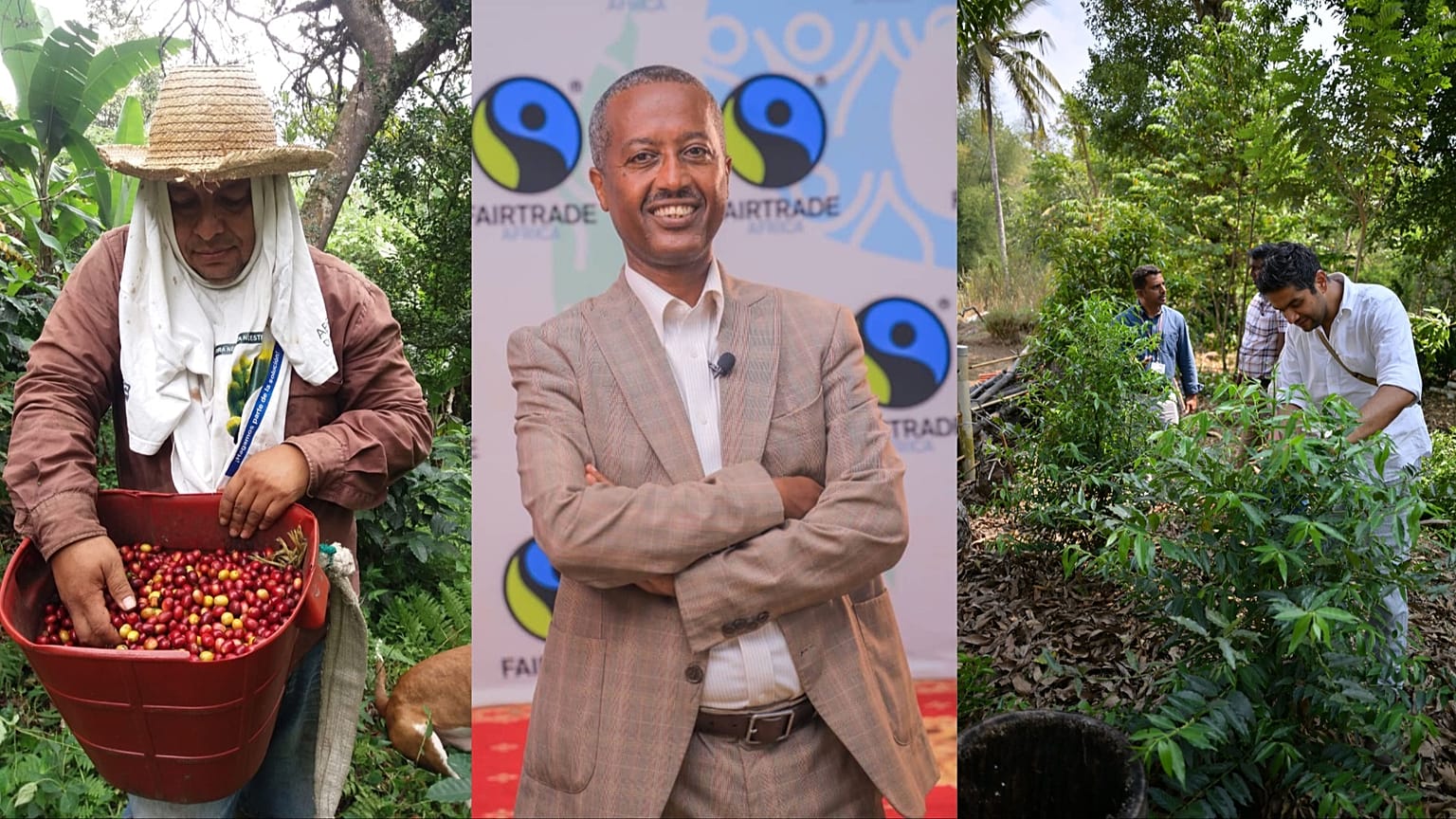













Coffee farmers have urged governments to act to protect harvests from increasing periods of extreme heat.
Climate change is threatening the world’s coffee supply and spiking prices for consumers, as struggling farmers call on their governments to act quickly.
 ADVERTISEMENT
ADVERTISEMENT
ADVERTISEMENT
Climate Central, an independent group of scientists and communicators, has analysed temperatures from 2021 to 2025 and compared them to a hypothetical world without carbon pollution. They found that human-fuelled climate change is pushing temperatures above the “coffee-harming threshold” of 30℃ across the world’s major coffee-growing regions.
The top five coffee-producing countries – Brazil, Colombia, Ethiopia, Indonesia and Vietnam – each experienced 57 extra days of harmful heat per year due to climate change. Together, they supply 75 per cent of the world’s coffee.
How climate change impacts coffee
When temperatures rise above 30℃, coffee plants experience heat stress that can reduce yields, affect bean quality and increase the vulnerability of plants to disease.
Together, this reduces the supply and quality of coffee and contributes to higher prices across the globe. Most of the coffee imported in the EU comes from Brazil (34 per cent) and Vietnam (24 per cent) – two nations that have been hit hard by fossil-fuelled warming.
Smaller harvests and higher prices hit smallholder farmers – which account for around 80 per cent of global coffee producers – the hardest. Despite this, these small businesses received just 0.36 per cent of the financing needed to adapt to the impacts of climate change in 2021.
According to Climate Central, the average cost of adaptation for a one-hectare farm is $2.19 a day (around €1.85), less than the price of a cup of coffee in many countries.
“Nearly every major coffee-producing country is now experiencing more days of extreme heat that can harm coffee plants, reduce yields, and affect quality,” says Dr Kristina Dahl of Climate Central.
“In time, these impacts may ripple outward from farms to consumers, right into the quality and cost of your daily brew.”
Dr Dahl argues that while this particular analysis only focuses on coffee, climate change is hitting other types of crops and farmers. She says this will have a “ripple effect” on food prices and livelihoods around the world.
Meet the coffee farmers struggling under extreme heat
"Coffee farmers in Ethiopia are already seeing the impact of extreme heat,” says Dejene Dadi, general manager of Oromia Coffee Farmers Cooperatives Union (OCFCU), a smallholder cooperative that is one of the largest coffee producers and exporters in Ethiopia.
“Ethiopian Arabica is particularly sensitive to direct sunlight. Without sufficient shade, coffee trees produce fewer beans and become more vulnerable to disease.
"To safeguard coffee supplies, governments need to act on climate change. They must also work with, and invest in, smallholder coffee farmers and their organisations so we can scale up the solutions we need to adapt.”
Dadi explains that the Union is distributing energy-efficient cookstoves that reduce the need for firewood and help protect forest areas that serve as natural shelters for coffee cultivation.
“Coffee farming is part of our cultural heritage and coffee trees are symbols of continuity and pride,” he adds. “Ethiopia is the birthplace of coffee and Ethiopian coffee farmers are key to safeguarding its future.”
Eugenio Cifuentes, from Colombia, has been farming coffee for 25 years now and co-founded the Colombian Organic Coffee Growers Association.
He says Colombian coffee farmers are battling against heat, drought and heavy rainfall, and are in dire need of funding to adapt to climate change.
Cifuentes also argues that the country needs help to eliminate monoculture farming, which heavily relies on chemical fertilisers and pesticides to produce a single crop, and focus more on how nature can help build climate resilience.
“You can see and feel the benefits on my farm where I planted trees to protect the coffee from the heat,” he adds. “In 2024 – a hot and dry year – the cooling effect of these trees helped maintain the quality and quantity of production, whereas the neighbouring monoculture farms had serious quality problems.”
Over in the Western Ghats of India, Sohan Shetty, who manages a number of biodiversity-rich shaded organic coffee farms, is also witnessing increased temperatures and “erratic” rainfall.
Premature flowering often means fewer, or lower-quality, cherries are produced, and can lead to uneven ripening.
“It’s quite common to see planters halting harvesting because part of their plants have blossomed,” says Shetty.
‘Coffee thrives on balance’
For Akshay Dashrath, co-founder and grower at the South India Coffee Company in Karnataka, climate change isn’t just something they’re predicting: it’s a factor they are measuring every single day.
“Our on-ground sensors show longer stretches of high daytime temperatures, warmer nights, and faster soil moisture loss than what coffee here has historically depended on,” Dashrath says.
“Coffee is a crop that thrives on balance: shade, moisture, and cool recovery periods. As that balance narrows, farms like ours and our partner farms have to adapt fast through better shade management, soil health and water resilience.”