




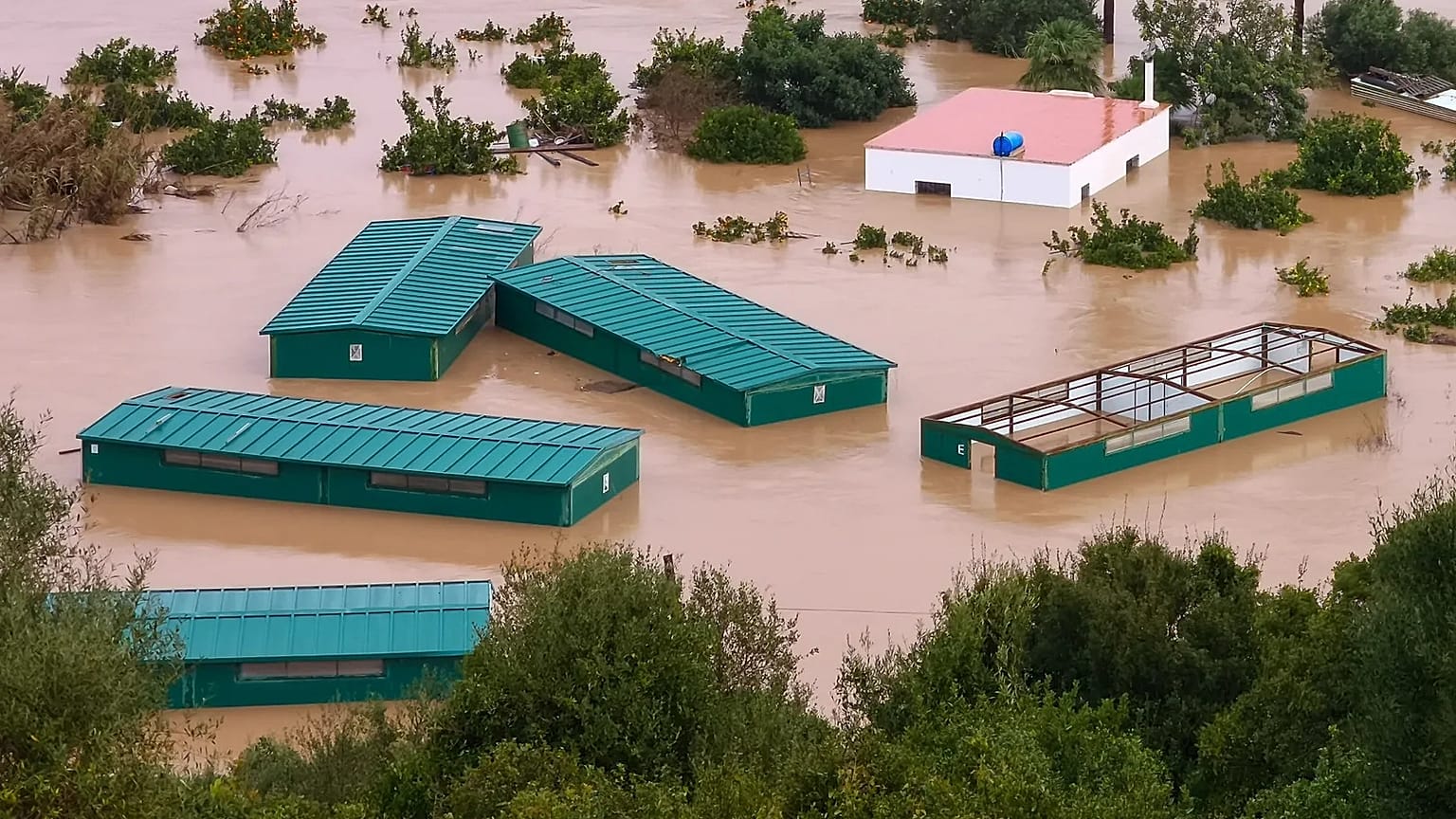













More frequent climate-related events such as flooding, wildfires, repeated heatwaves, and droughts call for a precautionary approach, according to the latest report from the European Scientific Advisory Board on Climate Change.
EU countries need to "urgently coordinate" to anticipate and mitigate the effects of climate change, such as flooding, severe storms, and heatwaves, a report from the EU's advisory board on climate change warned on Tuesday.
 ADVERTISEMENT
ADVERTISEMENT
ADVERTISEMENT
The scientific report from the European Scientific Advisory Board on Climate Change (ESABCC) urges the EU27 to strengthen its rule-making to ensure the bloc is prepared to address the impacts of climate change by mitigating hazards and adapting to risks, exposing the European Commission's failed 2021 climate adaptation strategy.
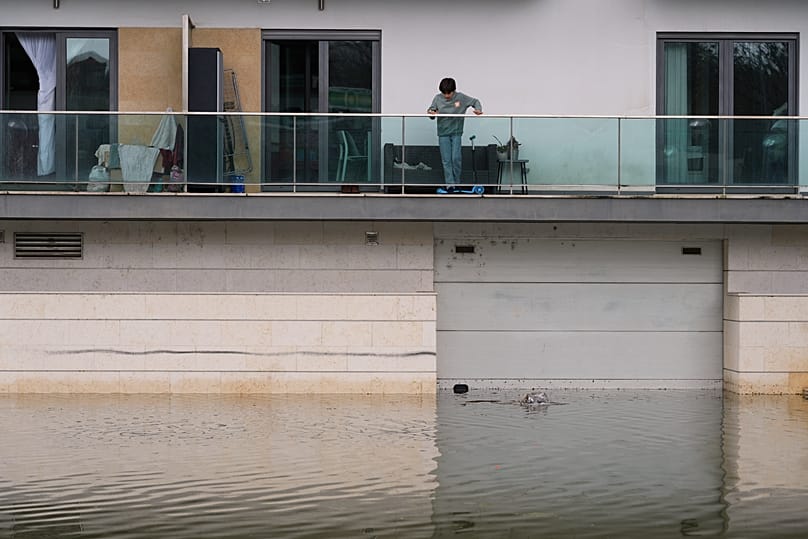
The warning comes as Spain and Portugal are reeling from the impact of three powerful storms that triggered widespread flooding, landslides, and storm surges, leaving multiple people dead and causing billions in damage.
Storm Marta alone led to the deployment of more than 26,500 rescue workers in Portugal, with waves towering up to 13 meters and rivers bursting their banks.
Mass evacuations were carried out, and critical infrastructure suffered severe damage, especially in Andalusia, southern Spain. Emergency shelters housed thousands of displaced residents, supported by medical teams on the ground.
Portugal’s economic losses are projected to surpass €3.3 billion, while farmers face devastating crop destruction, according to local media.
Floods in Valencia in October 2024 and in Germany and Belgium in July 2021, with devastating consequences for human life and infrastructure, have also roused more calls for climate adaptation.
The ESABCC's Chair, Professor Ottmar Edenhofer, said extreme weather and climate-related events are already causing severe damage across Europe.
“Extreme heat alone has resulted in tens of thousands of premature deaths in recent years, including an estimated 24,000 in summer 2025," said Edenhofer. "Economic damages to infrastructure and physical assets now average around €45 billion per year."
"These mounting impacts underline that strengthening adaptation is not optional, but essential to protect lives, livelihoods and Europe’s economic foundations."
Adaptation and mitigation, hand-in-hand
ESABCC warns that "adaptation and mitigation must advance together" to prepare for "unavoidable temperature increases" and safeguard Europe’s strategic priorities, as projections indicate climate hazards will continue to intensify.
"A fragmented approach to adaptation could undermine collective resilience, as insufficient measures in one country may trigger impacts and increased exposure in neighbouring areas," reads the report.
Professor Laura Diaz Anadon, vice chair of the Advisory Board, backed a robust EU adaptation framework as the key to addressing systemic risks that can disrupt access to food, water and energy.
Adaptation goes beyond climate policy, Anadon added, noting that taking action today will help protect the health of EU citizens and ecosystems as well as the integrity of the bloc's single market and competitiveness.
Professor Jette Bredahl Jacobsen, vice-chair of the Advisory Board, said adaptation can't prevent all losses, noting that mitigation efforts will remain essential to limit climate hazards to manageable levels.
“Robust risk management means the EU should prepare for a range of possible futures to ensure a resilient Europe. Strengthening adaptation alongside mitigation is essential to safeguard citizens, security, and the EU’s wider strategic goals,” Jacobsen said.
Climate risk assessments, mobilising capital
ESABCC's scientists have offered recommendations for upcoming EU legislation, as the European Commission is slated to present a climate resilience strategy by the end of the year.
Scientists defend harmonised climate risk assessments across EU policies and national governments, using common climate scenarios and methodological standards.
They also urge the EU to adopt a common concept for adaptation planning, preparing for climate risks consistent with global warming of 2.8-3.3 °C by the year 2100.
Mobilising public and private investment for climate adaptation is another key recommendation by climate scientists, who claim such funds would help establish and manage the "growing costs of climate impacts through the EU budget, economic governance, and risk-sharing mechanisms".
"Adaptation has already played an important role in reducing mortality during heatwaves through measures that lower people’s vulnerability to extreme temperatures, such as building and infrastructural changes, heat-health warning systems, or increasing urban green space," reads the report.
The EU has allocated around €658 billion of its 2021-2027 long-term budget to climate action. Negotiations are ongoing to allocate funds under the 2028-2034 budget.
Austrian Green MEP Lena Schilling recently insisted that the wealthy should be taxed in an appearance at the Vienna Opera Ball, which is being sponsored by OMV, one of Austria’s largest industrial companies dealing with oil, gas and petrochemicals, where she appeared in a "Tax the Rich" dress.
“We cannot prevent the climate crisis as long as the super-rich live off untaxed inheritances as if there were no tomorrow, especially while life is becoming unaffordable for so many people,” Schilling told Euronews Green.