












The devastation of recent storms has sparked questions about how cities are being built and planned in the face of climate change.
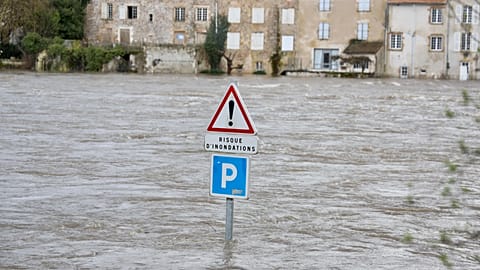
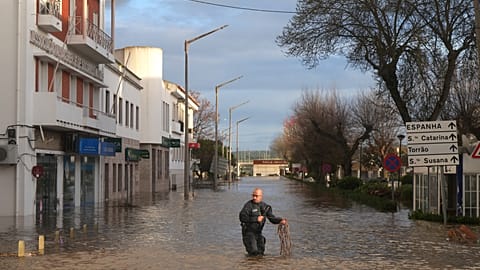
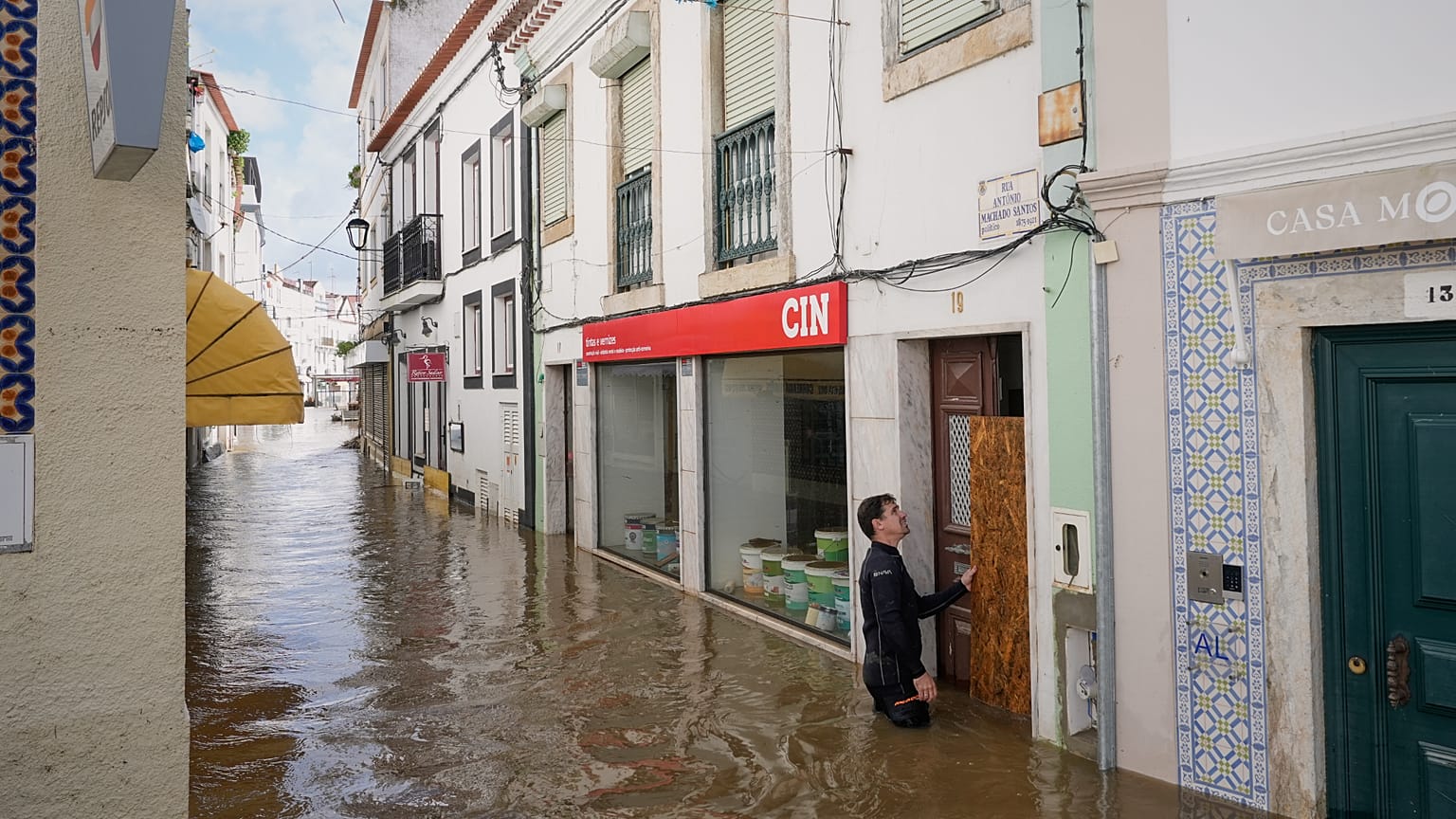
Houses destroyed, trees fallen, entire streets turned into rivers: Portugal's recent deadly storms have caused untold damage and left thousands displaced. Experts say some of this could have been avoided.
 ADVERTISEMENT
ADVERTISEMENT
ADVERTISEMENT
"Planning failed," says Maria Rosário Partidário, Professor of Planning, Urbanism and Environment at the Instituto Superior Técnico of the University of Lisbon, in an interview with Euronews.
"This has been going on for years. Only very recently has there been real concern," she says. For many, it's too late.
'There's no room for water'
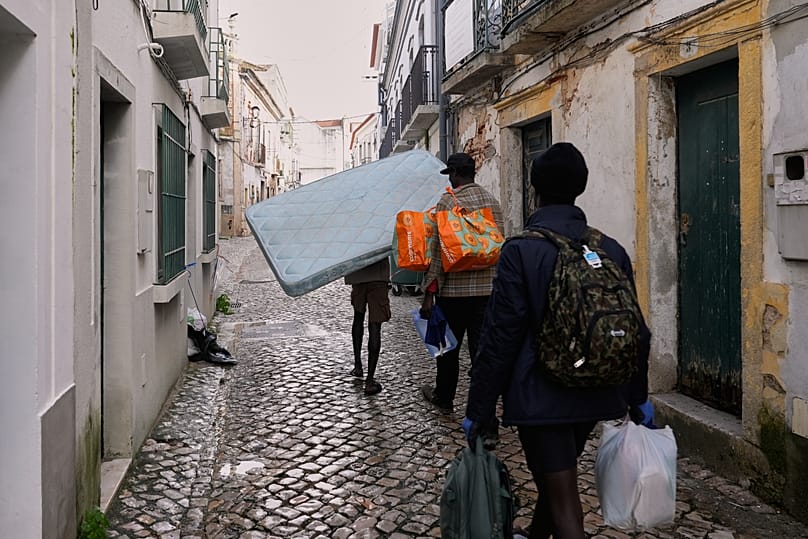
Portugal has been hit by a succession of named storms that have caused disastrous flooding as well as electricity, water and communications cuts. There have been more than a dozen deaths directly or indirectly linked to the heavy rain and strong winds.
"Cities need to adapt," says Partidário, who is also a consultant in Strategic Environmental Assessment. The storms devastated dozens of regions and exposed weaknesses in land-use planning. "There is a complete disregard for the permeability of the territory," she explains. Summed up simply: "There's no room for water."
"It's like turning on a tap: it's the difference between water flowing into a sieve or into a glass. In the colander, it seeps through; in the glass, it reaches a point where it fills up and overflows," she tells Euronews.
While Partidário acknowledges that the storms were a force of nature, she maintains that preventative measures could have been taken to reduce the damage they caused.
"The construction of dozens of car parks, roundabouts, shopping centres... this agglomeration of things only contributes to soil sealing," she says.
Excessive construction without letting the soil breathe, building in areas at risk, as well as the absence of retention basins or drainage plans, are some of the mistakes that have been made in land and urban management that have not now helped to contain the water and worsen the disaster, according to Partidário.
"I've seen road collapses where, looking at what happened, we clearly realise that there was no proper assessment of the planning there," she says.
Climate change must be taken into account in urban planning
The professor has long argued that we need to go "back to basics", in other words "bring nature into the cities. Planting more trees and green spaces is extremely important," she says.
As well as improving air quality and having a cooling effect, trees also help the soil and roots absorb water.
It's not just rampant construction that's an issue, but also the type of construction and the materials used.
"Precarious construction is proliferating throughout the cities," says Partidário, who criticises an unaffordable property market that leads to construction that lacks quality and planning, with quick and fragile solutions such as "self-building".
"We've now seen lots of industrial estates with zinc roofs that haven't held up, of course," she recalls.
The failure to maintain and monitor infrastructure capacity is another factor. The professor gives the example of REN's electricity pylons, which were prepared for winds of up to 150 km/h, but storm Kristin reached gusts of over 180 km/h, disabling 774 kilometres of very high voltage lines and knocking down 61 pylons. "Perhaps we also failed to assess the risks in the light of climate change," she says.
Maintenance of ageing infrastructure falls short
At the end of the day on Wednesday 11 February, a dyke on the River Mondego, already at its limit, burst in Coimbra as torrential rain fell.
Some raised suspicions about the lack of maintenance on the hydraulic structure, pointing once again to a lack of attention to prevention.
Jorge Avelar Froes, an agronomist who was part of the Mondego dyke project team, told Público that the structure is still robust, but that years of "abandonment and neglect" may have caused damage.
The dyke system was created to prevent the Mondego from flooding the agricultural fields on its banks, which used to happen frequently. In 2019, there had already been a dyke collapse in Montemor-o-Velho that led to repairs, followed by another collapse in 2020.
For Avelar Froes, a full structural assessment is now needed to ensure that the system, which was built between the late 1970s and the mid-1980s, is still fit for purpose.
A lack of monitoring
In 2007, Portugal adopted a European Parliament directive which resulted in the Strategic Environmental Assessment (SEA), an instrument used to assess the possible environmental effects of any public plan or programme, including town and country planning or land use.
Partidário, an SEA consultant for planning and land use in municipalities such as Cascais, Montijo, Alcochete, Palmela and Lourinhã, recalls that there have been many studies done in this area. "Ten or 15 years ago there were several projects. Plans and measures were introduced in cities to adjust them to heat waves or concentrated rainfall."
The problem, she says, is that many "don't make it off the drawing board" or, when they do, "there's no monitoring" of what has been done.
Climate risks are considered in city planning, but Partidário believes that "they are still relegated to the background" by many municipalities, which sometimes try to circumvent or break the law. "Just look at the massive construction on top of the water line," she says.
Lisbon's General Drainage Plan, which began in 2016, is an example of a project that aims to tackle climate change, particularly the heavy rainfall of recent years, which has flooded the city. However, "it's not a preventative measure, because it only happened after many floods in Lisbon," says the expert.
The project, valued at €250 million, includes several retention basins and two tunnels that will connect Monsanto to Santa Apolónia and Chelas to Beato. These large structures will collect water from two high points in the city.
The great need for funding for this type of project is one of the reasons why they are not being implemented more often, says Partidário. "A retention basin is expensive and the results of these measures are not immediate; we will only see them many years later," she explains.
"But I'd like someone one day to do the maths on the damage, what has been lost in recent years and what we have to build again, compared to what would be spent on these preventative measures."
Setúbal's retention basin: A disaster planning success story
Designed in 2018, the Várzea Urban Park Retention Basin was put to the test this year and was an example of a measure that has protected the city of Setúbal.
"The preventive actions to clean out blocked drains were important, but given the storms that have affected us and the huge amount of rain, it was above all the Várzea water retention basin that protected the city centre and prevented flooding," said Paulo Maia, the councillor responsible for Municipal Civil Protection at Setúbal City Council, in a statement shared by the municipality.
The project was developed in an area of former recreational farms, which have since been abandoned, where retention basins, similar to lakes, were built to reduce the consequences of flooding.
For Partidário, this is one of the solutions that cities need. "It's a natural solution at ground level," she says.
Under various European Union funding programmes, such as the Operational Programme for Sustainability and Efficiency in the Use of Resources (POSEUR), PORTUGAL 2020 and the European Regional Development Fund (ERDF), two geodesic boreholes were also created to guarantee the water supply for the entire park and around 1,290 trees were planted to help prevent soil erosion.
The footpaths were built in porous concrete, a variant that allows water to infiltrate quickly and air to circulate.
A week ago, with the heavy rains from Storm Leonardo, the basin had only utilised 20 per cent of its capacity. "The Ribeira do Livramento retention basin, combined with other similar smaller structures, which add up to a total capacity of around 300,000 cubic metres of water, continues to fulfil the function of preventing flooding in the city," reads a statement from Setúbal City Council.
The Várzea Urban Park shows that it is possible to apply environmental measures to protect cities and their inhabitants faced with extreme weather events.
Partidário points out that the involvement of communities is essential, so that they can understand, decide and feel empowered over their own land.
In the future, it will be essential to rethink city planning, putting environmental protection and people's well-being at the centre of all decisions.