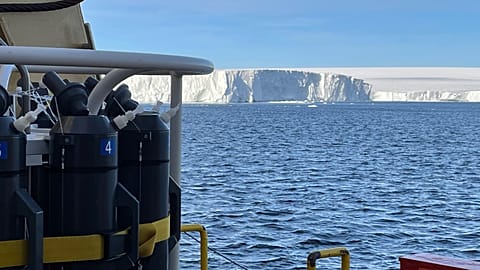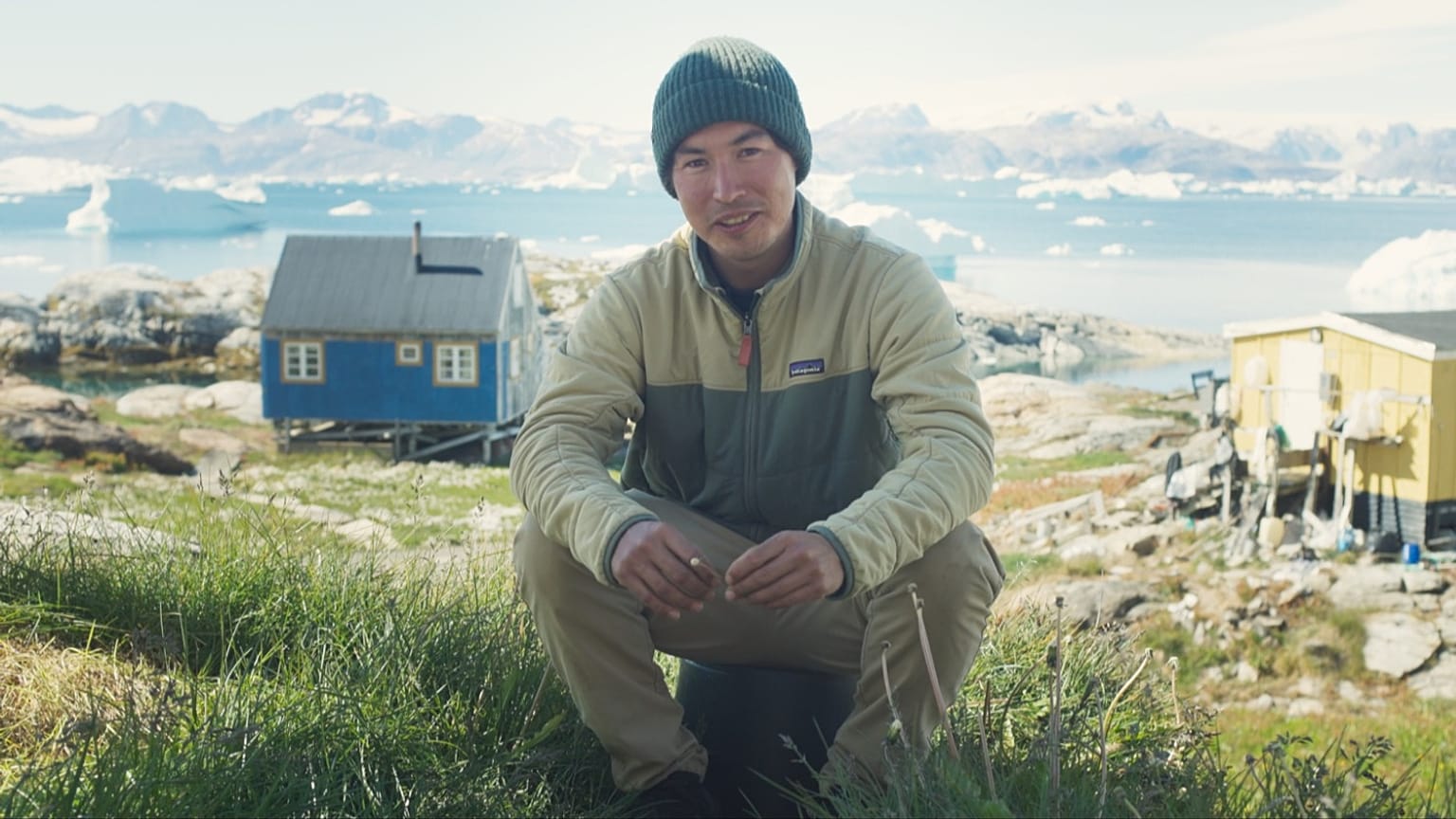













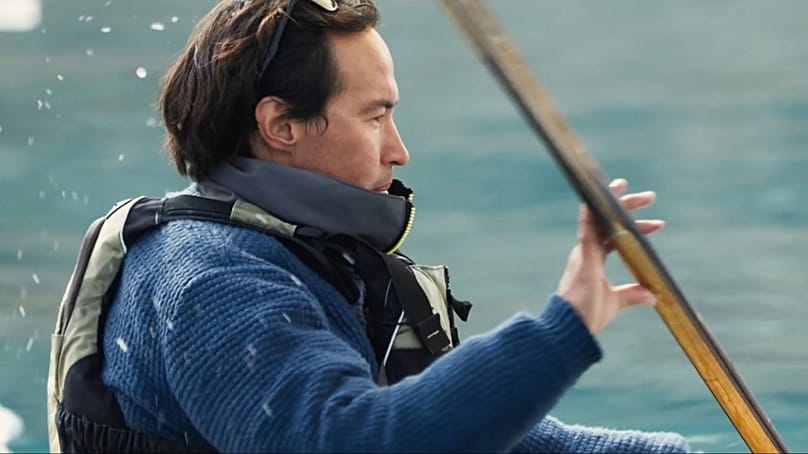
One scientist is on a mission to reveal the far-reaching spread of microplastics after kayaking around a remote glacier in Greenland.
Armed with just a kayak and a self-built microplastic filter, Kristian Louis Jensen has spent the last decade paddling through the most “pristine places” on our planet.
 ADVERTISEMENT
ADVERTISEMENT
ADVERTISEMENT
During his Master’s degree in environmental protection, the Inuit scientist developed ‘the Plastsaq’. This citizen-science tool allows kayakers and local communities to collect surface water samples containing debris from items such as abandoned bottles and packaging.
“But that work led me to ask a deeper question about the invisible footprint of humanity,” he tells Euronews Green. It is this that inspired his most recent trip, over to a remote glacier in eastern Greenland.
‘Fossil fuels in motion’
Jensen kayaked to one of the most “isolated corners of the Arctic”, located hundreds of kilometres from any kind of road. He expected to find fibres and general plastic debris - which he did - but Jensen also stumbled across traces of car tire particles in his samples.
“Finding them on a pristine glacier in eastern Greenland was a shock because it validated a terrifying thesis: these particles are no longer just an urban issue,” Jensen says.
“They have become dust, airborne, and have travelled thousands of kilometres to the Arctic. This is ‘fossil fuels in motion’. It tells us that the Arctic is a ‘sink’ for the world’s pollution.”
With more than five billion tyres on the road globally, each loses around 10-30 per cent of its mass during its lifespan.
“That mass doesn’t disappear,” Jensen says. “It breaks down into toxic dust that settles at the very start of our food chain.”
The impact of Greenland’s microplastic pollution
Jensen’s work has highlighted the far-reaching extent of microplastics, which are starting to cause a trifecta of problems for local communities in Greenland.
“Ecologically, we’re seeing early evidence that tire toxicity is high for Arctic species,” he explains. “For instance, chemicals like 6PPD are lethal to Coho salmon.”
Car tire pollution can also cause deformities in Atlantic cod eggs, threatening the very foundation of the nation’s fishing industry.
For Indigenous communities, Greenland’s polluted waters have become a matter of environmental justice that poses a serious health risk.
In urban areas, chronic exposure to these kinds of particles has already been linked to a slew of health issues such as worsening asthma and cardiac problems.
“In the Arctic, that threat is now settling on our food sources, turning a pristine environment into a repository for global waste,” Jensen adds. “The higher latitudes and the people living in them are disproportionately being adversely affected by global pollution and climate change.”
‘A critical blind spot’: What pollution regulations miss
Scientists have long warned of Greenland’s growing microplastic issue - with multiple studies finding higher concentrations of tiny particles in sea ice in these remote areas compared to infamous ocean garbage patches.
But Jensen argues that there is a “critical blind spot” in climate policy that aims to tackle this pervasive problem.
“Currently, we regulate what comes out of the tailpipe, but we ignore what wears off the tire,” he warns.
“This is dangerous, given that tire particles are now recognised as a leading source of microplastics entering ecosystems globally.”
Are fossil fuels to blame for Greenland’s microplastic pollution?
Momentum to transition away from fossil fuels rapidly gained traction at last year’s COP30 summit in Belém - with more than 90 countries including Germany, the Netherlands and the UK backing the idea of a roadmap.
However, following pushback from petrostates, all mentions of a phaseout were scrubbed from the final deal. Hope for a fossil fuel-free future now lies outside of the UN’s remit. In April, more than 85 countries will meet at Colombia’s Global Fossil Fuel Phaseout conference, which will be co-hosted with the Netherlands.
However, Jensen says the transition away from fossil fuels mainly focuses on ‘black carbon’. These are emissions that are generated from burning fuel.
“We need to broaden this to include ‘carbon black’, the fossil fuel-derived filler that makes up a massive portion of every tire,” he explains.
“We cannot claim to be tackling the fossil fuel crisis if we ignore the solid petrochemicals rolling beneath our vehicles.”
There is also growing support for more transparency among manufacturers. Jensen is therefore calling for a “collaborative ecosystem” where ecotoxicologists have full insight into the chemical cocktails that make up modern tires.
The Black Carbon coalition
Taking down fossil fuel giants and huge corporations is no easy task - one that Jensen can’t manage on his own. It’s why he’s launching the Black Carbon scientific coalition at the Arctic Frontiers conference this month.
“The core of this campaign is the formation of a cross-sector science coalition to monitor black carbon and carbon black in the Arctic, and its effect on the health of the Arctic,” Jensen says.
The coalition will bring together toxicologists, Indigenous leaders and policymakers to investigate the specific impacts of tire particles on Arctic health. It hopes to take this evidence to the EU Parliament, and to COP31 later this year.
“Our ultimate goal is to secure national and international commitments to reduce and mitigate black carbon and tire particle emissions,” Jensen says.
Jensen’s work will soon be shown on the big screen, in a documentary with award-winning German filmmaker Steffen Krones. Black Carbon aims to expose the devastating impacts of microplastics on the Arctic and communities living in harmony with these fragile ecosystems.
The film is currently in production following Jensen, his investigation and his advocacy work.
You can learn more about the coalition and sign up for updates on the film here.