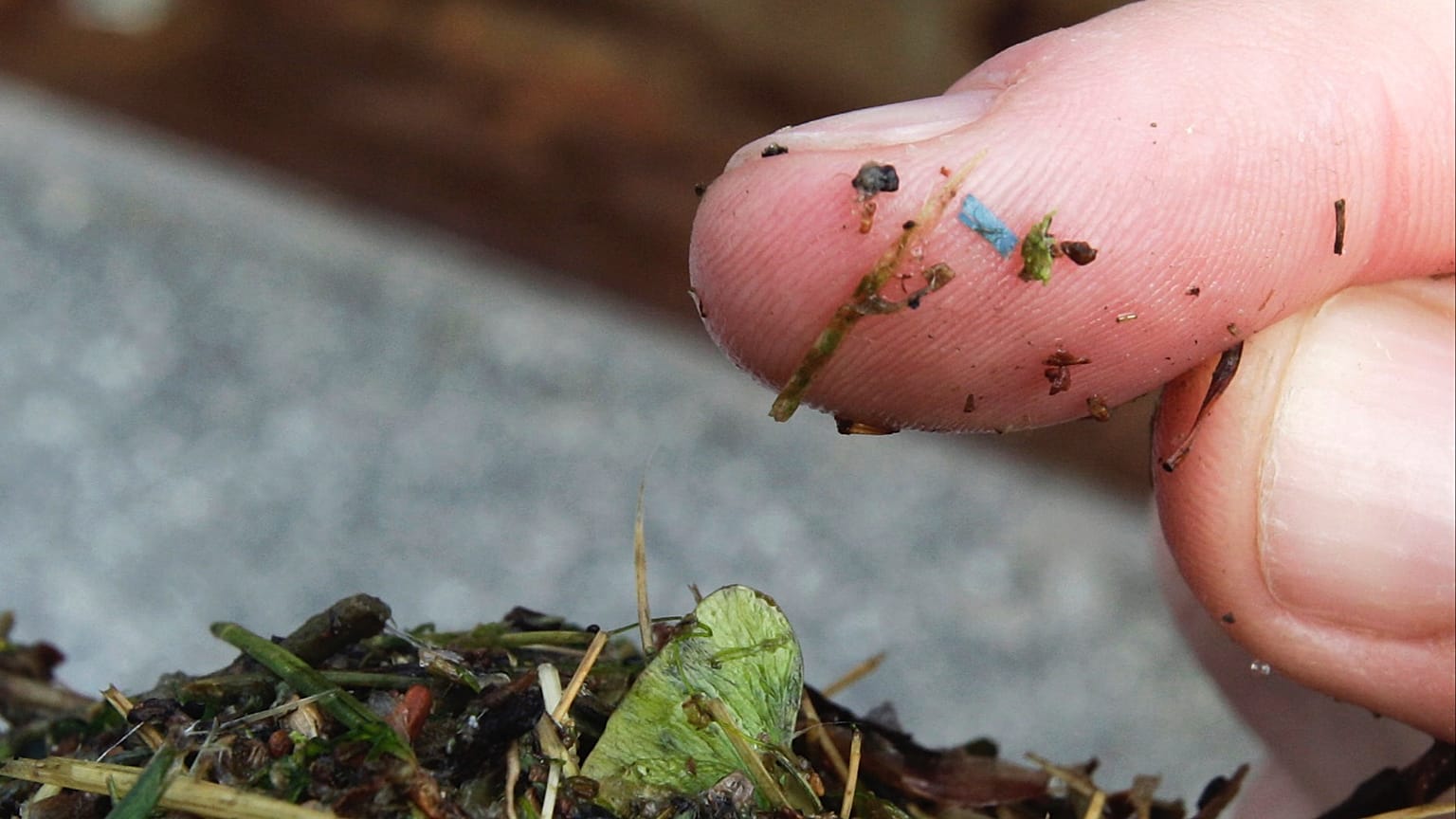













Researchers have also found “enormous” amounts of microplastics floating through urban air – far exceeding previous estimates.
Microplastics are infiltrating green spaces, often considered a respite from polluted cities, as experts sound the alarm on “potential health risks”.
 ADVERTISEMENT
ADVERTISEMENT
ADVERTISEMENT
New research from the University of Leeds warns that tiny plastic fragments have been found in greater quantities in rural environments than urban locations. Scientists say trees and other vegetation are capturing microplastic particles from the atmosphere and depositing them in woodlands.
Published in the journal Environmental Pollution, the three-month study detected up to 500 microscopic particles of plastic per square meter per day in an area of woodland – almost twice as many as collected in a major city centre.
Why woodlands are becoming riddled with microplastics
Researchers analysed microplastics from three locations in Oxfordshire, England. This includes a rural woodland, a suburban town, and the city of Oxford.
The team took samples every two to three days from May to July (2023) using a high-resolution spectroscope, which measures how infrared materials absorb light in a sample. This allowed them to identify exactly what the materials are made of.
Over the three months, 21 different types of plastics across four size ranges were discovered. Some of these were only 25-50 micrometres (one-thousandth of a millimetre) in size - equivalent to large bacteria and smaller than a pollen or sand grain.
In fact, up to 99 per cent of the particles were so small they were invisible to the human eye.
Wytham Woods recorded the highest overall number of particles, while Oxford City had the largest range of different particle types.
In the rural woods, most of the particles found were polyethylene terephthalate. Commonly known as PET, this kind of plastic is often used in clothing and kitchen items like food containers.
In the suburban town, polyethylene, which is used to make plastic carrier bags, was most commonly found. Most particles in Oxford City were of ethylene vinyl alcohol, a polymer widely used in multilayer food packaging, automotive fuel system components and industrial films.
“Our research reveals that rural environments are not necessarily safe from airborne microplastics and highlights how natural features like trees influence pollution patterns,” says Gbotemi Adediran, a lecturer in earth surface geochemistry and the study’s lead scientist.
“The widespread presence of smaller microplastics raises concerns about potential health risks from inhalation, regardless of whether people live in a city or a rural village.”
How do microplastics travel?
Studies have previously shown that microplastics can remain suspended in the air for weeks, with the smallest particles able to travel thousands of kilometres.
Weather conditions strongly influence this movement, with researchers finding that more particles were deposited during windy weather. Rainfall reduced the number of particles, but those that were collected were larger in size.
A new study published in Science Advances found that road dust can also play a major role in moving these particles through the atmosphere, after scientists found “enormous” quantities of microplastics and nanoplastics in the air.
For the first time, scientists were able to detect nanoplastics as small as 200 nanometres in the air using a new technique designed to quantify plastic particles in the atmosphere.
The method also tracks how plastics move between different environmental pathways, including airborne particles, dustfall, rain, snow, and dust resuspension.
Researchers from the Institute of Earth Environment of the Chinese Academy of Sciences (IEECAS) applied this technique in two Chinese cities and found plastic concentrations were much higher than levels previously reported. It highlights how ubiquitous microplastics have become, even infiltrating the air around us.