












Without “major intervention” the UK risks increasing geopolitical instability, economic insecurity, conflict and migration.
The UK has been warned that the collapse of global ecosystems is a direct threat to national security and prosperity.
 ADVERTISEMENT
ADVERTISEMENT
ADVERTISEMENT
A new report from the UK’s Department for Environment, Food and Rural Affairs (DEFRA) - which is understood to have involved MI5 and MI6 - found that the world is already experiencing the impacts of biodiversity loss. This includes crop failures, intensified natural disasters and infectious disease outbreaks.
However, without “major intervention”, the report warns that these threats will increase with environmental degradation - and they risk bleeding into geopolitical instability, economic insecurity, conflict, migration and increased competition for resources.
Why the UK’s security is at risk
Much of the 14-page report highlights the UK’s reliance on global markets for its food and fertiliser. The nation currently imports around 40 per cent of its food from overseas, with a quarter coming from Europe.
It is “heavily reliant” on imports for fresh fruit, vegetables and sugar, while animal farming also relies on soy imports from South America. The UK is not self-sufficient in fertiliser either, which helps boost the yield and nutritional value of crops that it does grow at home.
“Biodiversity loss, alongside climate change, is amongst the biggest medium to long term threat to domestic food production - through depleted soils, loss of pollinators, drought and flood conditions,” the report states.
“Ecosystem collapse would place the UK’s agriculture system under great stress, leaving it struggling to pivot to the new approaches and technologies that would be required to maintain food supply.”
It adds that significant disruption to international markets caused by ecosystem degradation or collapse will put UK food security at risk.
The report states that serious and organised crime will “look to exploit and gain control” over scarce resources, which risks pushing more people into poverty. As more people cross the threshold into food insecurity, migration will rise.
According to a landmark 2021 report by the Council on Strategic Risks, even a one per cent increase in food insecurity in a population compels 1.9 per cent more people to migrate.
Political polarisation and instability will grow in food and water-insecure areas as populations become more vulnerable to natural disasters. Experts say this will trigger an increase in disinformation.
“Conflict and military escalation will become more likely, both within and between states, as groups compete for arable land, food and water resources,” the report adds. “Existing conflicts will be exacerbated.”
The domino effect of all of these risks will provide non-state actors, including terrorist groups, with more opportunities resulting from political instability. “They may gain control over scarce resources,” the report warns.
Overall, economic insecurity will become more likely, as nature is a finite asset which underpins the global economy. According to the UK’s HM Treasury, it would take the resources of 1.6 Earths to sustain the world’s current levels of consumption.
A ‘wake-up call’ for the UK government
Fyfe Strachan of Earthsight, a non-profit dedicated to exposing environmental crime, says the report must act as a “wake-up call”.
“The UK must act urgently to strengthen and implement the Environment Act in order to protect the world’s remaining forests by addressing the part UK consumption plays in their destruction,” she adds.
The Environment Act 2021 is a landmark legislation that aims to clean up the country’s air, restore natural habitats, increase biodiversity, reduce waste and “make better use” of the country’s resources. It came into force during the Johnson government and legally binds the UK to halt the decline of species by 2030.
However, the UK banking sector has pumped more than £1 billion (around €1.14 billion) into “forest-risk” companies globally since COP26. Experts at Global Witness say this undermines the country’s commitments on deforestation.
Recent analysis from the Energy & Climate Intelligence Unit (ECIU) found that the UK is also falling behind its tree planting targets, warning that the nation could miss the “critical window” for woodland creation needed to meet its climate and nature targets.
A DEFRA spokesperson told Euronews Green that tree-planting is now at its highest levels in 20 years, but did not directly respond to claims it is falling behind target.
“Global forests are being driven to collapse by industrial food production, which the UK government report warns is risking our national security,” says Gemma Hoskins of climate group Mighty Earth.
“The delays in a robust legislative mechanism are now unacceptable, given what the report says is coming down the track. There has to be a clear and urgent plan to keep forests standing and end deforestation consumption in the UK.”
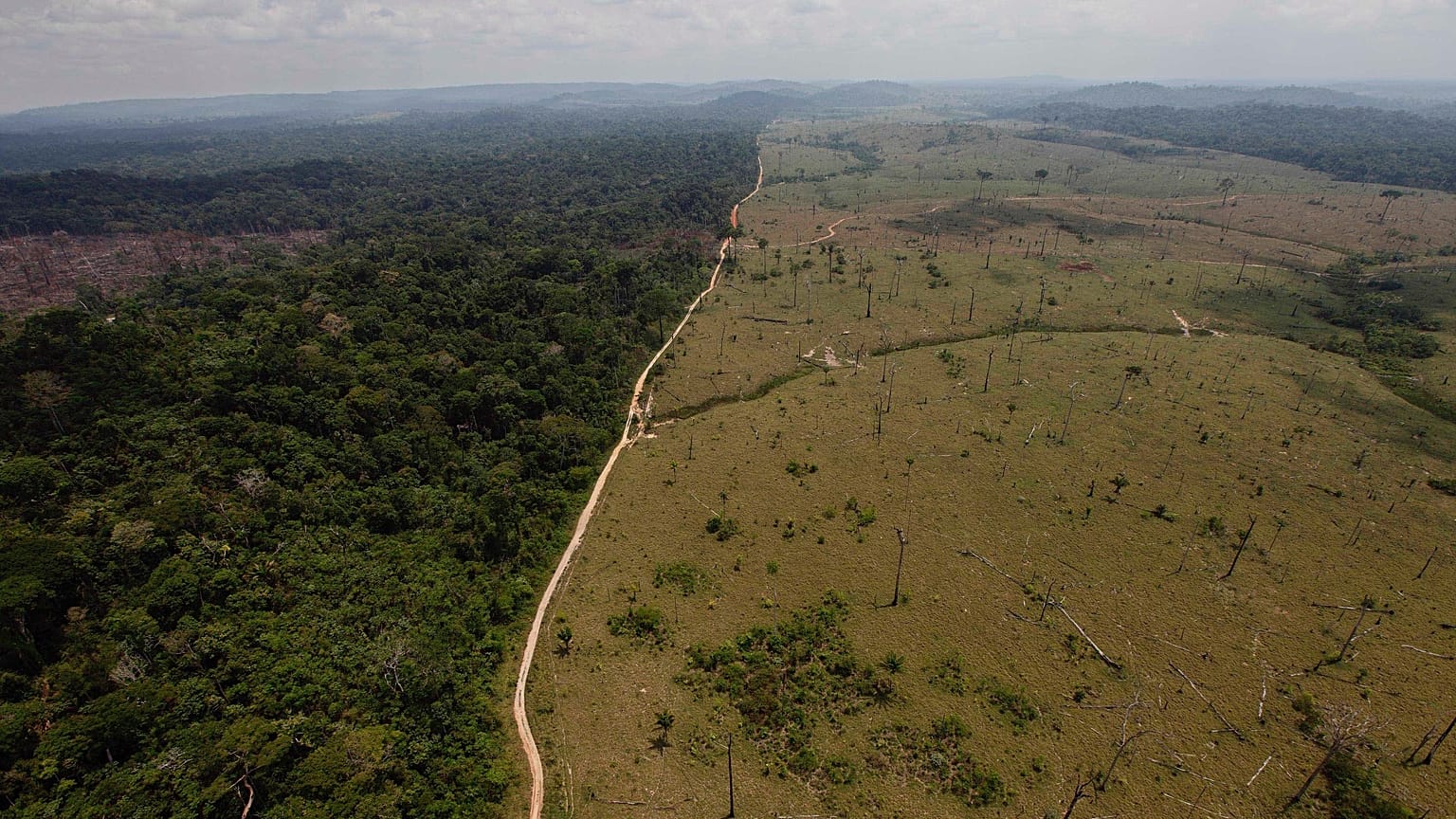
The NGO Forest Coalition is calling on the UK government to implement Schedule 17 of the Environment Act, which will ban the use of commodities grown on illegally deforested land, and to go further by ending imports of commodities grown on all deforested land.
How does Europe compare?
No country in the world is immune to the ripples of biodiversity loss, including Europe, which is the world’s fastest-warming continent.
Although it is one of the regions with the least food insecurity in the world, climate change has already increased the risk for around 12 million Europeans.
The European Parliament says one-third of the EU is also experiencing water stress all year round. Sufficient levels of water quantity and quality are key to food security, as the agricultural sector accounts for around 30 per cent of annual water abstraction.
Like the UK, Europe is heavily reliant on imports for food such as maize, rice, wheat, cocoa, coffee and soy. Many of these foods come from climate-vulnerable countries that have limited resources to adapt to human-fuelled environmental degradation.
EU consumption currently accounts for around 10 per cent of global deforestation, which is mostly driven by palm oil and soya (which is mainly used as animal feed).