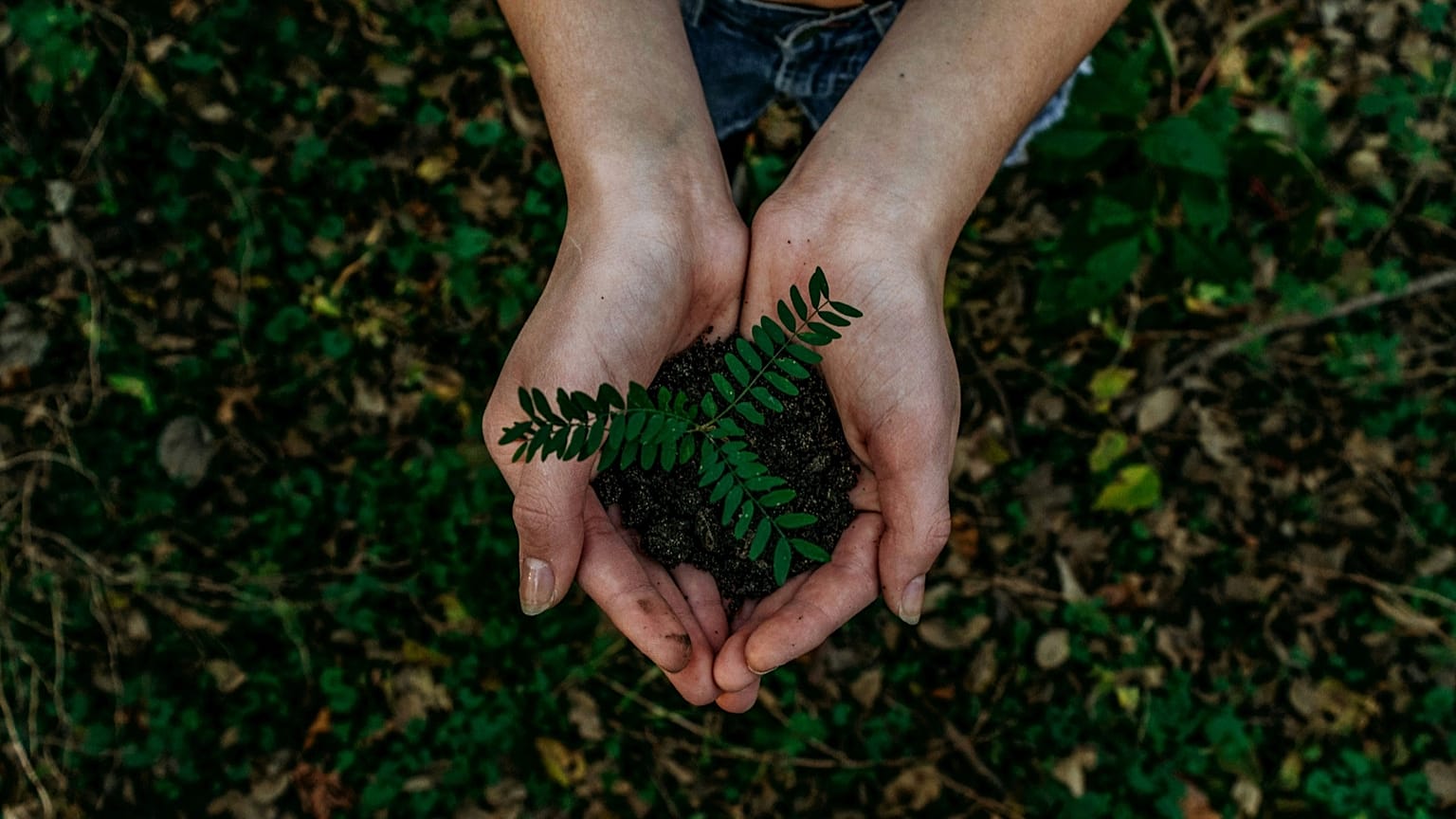













The UK and EU both have ambitious targets for planting new trees to help meet climate targets. But how much progress has actually been made?
Planting new trees now could be the key to offsetting heat-trapping gases from the atmosphere – and reducing flood risks from climate-fuelled extreme weather.
 ADVERTISEMENT
ADVERTISEMENT
ADVERTISEMENT
It’s made the creation of woodland a key focus for many governments around the world, including the UK. Ahead of the COP30 summit last year, the country launched a £1 billion (around €1.5 billion) investment in tree planting.
The EU has also committed to substantially increasing tree coverage, pledging to plant an additional three billion trees by 2030 as part of its Biodiversity and Forest Strategies.
But, how much progress has actually been made, and why are experts now warning that time is running out?
UK risks missing tree planting targets
New analysis from the Energy & Climate Intelligence Unit (ECIU) found that the UK is falling behind its tree planting targets, warning that the nation could miss the “critical window” for woodland creation needed to meet its climate and nature targets.
The report found that more than 70 per cent of carbon removal from new trees up to 2050 will come from those that have been planted within the next five years. This is due to the time lag between when a tree is planted and when it has reached its peak carbon removal potential.
However, if current planting rates are maintained, the total area of missed planting will be an area equivalent to three times the size of Greater London, with a third less carbon sequestered than on the Climate Change Committee’s (CCC) Balanced Pathway. This is equivalent to all residual industrial emissions in 2050.
The CCC Balanced Pathway is the UK’s blueprint for reaching net-zero emissions by 2050, which calls for an 87 per cent emissions cut by 2040 as well as boosted efforts in renewable energy, energy efficiency and carbon capture.
Why are trees so important to climate targets?
Tom Cantillon, a senior analyst at ECIU, argues that trees are “critical” for the UK to reach net zero (where emissions released into the atmosphere are balanced by the amount removed) and bring the climate “back into balance.”
“After years of delay and missed targets, trees need to be planted now if they are to grow to maturity in time to absorb carbon emissions to help hit targets and slow the flow of extreme rainfall that is getting worse in the UK because of climate change,” he says.
For every 1℃ rise in air temperature, the atmosphere can hold around seven per cent more moisture, which can lead to more intense and heavy rainfall.
Experts predict that 1.7 million more homes will be at risk of flooding by 2050 as a result of warming, but add that planting new trees can provide over £400 million (€461 million) per year in flood protection benefits.
This is because forests effectively act like giant sponges that slow down water flow and reduce runoff volume, with trees able to evaporate more water than any other type of vegetation.
“Tree planting can help improve water quality and provide shade for parks and streets during heatwaves too,” Kathryn Brown of The Wildlife Trusts says.
“These nature-based solutions also provide much-needed habitats for wildlife, helping to give species like dormice, butterflies, and lesser spotted woodpeckers a home.”
Brown adds that the report highlights the need for “urgent investment” in natural solutions, arguing: “The [UK] government must remove barriers and speed up the process of approvals for tree planting if we are to tackle climate challenges head on, boost beleaguered wildlife, and safeguard homes, businesses and livelihoods in the process.”
A spokesperson for the UK’s Department for Environment, Food and Rural Affairs (DEFRA) tells Euronews Green that it planted 10.4 million trees in 2024-2025 and has already announced two of three new national forests.
“Trees are vital for people and the planet, and tree planting is now at its highest level in 20 years,” they added – but did not respond to the ECIU’s claims that the UK is falling behind on its target.
The EU’s three billion trees initiative
The EU launched its three billion trees initiative back in 2010, a milestone that could remove a staggering 15 million tonnes of CO2 from the air per year by 2050.
“To achieve this ambitious target, we need everybody on board, to plant trees and make sure that they grow over time,” the European Commission states on its website.
“Tree planting requires everyone involved to work together and the success of the pledge depends heavily on grassroots initiatives. Individuals, landowners, nurseries, associations, companies, and public bodies, such as cities and regions are all encouraged to participate in the initiative.”
However, according to an online tool set up by the Commission, less than 38 million trees have been planted in the EU so far. This has largely been spearheaded by Belgium, which has planted 7,661,693 new trees, followed by Ireland (5,300,699) and Denmark (4,387,605).
At the bottom of the list is Cyprus, which has only planted 145 trees so far. This is followed by Sweden (250) and Hungary (1,964).
It means that the EU has only completed 1.26 per cent of its goal five years into the initiative. Unless planting rates increase dramatically, achieving three billion new trees by 2030 will be unlikely.
A Commission official tells Euronews Green that its three billion trees initiative is a “voluntary commitment” which aims to mobilise organisations and individuals active in tree planting to report their work.
“The Commission is aware that the current number of reported trees is falling short of the target,” they add. “For this reason, we’re supporting outreach activities, such as workshops and webinars, which raise awareness about the initiative.”
In 2027, the Commission is planning to launch an award that will recognise “innovative and impactful tree-planting”, a move that will hopefully make large gains towards its ambitious goal.