

















Police and a protest group calling itself the Resistance Collective confirmed the early-morning incident at the airfield where Merz, a hobby pilot, parks his plane.
German police arrested three climate activists on Thursday on suspicion of breaking into an airfield to splash pink paint on the private plane of Chancellor Friedrich Merz.
 ADVERTISEMENT
ADVERTISEMENT
ADVERTISEMENT
Police and a protest group calling itself the Resistance Collective confirmed the early-morning incident at the airfield where Merz, a hobby pilot, parks his plane.
"The plan was to paint the aircraft pink to effectively take it out of service," the protest group said in a statement sent to the AFP news agency.
The activists carried a banner that read "Mobility for all, not just the super-rich!" and had also planned to leave behind a bicycle as a more climate-friendly means of transport for Merz, the group said.
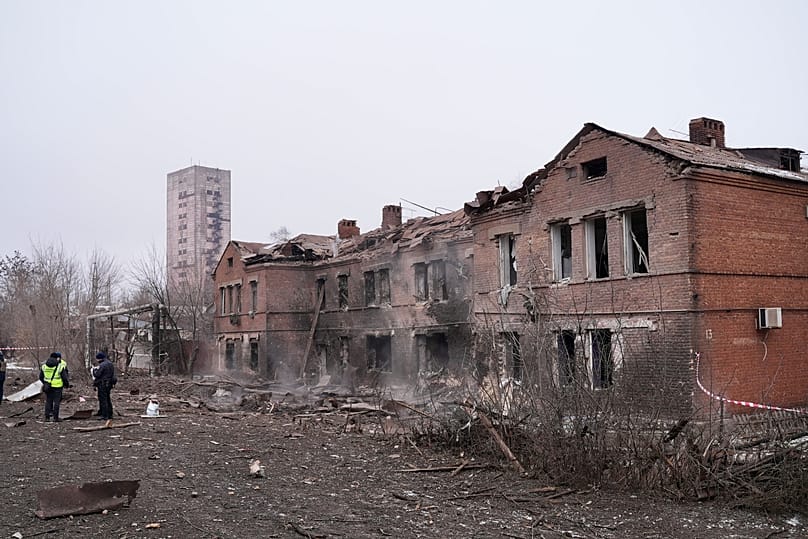
Police said they foiled the plan after pulling over one of the activists near the Arnsberg-Menden Airport in Merz's native Sauerland region, about 40 kilometres east of the city of Dortmund.
The driver said he was looking for the local airfield, and police records showed the person had previously been "involved in politically motivated crime", according to a police statement.
Three other activists were then arrested for trespassing inside the airport's restricted area after police launched a subsequent search.
Police confirmed that Merz's personal aircraft was parked at the airport.
"We are acting in self-defence," one of the activists, Anja Windl, said in the group's statement.
"The climate catastrophe is escalating - hunger, heat and natural disasters are claiming lives - and yet Friedrich Merz is flying around in his own plane," Windl said.
"The chancellor, of all people, should be setting an example for the rest of us."
The three activists were caught on the tarmac of the small airport and are being held in police custody, according to the activists group.
Merz is the focus of international attention
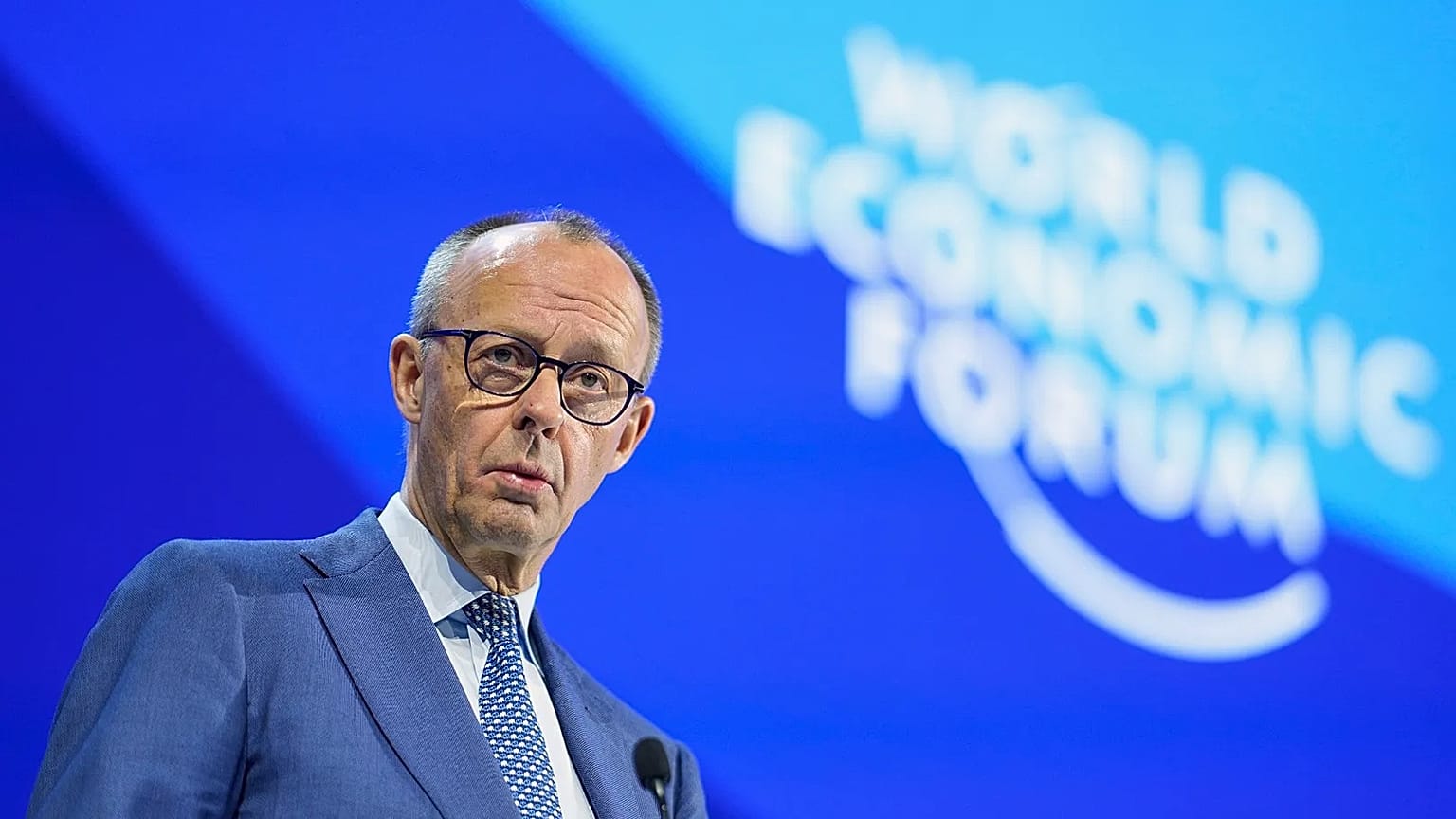
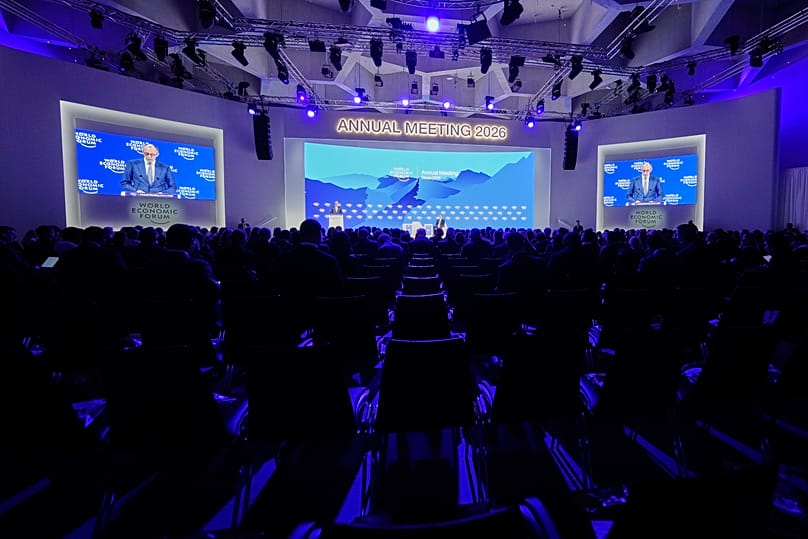
The incident comes at a time when Merz is attracting international attention, particularly after giving his keynote speech on Thursday morning at the World Economic Forum in Davos.
Merz warned that the international order is "unravelling at a breathtaking pace" and that "a world where only power counts is a dangerous place".
He pointed to Russia's war in Ukraine, a rising China and a United States that is "radically reshaping its foreign and security policy."
"A world where only power counts is a dangerous place," he said. "First for small states and for the middle powers, ultimately for the great ones."
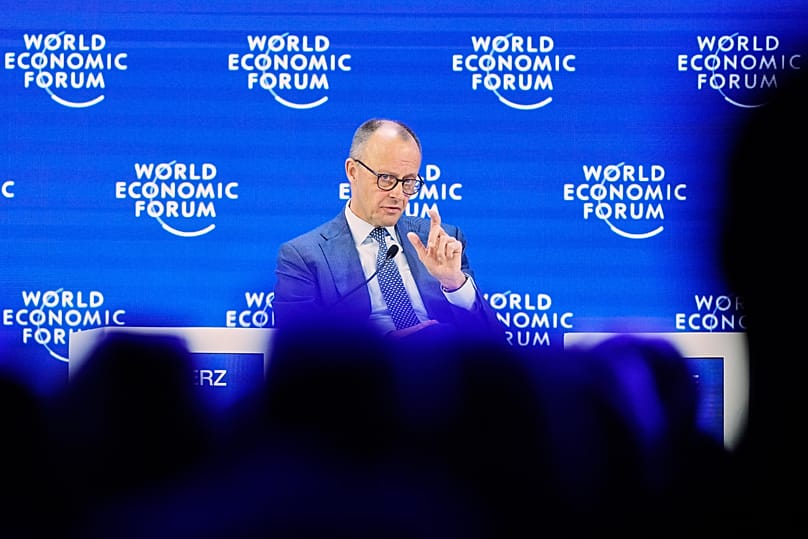
The conservative leader of the top EU economy said Germany went down this road "to its bitter end" during the 20th century.
"It pulled the world into a black abyss," he said.
"So let us bear in mind: our greatest strength remains the ability to build partnerships and alliances among equals based on mutual trust and respect."
Merz called Russia's invasion of Ukraine "the most drastic expression" so far of a global "new era". He added that China, "with strategic foresight, has worked its way into the ranks of the great powers".
"The United States' global pole position is being challenged," Merz said, with Washington responding by "radically reshaping its foreign and security policy".
"We have entered a time of great power politics. The international order of the past three decades anchored in international law has always been imperfect. Today, its very foundations have been shaken."
He said Europe's power rested on three pillars.
"First we must invest massively in our ability to defend ourselves, and we are doing this," he said.
"Second, we must rapidly make our economies competitive, and we are doing this. Third, we must stand closer together among Europeans and among like-minded partners. We are doing this."