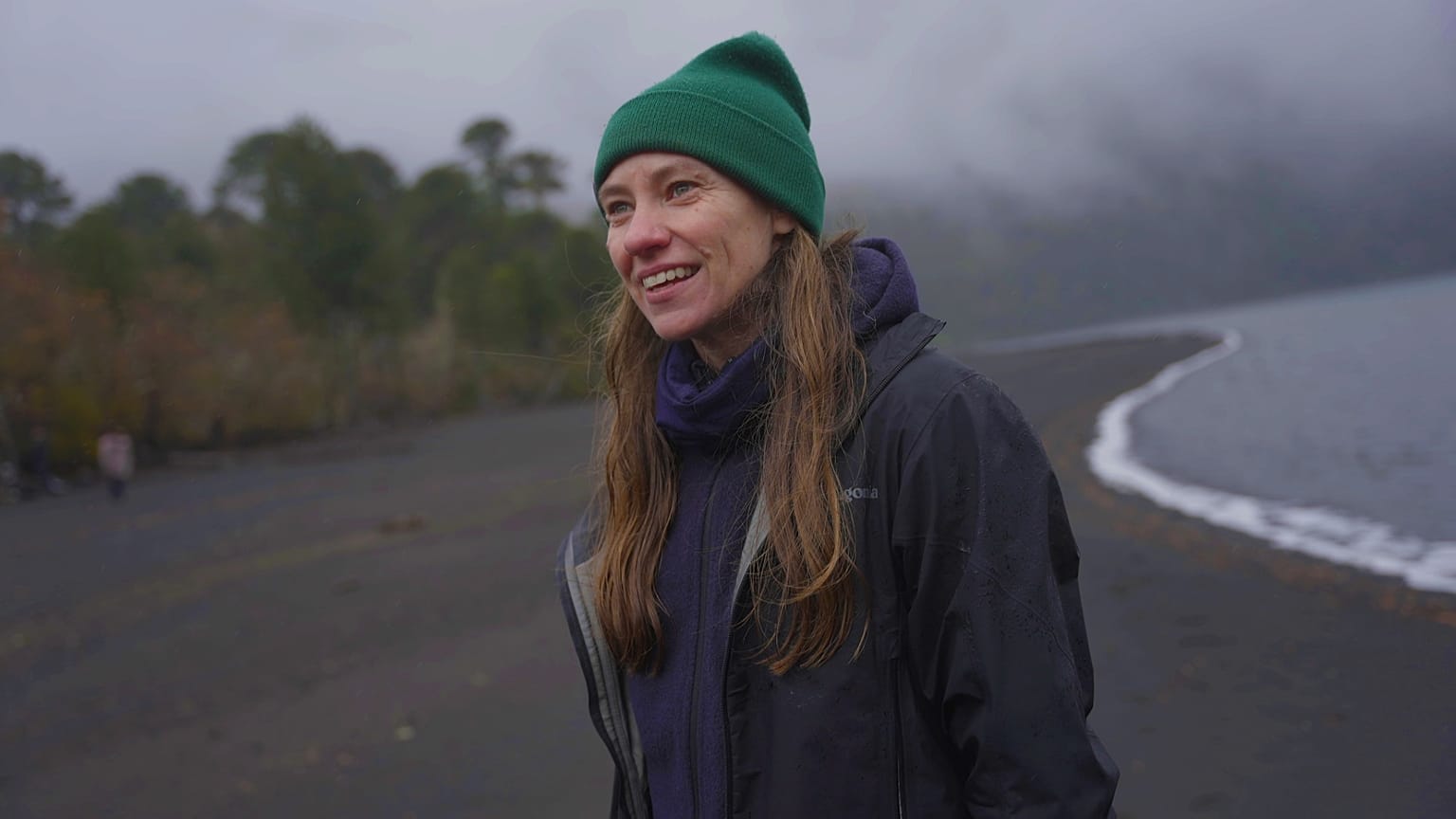













Dr Toby Kiers has won the 2026 Tyler Prize award after shedding light on “overlooked” fungi that can offset huge amounts of CO2.
An “invisible” key to tackling the climate crisis has taken centre stage after evolutionary biologist Dr Toby Kiers was named the winner of the 2026 Tyler Prize for Environmental Achievement.
 ADVERTISEMENT
ADVERTISEMENT
ADVERTISEMENT
The Laureate, which is often touted as the ‘Nobel Prize’ for the climate, recognises “outstanding” scientific work in environmental science, health and energy that benefits humanity. It comes with a $250,000 (around €215,000) cash prize.
Dr Kiers, a professor at Vrije University in Amsterdam, scooped the prestigious gong after shedding light on hidden fungal networks that suck-out carbon from the atmosphere.
How can fungi help save the world?
Mycorrhizal fungi, found in soil, act as one of Earth’s circulatory systems – forming a symbiotic partnership with plant roots to create a vast underground network.
“These networks move massive amounts of nutrients and carbon,” Dr Kiers explains. “They are responsible for drawing down 13 billion tons of CO2 into soil systems every year – that’s a third of emissions from fossil fuels.”
These fungi also provide nutrients to plants, increase heavy metal tolerance, increase water uptake and make “bigger, sweeter” flowers that support pollinator populations.
“Fungal networks served as plant root systems for tens of millions of years until plants evolved their own roots,” Dr Kiers adds.
However, the scientist warns that the planet has long “neglected” to map, monitor or protect fungal systems – which are now under threat from deforestation, erosion and agricultural practices.
Little attention has been paid to this degradation, with the IUCN’s conservation listings only including the “tiniest fraction” of fungi.
“This is a problem,” Dr Kiers warns. “The destruction of underground networks increases global warming, accelerates biodiversity loss, and disrupts nutrient cycles. Despite their critical importance, less than 0.02 per cent of Earth’s terrestrial surface has been mapped for mycorrhizal fungi.
“To incorporate fungi into climate strategies, conservation agendas and restoration efforts, decision-makers need access to high-resolution fungal data on a global scale.”
The ‘Nobel Prize’ for climate science
Dr Kiers won the 2026 Tyler Prize after shedding light on this issue. She worked with colleagues to create the Underground Atlas, which launched last year.
This charts the global distribution of mycorrhizal fungi found around the world, helping guide conservation efforts to protect the vital carbon stores. Using lab experiments, her team found that fungi actively move phosphorus – an essential mineral for all life – from areas of abundance to areas of scarcity, absorbing more carbon in return.
“My job was just to become an Underground Astronaut, pull together a network of fungal-forward scientists, put on a jumpsuit and work with local collaborators around the world to start exploring,” Dr Kiers says.
“My aim has been to pioneer a new way of understanding life on Earth. But this is hard when the new understanding is completely invisible.”
Her biggest challenge has been to flip people’s perspectives about underground ecosystems, arguing that “once they’re curious, they’re hooked for life”.
She thanked her collaborator Tom Shimizu, a biophysicist, who helped lead the robotic imaging team, and says the prize money will help her “take a deep breath and actually dream”.
“Scientists never get to just dream,” she says.