












Investors are withdrawing from sovereign bonds and currencies in an attempt to shield their assets from geopolitical volatility.
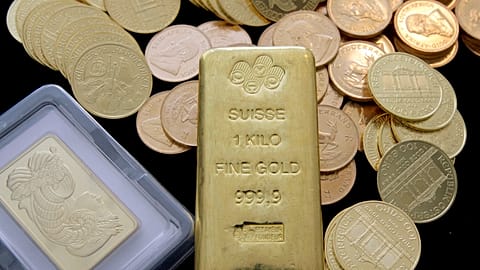
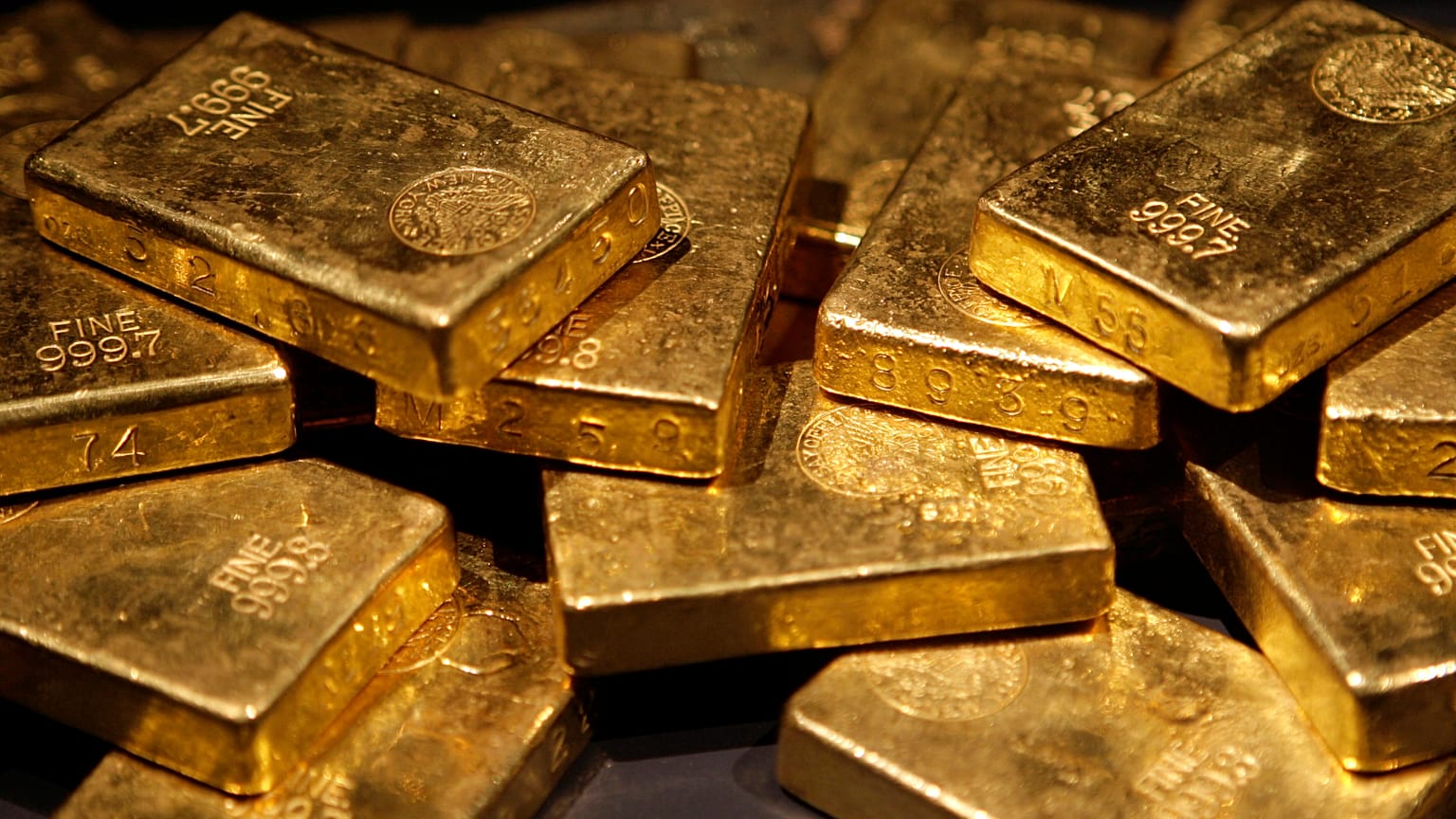
Gold prices have continued to climb after breaching the symbolic $5,000 milestone earlier this week, as investors increasingly funnel their capital into safe haven assets.
 ADVERTISEMENT
ADVERTISEMENT
ADVERTISEMENT
Rising roughly 4% on the day, the metal was valued at over $5,300 on Wednesday morning in Europe. At the same time, silver was up over 6%, at $113 an ounce.
Unlike assets like stocks or bonds, precious metals provide no interest payments or dividends, meaning that the appeal lies in their ability to hold value over time, acting as a hedge against inflation and economic downturns.
In the year to date, gold has soared over 20%, with investors increasingly spooked by geopolitical tensions. Earlier this week, the Bulletin of the Atomic Scientists announced that their so-called “Doomsday Clock” had moved closer to midnight than ever before — meaning the experts believe we are at the closest point to “destruction” since the clock’s creation. As conflicts drag on in the Middle East and Ukraine, accompanied by rising tensions in the US and the weaponisation of global trade, investors are eager to pull their money from risky assets.
While the dollar is typically considered a safe investment, erratic policies from the Trump administration have fuelled a roughly 10% decline in the currency over the last year.
“No, I think it’s great,” Trump told reporters in Iowa on Tuesday when asked if he was worried about the currency’s slide. “I think the value of the dollar — look at the business we’re doing. The dollar’s doing great.”
What a weaker dollar means
The greenback’s status as the global reserve currency means that it is held in large quantities by central banks around the world and dominates international transactions. On one hand, this lowers the cost of borrowing for the US government. On the other hand, a strong dollar means that American products become relatively more expensive for foreign customers, and overseas products become relatively cheaper for buyers in the US. As a result, some of Trump’s entourage have expressed frustration at the effect of a strong dollar on the competitiveness of US exports.
“In the distant past, it tended to be Republican administrations that preferred a weaker dollar. President Trump's lack of concern about the weaker dollar in comments late yesterday will feed the latter theory,” said ING analyst Chris Turner. “Presumably, there will now be renewed questions for Scott Bessent as to the US Treasury's dollar policy,” he added.
When it comes to gold, a weaker dollar also makes the metal comparatively cheaper for foreign buyers, meaning the recent fall in the currency may be one factor driving up demand for bullion.
Upcoming Fed decision
The upcoming rate decision from the Federal Reserve is also impacting market movements.
After three straight quarter-point cuts last year, the central bank's committee is expected to keep its key rate unchanged at 3.5% to 3.75% on Wednesday.
Such a decision is likely to displease President Trump, who has long complained that the committee has been too slow to lower rates. Policymakers at the Fed stress that their mandate is to ensure the stability of the US economy, meaning caution is required to stem inflationary risks. If price pressures are ignored, this could weaken the dollar and US fiscal stability, meaning the government could see its borrowing costs rise.
Threats to the independence of the central bank hang heavily over this week’s meeting after the Justice Department subpoenaed the Fed earlier this month. The legal action is linked to a criminal investigation into testimony Chair Jerome Powell gave about a $2.5bn (€2.1bn) building renovation. It's the first time a sitting Fed chair has been investigated, and Powell has publicly criticised the probe as an attempt to influence monetary policy.
Powell’s term as chair is due to expire in May, with President Trump expected to nominate a successor in the coming days. Although Powell is set to leave the top job, it's unclear whether he will take the unusual decision to stay on as a governor.
Combined with the US’ unconventional tariff tactics, threats to Fed independence have prompted a series of spikes in Treasury yields since Trump took office. Alongside a drop in the dollar, a rise in bond yields has raised fears about a “sell America” trade, with some analysts suggesting that investors are losing faith in Treasuries — pushing prices down and yields up as investors expect higher premiums.
Recent yield spikes have, however, also been linked to the macroeconomic outlook in Japan, with some investors moving money away from US assets into higher-yielding Japanese debt.
While economic patterns have been deviating from the norm recently, the standard trend is that when interest rates fall, bond prices rise and yields fall.
Stock market movements
Turning to equities, Europe opened lower on Wednesday morning. The DAX fell 0.25%, the CAC 40 slid 1.08%, the IBEX 35 dropped 0.74%, the FTSE MIB tumbled 0.48%, while the FTSE 100 fell 0.28%. The wider STOXX Europe 600 was down 0.42%.
Ahead of the opening bell in the US, Nasdaq futures were up 0.73%, S&P 500 futures rose 0.29%, while Dow Jones futures slipped less than 0.1%.
“Some investors have pointed out some evidence of national pension funds hedging their dollar exposure while maintaining their holdings in underlying US securities,” said Richard Hunter, head of markets at Interactive investor.
“This partially explains why markets have continued to prosper despite the currency weakness, and indeed the S&P 500 hit yet another record closing high yesterday.”