















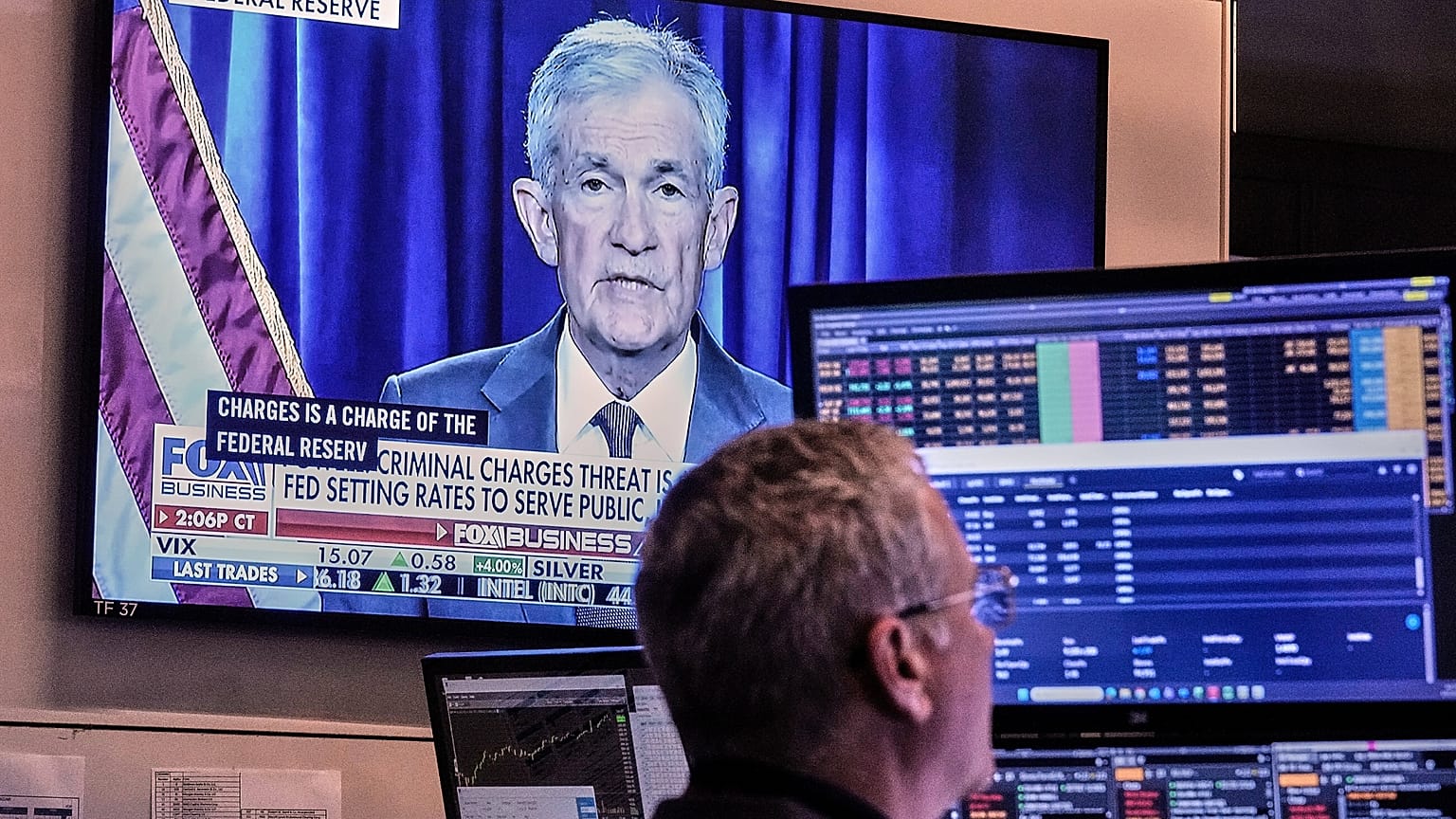













This week's meeting will be overshadowed by the revelation that the Justice Department has opened a criminal investigation into the Fed, threatening central bank independence.
After two weeks of intense political and legal scrutiny, the Federal Reserve will seek to make this week's meeting about interest rates as uneventful as possible, though President Donald Trump probably still won't like the result.
 ADVERTISEMENT
ADVERTISEMENT
ADVERTISEMENT
The central bank's interest rate-setting committee is almost certain to keep its key short-term rate unchanged at about 3.6%, after three straight quarter-point cuts last year.
Fed Chair Jerome Powell said after December's meeting that they were “well positioned to wait to see how the economy evolves” before making any further moves.
When the Fed lowers its short-term rate, it can over time influence other borrowing costs for things like mortgages, auto loans, and business borrowing, though those rates are also affected by market forces.
This week's meeting — one of eight the Fed holds each year — will be overshadowed by the bombshell revelation earlier this month that the Justice Department has subpoenaed the Fed as part of a criminal investigation into testimony Powell gave last June about a $2.5bn (€2.1bn) building renovation. It's the first time a sitting Fed chair has been investigated, and prompted an unusually public rebuke from Powell.
Now, Powell will have to shift from a dispute with the White House to emphasising that the Fed's decisions around interest rates are driven by economic concerns, not politics. Powell said on 11 January that the subpoenas were “pretexts” to punish the Fed for not cutting rates as sharply as Trump wants.
Michael Gapen, chief US economist at Morgan Stanley and also a former Fed staffer, said that despite the scrutiny, the Fed can be expected to consider its interest rate policies like it always does.
“The meetings have a regular flow to them,” he said. "There are presentations that are made, there are discussions that have to be had. ... Some of these other broader-based attacks on the Fed don't really come up."
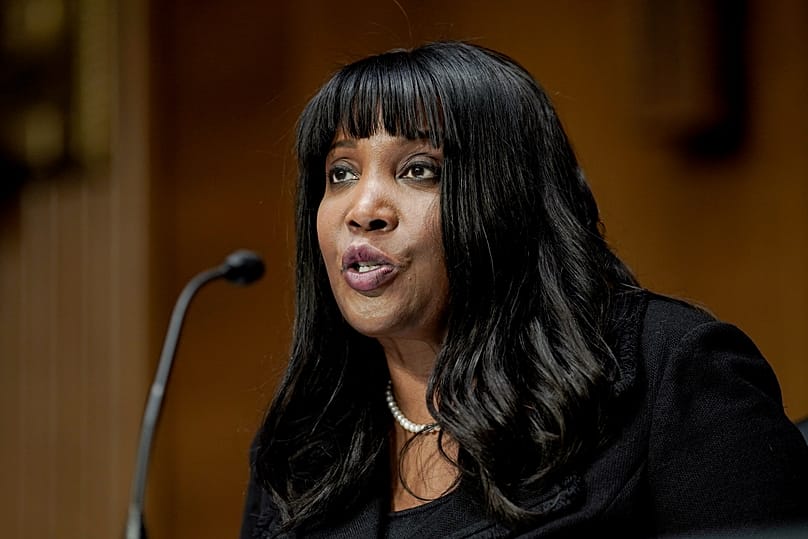
Not long after the Justice Department's subpoenas, the Supreme Court last week considered whether Trump can fire Fed governor Lisa Cook over allegations of mortgage fraud, which she denies. No president has fired a governor in the Fed's 112-year history.
During an oral argument, the justices appeared to be leaning toward allowing her to stay in her job until the case is resolved.
Attempts to fire Lisa Cook
Other Fed officials have also signalled that the central bank is likely to keep rates unchanged at their two-day meeting that ends on Wednesday.
The Fed's three rate cuts last year were intended to bolster the economy after hiring slowed sharply in the wake of Trump's April tariffs on dozens of countries.
Yet the unemployment rate ticked lower in December, after picking up for much of last year, and there are other signs the job market may be stabilising. The number of people seeking unemployment benefits has stayed historically low, a sign layoffs haven't spiked.
Meanwhile, inflation remains elevated and actually ticked higher last year, according to the Fed's preferred measure, weakening the case for an immediate rate cut. Prices rose 2.8% in November from a year earlier, according to the latest data available. That is up from a year-on-year figure of 2.6% last November.
Unless businesses start cutting jobs or the unemployment rate rises, the Fed is unlikely to cut rates again for at least a few months, economists say.
If inflation slowly declines this year, as economists expect, the Fed may cut again in the spring or summer. Wall Street investors expect just two quarter-point rate reductions this year, according to futures prices.
Many economists expect growth could pick up in the coming months, which would be another reason to forego rate cuts. Gapen estimates that tax refunds could be about 20% higher this spring than last year as the Trump administration's tax cuts take effect.
The economy expanded at a 4.4% annual rate in last year's July-September quarter and may have grown at a similarly healthy pace in the final three months of last year.
If such solid growth continues, Fed officials will likely wait to see if hiring picks up as well, further reducing the need for more rate cuts.
Powell's future
Jerome Powell has chaired the Fed since 2018, initially appointed by Trump in his first term then reinstated by Biden.
His term as chair is due to expire in May, with President Trump expected to nominate a successor in the coming days. Rumoured candidates include BlackRock's Rick Rieder, National Economic Council director Kevin Hassett, Fed governor Christopher Waller, and former governor Kevin Warsh.
Although Powell is set to leave the top job, it's unclear whether he will take the unusual decision to stay on as a governor — with this term lasting until 31 January 2028.
The Fed's board of governors includes seven members serving 14-year terms, although nearly all chairs step down from the board when their term in the top job ends.
If Powell does stay on the board, it would deny the White House a chance to gain a majority, undercutting the Trump administration's efforts to seize greater control over the central bank.
He would be the first chair in nearly 50 years to stay on.


