



























Countries with close ties to Russia have seen an increase in imports of Portuguese products that are under EU sanctions following the 2022 invasion of Ukraine.
Portuguese exports to countries near Russia have risen sharply since the 2022 invasion of Ukraine, prompting the Ministry of Finance to investigate the scope and design of existing sanctions, according to the national newspaper Público.
 ADVERTISEMENT
ADVERTISEMENT
ADVERTISEMENT
Following the entry into force of EU sanctions against Russia over its invasion of Ukraine, direct Portuguese sales to the country fell from more than €26mn in 2021 to negligible figures.
On the other hand, numbers published by Portugal's National Statistics Institute (INE), show that sales have increased in Kyrgyzstan, Kazakhstan, Azerbaijan, Turkey and the United Arab Emirates.
Kyrgyzstan stands out from the countries mentioned, with Portuguese exports rising from around €200,000 in 2021 to almost €6mn in 2025.
Although this is not a significant figure in the global panorama of Portuguese international trade, this destination has seen the greatest growth in Portuguese exports in recent years.
Circumventing EU sanctions
The five countries to which sales have increased the most are all located close to Russia and have maintained regular trade relations with the country throughout the war.
Portuguese exports have soared to all these countries, giving strong indications that, like other EU countries, there are Portuguese companies, wittingly or unwittingly, circumventing the sanctions imposed on Russia through intermediaries.
In practice, Portuguese companies, and those from other EU countries, may be exporting products to countries that then send them to Russia.
INE data also shows that since 2022, the countries mentioned above have been importing more products subject to restrictions and, at the same time, exporting more to Moscow.
Among the products sanctioned are microchips, semiconductors, electronic equipment, drones, industrial components and other materials that can be used in the military industry.
These restrictions are intended to limit the ability of Russian industry, especially the military, to obtain Western technology. Categories such as engines and generators have also seen sharp falls in direct exports to Russia and similar increases to other markets.
Cork stands out from other products
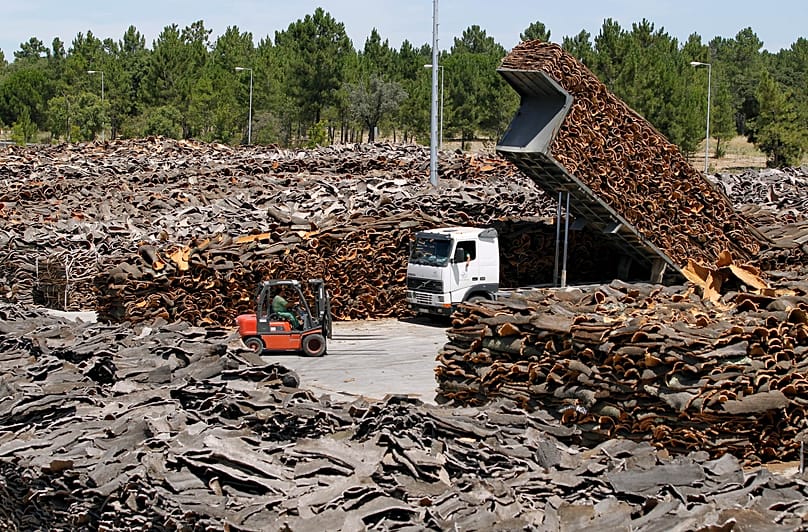
One of the products with the most stark increase in exports to these Russia-tied countries is cork, withPortugal being the world’s largest exporter of the material.
Moscow used to be a regular customer for cork imports, especially because of its wine production. However, after the invasion of Ukraine, the material was targeted by sanctions as it can be used for military purposes.
Therefore, although the sale of cork to Russia has plummeted since 2022, the Portuguese exports to Turkey, the United Arab Emirates, Kyrgyzstan and Kazakhstan have increased significantly.
A recent investigation that took place this year, coordinated by the European Anti-Fraud Office with Polish authorities, revealed a scam where used vehicles from the EU were indirectly exported to Russia through Turkey, Armenia, Kazakhstan and Kyrgyzstan.
This resulted in the opening of criminal proceedings in several member states, which were trying to evade sanctions, and the tightening of controls on this type of export.
In Portugal, the Tax and Customs Authority is responsible for monitoring compliance with the sanctions applied to exports to Russia, which confirmed to the newspaper Público that there are investigations into possible irregularities.
According to the authorities, changes in trade patterns are not automatic proof of non-compliance with sanctions but can logically be worthy of investigation.