













Oil markets got their first significant relief in days as Trump signalled Washington could ease sanctions on some countries to cool crude prices.
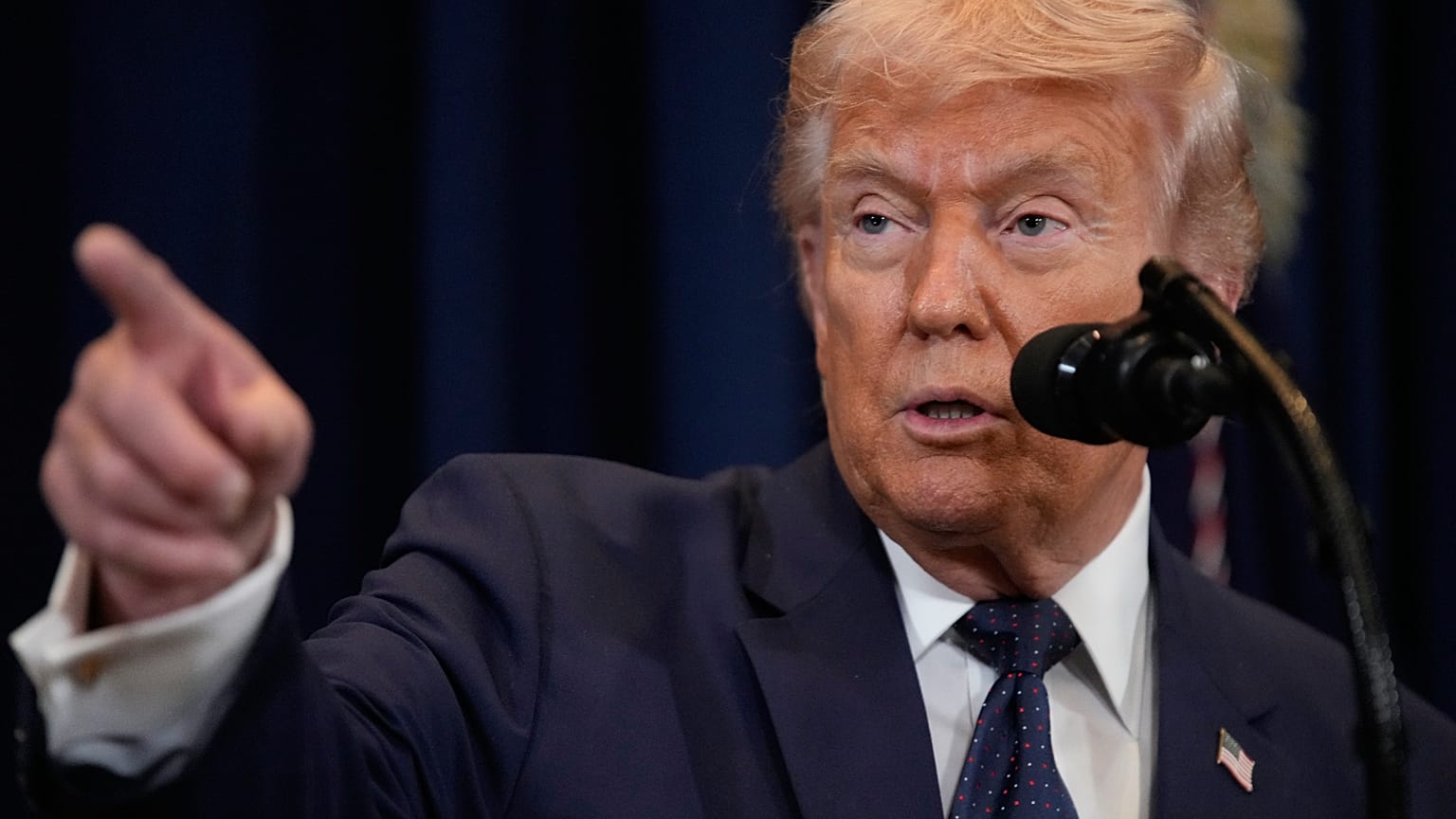
Oil prices fell sharply after US President Donald Trump said on Monday that the war against Iran could be short-lived and that Washington was considering waiving oil-related sanctions on certain countries to ease pressure on crude markets.
 ADVERTISEMENT
ADVERTISEMENT
ADVERTISEMENT
"So in some countries, we're going to take those sanctions off until this straightens out," Trump told reporters, without naming which countries were under consideration.
The United States currently maintains sanctions affecting oil trade against a small group of countries: Iran, Venezuela, Russia, Syria and North Korea.
Trump also said he spoke with Russian President Vladimir Putin on Monday to discuss the war and other issues.
Oil prices retreated from recent highs, with both WTI crude and Brent futures falling more than 9%. Brent was trading just below $90 during the European morning, while WTI stood at $85.40 a barrel.
Prices had briefly surged to their highest level since 2022, nearing $120 a barrel, a day after Iran's Assembly of Experts appointed Mojtaba Khamenei as supreme leader in succession to his late father.
Investors read the appointment as a signal that Tehran was digging in, ten days into the war launched by the United States and Israel.
But prices later fell, and US stocks rose on hopes that the war with Iran may not last much longer.
"We took a little excursion" to the Middle East, "to get rid of some evil. And, I think you'll see it's going to be a short-term excursion," Trump told Republican lawmakers at his golf club near Miami.
However, he left open the possibility of an escalation of fighting if global oil supplies are disrupted by the Islamic Republic, which chose a new hardline supreme leader.
Hours later, Trump posted on social media.
"If Iran does anything that stops the flow of oil through the Strait of Hormuz, they will be hit by the United States of America twenty times harder than they have been hit thus far."
In an apparent response to Trump's remarks, Iranian state media reported that Ali Mohammad Naini, a spokesperson for the paramilitary Revolutionary Guard, said that "Iran will determine when the war ends".
Stock markets cheer the news
All major European stock markets opened sharply higher.
The FTSE 100 in London gained more than 1.1%, the CAC 40 in Paris jumped 1.9%, the DAX in Frankfurt rose 2%, benchmark indices in Madrid and Milan were up 2.5%, and the Stoxx 600 gained 1.7%.
Asian shares also rebounded on Tuesday after sharp declines the previous day, as investors wagered the conflict might be short-lived.
Tokyo's Nikkei 225 added 2.9%, also buoyed by revised government data showing Japan's economy grew at an annual pace of 1.3% in the final quarter of last year — well above the initial estimate of 0.2%, driven by solid business investment.
South Korea's Kospi jumped 5.4% and Australia's S&P/ASX 200 gained 1.1%.
"Today is the rebound — obviously [after] positive comments from President Trump overnight. We're starting to see the light at the end of the tunnel for the war," said Neil Newman, head of strategy at Astris Advisory Japan.
"Volatility is going to remain with us, but things are certainly looking a lot brighter today."
Hong Kong's Hang Seng added 2.1% and the Shanghai Composite rose 0.6%.
Share prices have been swinging largely in tandem with oil, which has gyrated as the conflict has deepened.
The central uncertainty for markets is how high crude prices will go and how long they will stay there, given ongoing disruptions to Middle Eastern energy infrastructure.
If oil remains very high for an extended period, households already stretched by inflation could come under severe pressure, while companies would face sharply higher bills for fuel and logistics.
The risk is a worst-case scenario for the global economy: stagflation, where growth stagnates and inflation stays elevated.
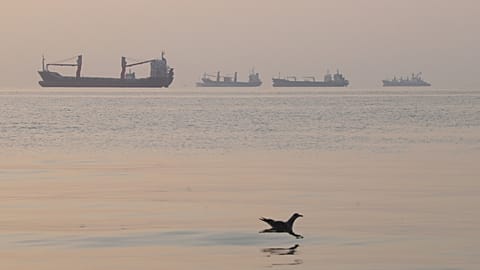
Attention has focused in particular on the Strait of Hormuz, the narrow waterway off Iran's coast through which a fifth of the world's oil passes on a typical day.
Iran has threatened to attack ships sailing through the strait.
If it remains closed for even a few weeks, oil could push to $150 a barrel or higher, according to strategists at Macquarie Research. Trump said separately that he was "thinking about taking it over," according to CBS.
In bond markets, the yield on the 10-year US Treasury fell to 4.10% from 4.15% late Friday after briefly rising above 4.20% on Monday morning as oil price fears pushed yields higher.
Yields retreated when crude eased later in the day.
In currency markets, the dollar edged up to 157.48 yen from 157.67, while the euro was unchanged at $1.1638.
Gold rose 1.7% to $5,191.8 an ounce. Cryptocurrency markets also gained, with most leading tokens up between 1% and 2%.
Bitcoin outperformed, rising 2.6% to $70,863 according to the CoinDesk Bitcoin Price Index.