



























Hausmann warned that recent injections of dollars from oil sales do not solve structural economic problems under a “hyper-repressive” regime.
The recent strategy of the United States toward Venezuela consists of controlling oil sales and managing the dollar revenues under strict conditions. According to Ricardo Hausmann, a Venezuelan economist and director of Harvard University’s Growth Lab, the scheme operates as a form of cash-flow control.
 ADVERTISEMENT
ADVERTISEMENT
ADVERTISEMENT
"The current arrangement is as follows: Venezuela is forbidden to sell its oil, but is allowed to deliver it to the United States. Washington sells it at market price and deposits the proceeds into accounts under its control. It then transfers those dollars to the Venezuelan government with conditions," Hausmann explained.
This mechanism allows the Venezuelan government to access more dollars, but with restrictions on how and when they can be used — something Hausmann describes as an “aspirin”. In other words, it temporarily relieves the lack of liquidity but does not cure the structural problems.
De facto dollarisation
In parallel, Venezuela is experiencing a "de facto dollarisation", according to Hausman, who also served as Minister of Planning from 1992 to 1993.
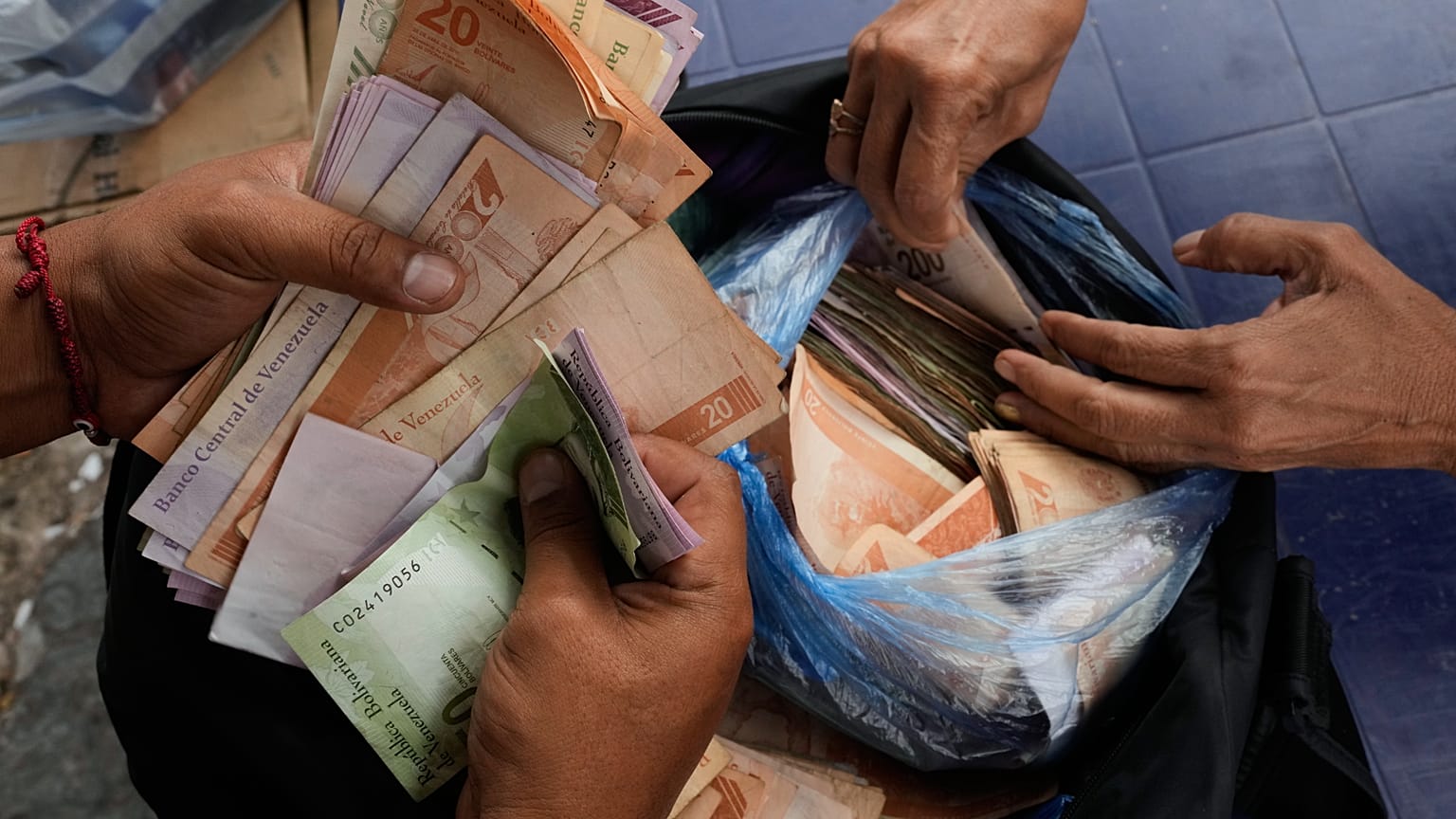
Hyperinflation and the devaluation of the bolívar mean that most transactions, from food purchases to service payments, are carried out in dollars, while electronic bolívars function as a secondary means of payment.
"Nobody wants to save in bolívars, so it disappeared as a savings currency," the economist explained. This dollarization facilitates daily transactions, but the country has not accepted the greenback as its legal currency.
Unlike officially dollarized countries, Venezuela’s financial system cannot offer savings or credit in dollars, which limits economic recovery. According to the economist, without a functioning financial system, and without the restoration of basic rights, the inflow of dollars does not translate into sustainable growth.
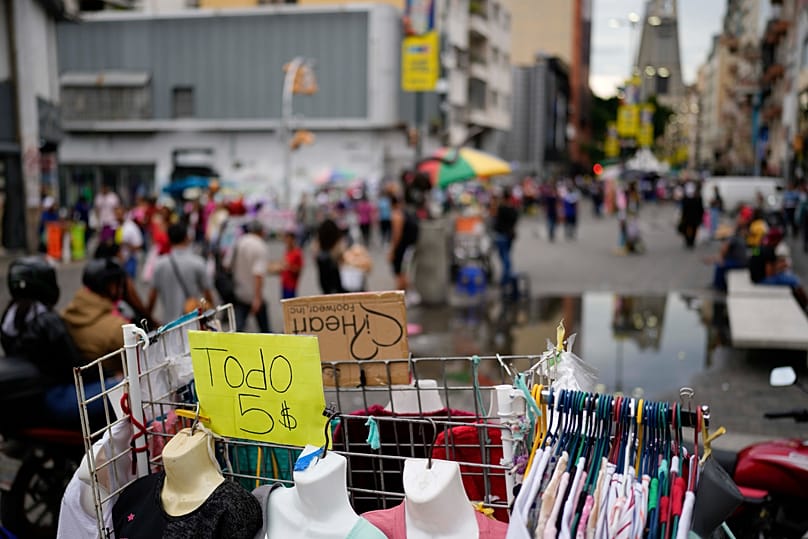
The inflow of US currency does not automatically lead to an improvement in living standards. The state adjusts salaries and pensions, paid in bolívars, to contain the deficit, while prices continue to be set in dollars. The result is a sharp loss of purchasing power.
“I have acquaintances who are retired university professors, and their pension is about three dollars a month,” Hausmann said.
Added to this is the fact that prices in Venezuela are surprisingly high, even compared with Europe.
“Venezuela is not cheap; things cost what they cost in dollars, plus the risk of operating in a country as uncertain as Venezuela,” Hausmann explained.
This combination of low incomes and high costs reinforces dependence on remittances. More than eight million Venezuelans have emigrated, many of whom send money back home, reflecting the scale of the humanitarian crisis and the vulnerability of those who remain in the country.
Rights are the basis for recovery
Hausmann warned that recent injections of dollars from oil sales do not solve the structural problems of the economy under a “hyper-repressive” regime.
“Now it will have a somewhat better cash flow than it had before. That’s the aspirin. But that doesn’t cure the patient. You have to give Venezuelans back their rights,” he said.
Beyond money, Hausmann stressed that real recovery requires fundamental rights and a legitimate political regime.
“In Venezuela there is no freedom. And when there is no freedom, you have no rights. You have no property rights. You have no rights at all. So you operate with extremely high risk, and that's not the way to recover the economy,” he argued.
The economist noted that restoring rights would allow Venezuelans to invest, produce, and envision a sustainable economic future, multiplying the country’s potential far beyond what the current flow of dollars can achieve.
The former minister explained that raising wages or pensions will not be enough if the country’s electricity, water, transportation, and production infrastructure are not rebuilt.
“It’s not just a matter of decreeing a salary increase… what we need is the restoration of productive capacity,” he concluded.