












Output can rise with capital and access — but Venezuela’s oil story has never been just technical. Sovereignty, revenue flows, and who controls where the crude goes are just as important.
The easiest way to misunderstand Venezuela’s oil business is to treat it like a standard industry story, framing it exclusively in terms of reserves, rigs, investment, and output.
 ADVERTISEMENT
ADVERTISEMENT
ADVERTISEMENT
Those things matter, but they fail to capture how intrinsically oil is stitched into the country’s political DNA.
Venezuela sits atop immense reserves of one of the world’s most coveted resources, yet for much of its history, ordinary people have seen limited benefits from that geological blessing.
With reserves split largely between the Orinoco Belt and the older, more heavily exploited Lake Maracaibo region, every government has had to build its claim to power around a plan for the oil.
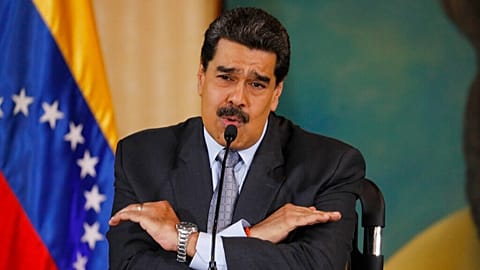
After the US intervention in early January that led to Nicolás Maduro’s capture and removal, the future of Venezuela’s oil reserves — and what they mean for ordinary livelihoods — has once again become the country’s defining point of contention.
“There is a lot of talk about the future of the oil industry yet the situation remains so uncertain that it is hard to confidently state where things are headed,” explained Tiziano Breda, a senior analyst for Latin America and the Caribbean at the Armed Conflict Location and Event Data project.
Who sees the benefits?
In boardrooms from Houston to Madrid, that renewed uncertainty has become a key consideration. It affects whether service firms mobilise rigs, whether insurers price risk back into Caribbean shipping lanes, and whether refiners retool for heavier blends that Venezuela can supply better than almost anyone — on paper.
Breda lays out two main scenarios that are more likely in the near future.
"One is a situation where the US either controls or gets preferential access to the Venezuelan oil platforms and preferential conditions to invest and retain the profits of the oil industry," he said.
In that scenario, US investment would come with infrastructure improvement, and production could start rising again, which is now around 800,000 barrels per day.
“The problem with this scenario is that it seems US companies would be the ones who benefit most from this setup. The benefits for the Venezuelan people are unclear or would be limited,” Breda continued.
Venezuela has seen its oil controlled by different parties, although the returns have failed to trickle down to society as a whole.
“The other scenario is for the Chavista power structures to stay in place just without Maduro," Breda argued. He added that this would maintain a back-and-forth relationship with the US, with the system seeking to protect national production instead of giving away all licenses to foreign companies.
Barriers to investment
Francis Perrin, a senior fellow at the French Institute for International and Strategic Affairs (IRIS) who is specialised in energy issues, spoke to Euronews about the future of the oil industry in Venezuela.
"International oil companies would have to invest dozens of billions of dollars. In order for this to happen three conditions are required, [namely] security, stability, and profitability, not only now and in the coming months but on a long-term basis," he said.
"It is of course not possible today to assess the future stability of the country... the US State Department recently urged Americans to leave Venezuela," he continued.
The companies that are the most likely to invest more in Venezuela are those which are already on the ground in this country, namely Chevron, Repsol, and Eni.
From extraction to households
Oil money is often discussed as if it automatically creates a public good, although this logic only works if leaders funnel the returns into useful policies.
On one hand, oil revenues can build hospitals and schools. On the flip side, it can also fund patronage and an oppressive security state.
“When former president Chávez came to power he did not dismantle the industry, he kept the foreign know-how and was lucky that commodity prices boomed in the early 2000s and he used this to fund his political project both in the country and the region,” Breda explained.
Chávez did not blow up the oil machine completely, at least not right away. He kept parts of it working and used the boom to turn oil into politics at scale.
“Maduro then inherits that legacy [after Chávez's death], and in a quest to consolidate his own power structure, he basically replaces all the former loyalists to Chavez who are also knowledgeable about the oil industry with other people, mainly based on the criteria of whether they’re loyal to him,” Breda noted.
Breda argued that this culling of knowledgeable staff, combined with the sharp drops in oil prices beginning in 2014, led to a perfect storm — worsened by US sanctions.
A system for the elites?
“Even though the Venezuelan industry reached rock-bottom during Maduro, the sheer size of it still allowed it to produce enough in order to be able to keep the economic, political and military elites happy in the country,” Breda explained.
He added that many of the country's top brass were unhappy with the US intervention, partially because "they were the ones who benefitted the most from the [previous] status quo”.
While former vice president Delcy Rodríguez has been serving as interim president since Maduro's capture, Venezuelan opposition leader María Corina Machado has vowed she will lead the country "when the right time comes".
Breda explained that many individuals belonging to the Venezuela's elite class are distrustful of Machado's plans for the oil industry, fearing that she will allow US companies to "make the most out of Venezuelan oil without direct benefits for average people".
Last week, Machado — the recipient of the 2025 Nobel Peace Prize — formally handed the medal she received from the prize over to Trump as recognition of his "unique commitment to our freedom".
Machado has openly called for a heavy-handed US role in Venezuela, and is clearly seeking to gain a close relationship with Trump.
For supporters of Machado, an openness to US intervention sounds like a promising means to bring back investment, output, and order. To others, it sounds like a rerun of a model they believe failed them.
What about Russia and China?
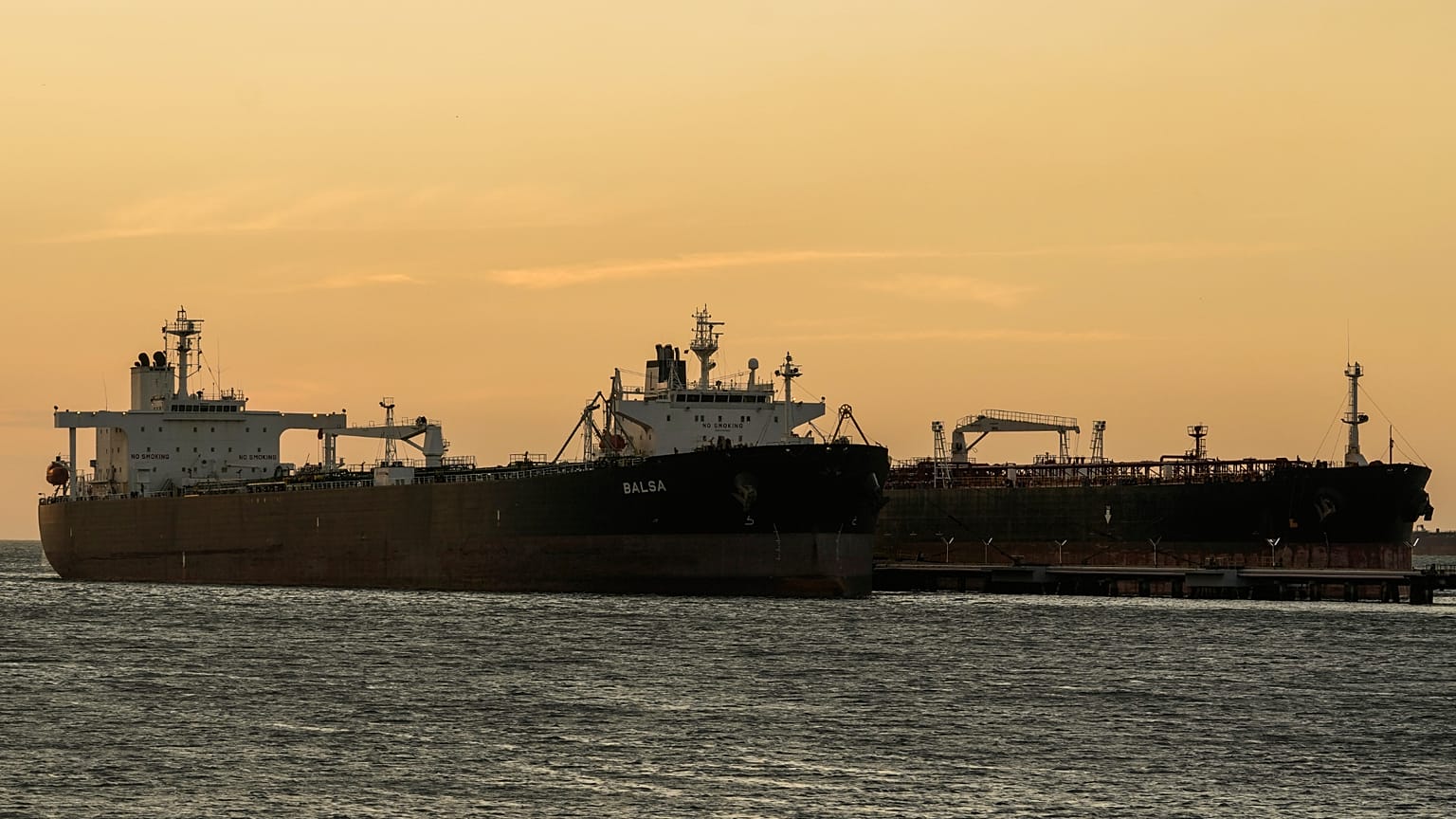
Venezuela’s crude and fuels trade was largely focused on China in the post-sanctions years, as buyers and intermediaries helped Caracas keep barrels moving despite US sanctions.
In 2024, ship-tracking data showed China remained the top receiver at about 351,000 barrels per day, while the US was second at roughly 222,000 bpd under specific authorisations.
In January 2025, Venezuelan exports rose 15% to about 867,000 bpd, with China taking around 442,000 barrels per day, and Chevron sending about 294,000 barrels to US refiners.
For 2025 as a whole, internal documents belonging to the state-owned oil and gas company put average exports to China at around 642,000 bpd — about three quarters of Venezuela’s total daily exports last year.
This model is likely to change if the US is calling the shots, particularly after US secretary of state Marco Rubio stressed that the Trump administration would prevent its adversaries from owning or controlling strategic resources in the Americas, and particularly in the Western Hemisphere.
"Clearly, Russia and China will not play an important role in Venezuela... Russia and China have lost an important ally, [further] bad news for Moscow after the fall of the Assad regime in Syria at the end of 2024 and the weakening of the Islamic Republic of Iran since 2024," Perrin highlighted.
China will no longer be able to buy the greatest part of Venezuela's oil exports at very favourable terms. "It will have to search for other supplies, which is not [impossible] due to the present state of the world oil market where there is a surplus of supply over demand, but will be more costly," he continued.