

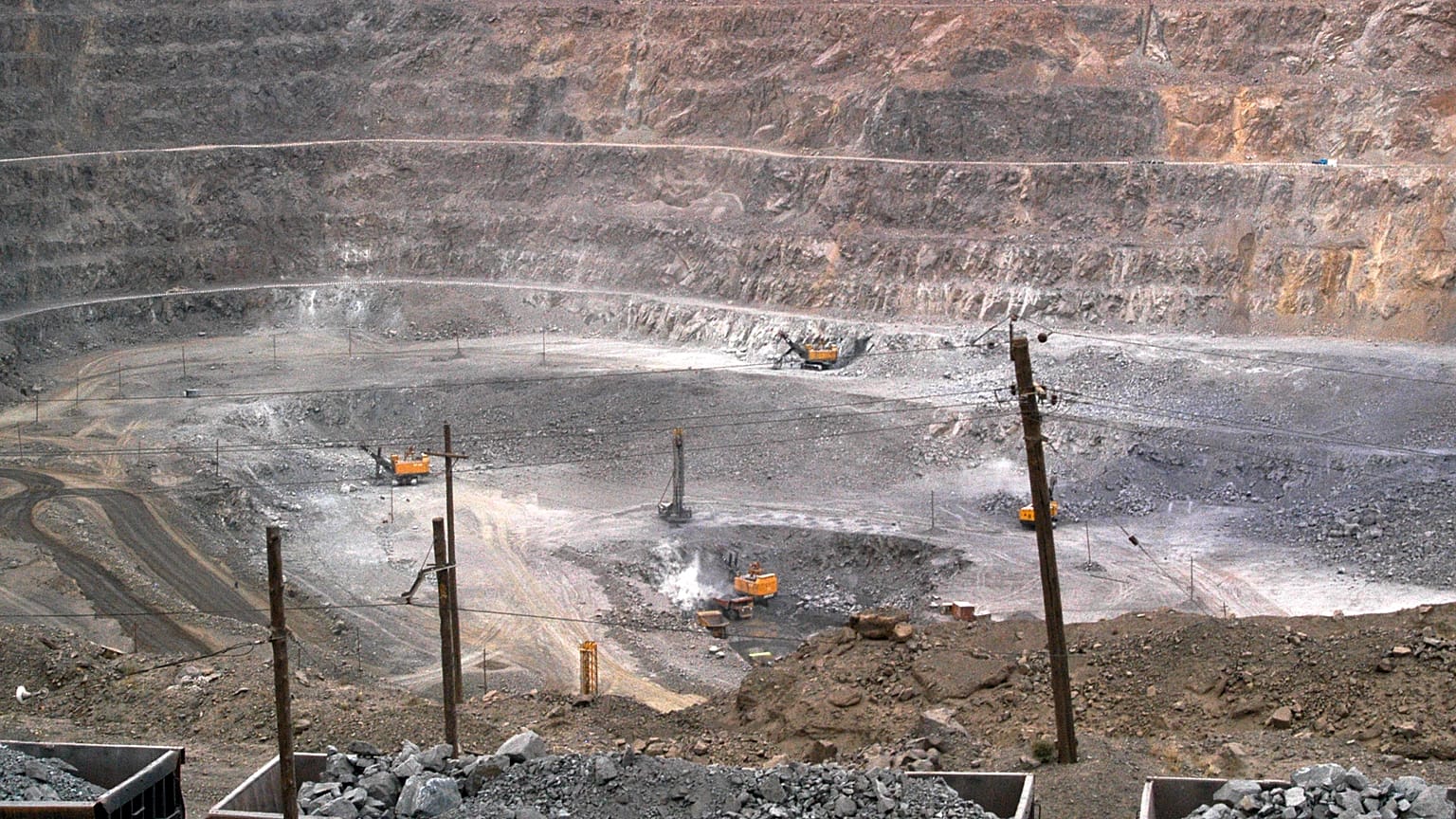













Oil shaped the last century, but rare earths may shape the next. As economies electrify and AI expands, control over critical materials is becoming a new source of global power.
For much of the past century, oil has been the backbone of the global economy.
 ADVERTISEMENT
ADVERTISEMENT
ADVERTISEMENT
It fuelled factories, transport, and trade, and helped determine which countries grew rich and which remained dependent. Control over crude flows often translated into leverage over inflation, industrial output and, at critical moments, the outcome of wars.
That influence has not disappeared. Oil prices still have the power to unsettle economies. A sudden surge can quickly feed into inflation, complicate central bank decisions, and put pressure on public finances. For governments, energy security remains a recurring concern, especially when geopolitical tensions rise.
Yet the foundations of global power are shifting. As economies electrify and digital technologies spread through every layer of production, a different kind of resource is moving into the spotlight.
“Middle East has oil. China has rare earth metals,” Chinese statesman Deng Xiaoping said in the 1980s, at a time when oil defined global power. Decades on, the remark appears strikingly visionary.
From black gold to strategic metals
Oil’s role in the global economy is far from finished. Worldwide consumption still runs above 100 million barrels per day, and most forecasts suggest demand will remain robust well into the 2030s, even as the energy transition advances unevenly.
Oil markets are built for scale and flexibility. Crude can be shipped across oceans, stored in strategic reserves, and traded through deep, liquid benchmarks. When supply is disrupted, the system can usually adjust, sometimes painfully, but often quickly.
Rare earth elements occupy a radically different position. They are not burned for energy or traded in massive daily volumes.
Instead, they are embedded deep inside the technologies that underpin electrification, automation, and digital infrastructure.
Permanent magnets made from rare earths are critical components in electric vehicle motors, wind turbines, robotics, aerospace systems, and advanced military hardware.
They are also increasingly important for data centres and AI-related infrastructure.
The magnet economy is accelerating
At the October 2025 Rare Earth Mines, Magnets & Motors (REMM&M) conference in Toronto, Bank of America commodities analyst Lawson Winder laid out the emerging stakes.
Data cited by Bank of America suggests demand for global neodymium magnet, one of the most useful types of rare earth, could grow at roughly a 9% compound annual rate through 2035.
Passenger EVs are expected to drive growth of around 11% per year. Robotics demand could rise close to 29%.
In the US, the numbers are even steeper. Magnet demand is projected to rise fivefold by 2035, roughly an 18% annual growth rate. Europe’s demand could grow about 2.5 times over the same period.
By comparison, global oil demand growth is projected to slow to well below 1% annually over the same horizon.
Demand is racing well ahead of supply
While demand for rare earths is rising, Europe has virtually no domestic rare earth mining or processing facilities. Bank of America expects persistent undersupply in the region, with deficits widening as demand rises from an already high base.
China accounts for roughly 90% of rare earth oxide production in neodymium and praseodymium, nearly all heavy rare earth oxide production in dysprosium and terbium, as well as accounting for around 89% of rare earth magnet production in general.
On processing capacity, Bank of America estimates China represents roughly 87% of global capacity to turn mined material into separated products manufacturers can use.
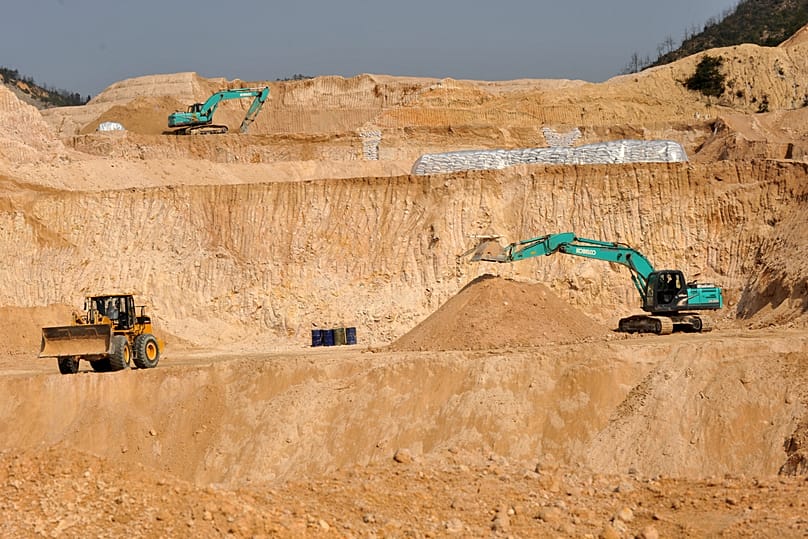
When it comes to the unprocessed material, China holds around 49% of global rare earth oxide reserves and produces roughly 69% of global unseparated output.
This is why rare earths generate structural vulnerability. They are less a commodity market than a manufacturing system: one where scale, expertise and integration matter more than geology alone.
The real bottleneck lies in processing, refining and magnet manufacturing — stages of the supply chain that are technically complex, environmentally challenging, and capital-intensive.
China’s export controls introduced in April 2025 made this explicit. Licences and end-use disclosures are now required for several medium and heavy rare earth exports.
Physical AI brings materials back to the centre
For Jordi Visser, head of macro nexus research at 22V Research, rare earths are part of a broader story: the “physical AI” buildout.
“The physical AI buildout creates acute dependencies on commodities where China dominates global supply chains,” he said in a recent note.
AI is not just software and data centres. It involves hardware such as robots, sensors, motors, batteries and power systems.
“The transition demands rare earth elements for permanent magnets in robotic actuators and EV motors, lithium and advanced battery materials for portable AI systems and energy storage, and processed materials like refined graphite and cobalt where Western capacity barely exists,” Visser explains.
Crucially, Visser stresses that this is a timing problem as much as a strategic one.
“Even as the US and Europe race to build AI infrastructure, they remain structurally dependent on Chinese processing capacity,” Visser warns. “This is a strategic vulnerability that cannot be closed on the timeline the technology demands.”
Control over bottlenecks
Despite the race to decarbonise the global economy, oil remains indispensable. Its price governs inflation expectations and still shapes global trade balances.
But in the emerging industrial era defined by automation, electrification, and AI, rare earths increasingly determine what can be built, and by whom.
“This creates both massive opportunities for producers and massive challenges for governments and end-users looking to secure the supply chain,” Winder said.
In this world, dominance looks less like control over fuel and more like control over bottlenecks. Oil still moves the present, but rare earths increasingly decide who can build the future.