













Pizza prices are rising across Europe, with the typical order now nearly 8% more expensive than a year ago. A new Foodora index shows how inflation, wages, and rents are reshaping what diners pay — and what they choose to eat.
The typical pizza has become 7.75% more expensive in a year, with the combined median rising from €11.10 in 2024 to €11.96 in 2025.
 ADVERTISEMENT
ADVERTISEMENT
ADVERTISEMENT
A recent report shows that pizza prices have risen all over Europe, a symptom of the broader pressures that are driving everyday living costs up.
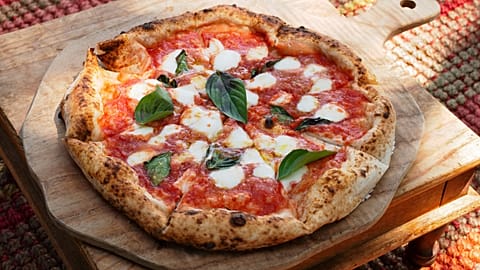
Food delivery company Foodora compared the price of a basic Margherita pizza across six European markets where it operates — Austria, the Czech Republic, Finland, Hungary, Norway, and Sweden — using millions of orders from 2024 and 2025 to build a “pizza index”.
They calculated median prices and discovered that, on average, the typical pizza became 7.75% more expensive over the year across the six countries, with the combined median rising from €11.10 in 2024 to €11.96 in 2025.
Hungary remains the cheapest market, with a 2025 median of €8.75, followed by Czechia at €9.47, while Norway is by far the most expensive at €17.60.
Austria sits in the middle at €11.50, with Sweden at €10.94 and Finland at €13.50.
Sweden and Finland actually recorded slight national price declines year-on-year, but Hungary, Czechia, Austria and Norway saw increases.
The Margherita (largely) bucks the trend
Some cities saw sharp drops in the median price of a Margherita. Bergen in Norway was down 15.85% to €15.72, and Göteborg in Sweden fell 15.81% to €11.93.
Vienna and Graz in Austria also became cheaper, down 8.46% and 4.17% respectively. Austria’s overall median rose, while Budapest’s median fell by 5.44% to €9.21, making it a relatively good-value spot in Central Europe.
At the very low end, Szeged in Hungary is now the cheapest city in the index, with a median price of €8.50, while Lillestrøm in Norway is the most expensive at €19.12, after jumping from one of the cheapest Norwegian cities in 2024 to the costliest in 2025.
Local conditions such as rents, wages, competition between restaurants and the intensity of delivery-platform promotions are currently shaping what customers pay.
The report also looked at what people are ordering, and the picture suggests that consumers are trying to squeeze more “value” out of their meal.
More bang for the bite
Across the six countries, the classic Margherita and Salami pizzas remained the top two choices in both 2024 and 2025, but the third spot changed hands. In 2024, the ranking was dominated by “pure classics” and child-sized options.
By 2025, the folded and often more filling Calzone climbed into third place, overtaking simpler ham-based pizzas, while multi-topping options like Capricciosa and the protein-heavy Kebabpizza continued to gain ground.
Foodora interprets this as a shift shaped by “filling factor”: customers still watch prices, but increasingly judge value by how substantial and satisfying the toppings are for the money they spend.
This is consistent with patterns seen in past downturns, where consumers trade down on where they buy (for example, entirely skipping dine-in) but trade up on how filling the meal is when they do spend.
No longer a cheap date
Euro area food inflation has cooled from a peak of about 15.5% in March 2023 to around 2.5% in December 2025, averaging roughly 2.9% in 2025.
ECB economists note that to “put a meal on the table,” consumers are paying roughly one-third more than before the pandemic, with particularly strong increases in meat and dairy.
Prices for beef, poultry and pork are now more than 30% higher than at the end of 2019.
These are the ingredients that drive pizza prices: wheat for dough, tomatoes, cheese, and meat toppings, plus energy for ovens and transport.
Even as headline inflation and food inflation moderate, these accumulated increases keep menu prices elevated.
For cheap pizza, go... east?
Lower-income countries in Eastern and Southeastern Europe still have cheaper pizzas in euro terms, but families there typically spend more than 20% of their budget on food, compared with under 12% in richer economies, so price rises bite harder even when starting from a lower base.
Pizza can also be used as a political indicator, albeit with varying success. A theory called the ‘Pentagon pizza index’ predicts global crises by tracking spikes in fast-food delivery orders around the Pentagon, suspecting that key decision-makers rely on quick deliveries like pizza when dealing with an emergency.
Another one is the "frozen pizza trend," where some analysts suggest that a surge in frozen pizza sales can act as a counter-cyclical indicator of economic weakness, since sales rise during downturns.