












Even in the digital age, Portugal still relies on gold as a financial backstop, holding over 300 tonnes stored between Carregado and London.
In a world where payments are digital and transfers are just a click away, what sense does it make to store tonnes of precious metal in armoured vaults?
 ADVERTISEMENT
ADVERTISEMENT
ADVERTISEMENT
The reason is simple — when everything becomes uncertain, gold is the only guarantee. It is an asset free of credit risk, independent of the monetary policy decisions of other countries and resistant to financial shocks.
In recent months, gold has seen historic rises, breaking price records. On Wednesday, bullion reached a new high and surpassed $4,800 per ounce, boosted by geopolitical tensions as the US doubled down on threats to acquire Greenland.
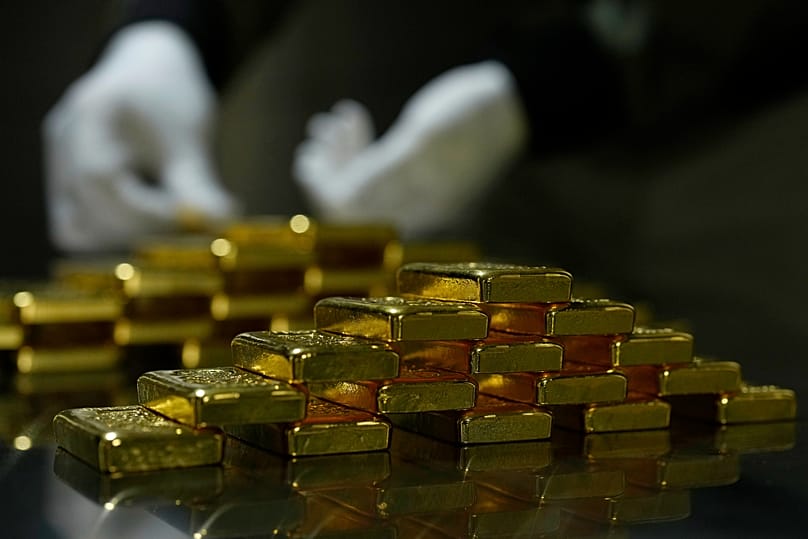
This was good news for Portugal, which continues to rely on this valuable commodity. According to the latest data from the World Gold Council, the body that records the gold reserves of various countries, Portugal has 382.66 tonnes of gold, with the Bank of Portugal's reserves already worth €47bn.
Around half of this gold is stored in a high security building in Carregado, owned by the Bank of Portugal, a few kilometres north of Lisbon. The other half is deposited in London.
Demand for safe assets, expectations of a cut in interest rates and systematic purchases by central banks have also helped to push up the price of gold, with the value of global gold reserves rising to around €4tr.
Gold reserves are, above all, a pillar of credibility. When investors analyse a country to assess risk, whether when granting credit, judging the strength of the currency or anticipating political risks, the volume of gold held by the state is a relevant factor.
Portugal, with the 14th largest gold reserves in the world and the seventh largest in Western Europe, surpassed only by Germany, Italy, France, Switzerland, the Netherlands and Poland, has an important strategic asset in this area.
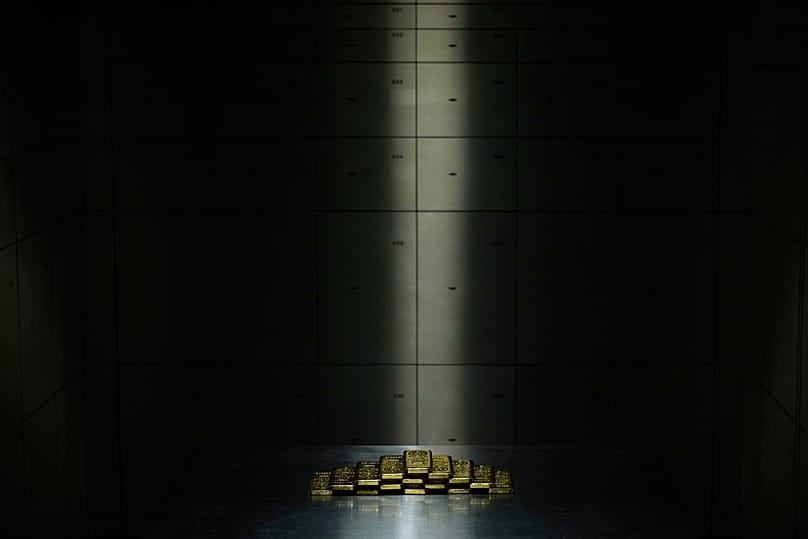
In addition, gold acts as a protection mechanism in situations of monetary or currency crisis. Should the euro collapse or access to international liquidity be interrupted, central banks could convert gold into hard currency or use it as collateral to obtain financing.
Throughout history, several countries have resorted to this solution in the context of war or financial collapse, including Portugal during the three IMF interventions in 1977, 1983 and 2011. Although it is an undesirable scenario, it is precisely this possibility that continues to justify holding gold reserves.
Finally, gold also has an accounting function. Its value forms part of the central bank's balance sheet and contributes to its solvency. A financially sound central bank strengthens the confidence and stability of the financial system it supervises.
According to the World Gold Council, several central banks have been buying this precious metal to reduce their exposure to the US currency. Demand has been especially robust in China, which has bought hundreds of tonnes of gold in recent years.
But Poland has been the most active buyer over the past year, adding 82.67 tonnes to its reserves, which stood at 530.9 tonnes last December.
Kazakhstan, Brazil and Turkey were also three of the countries that accumulated the most. Kazakhstan added 40.97 tonnes, Brazil 31.48 tonnes, and Turkey 26.68 tonnes. China added another 24.88 tonnes to its reserves, now valued at around €283.2bn and Czechia added another 18 tonnes.
On the other hand, the biggest sellers of the year were Singapore, with its central bank selling 15.24 tonnes of gold, followed by Uzbekistan, which disposed of 11.82 tonnes of the golden metal. Russia sold 6.22 tonnes and Germany 1.28 tonnes.
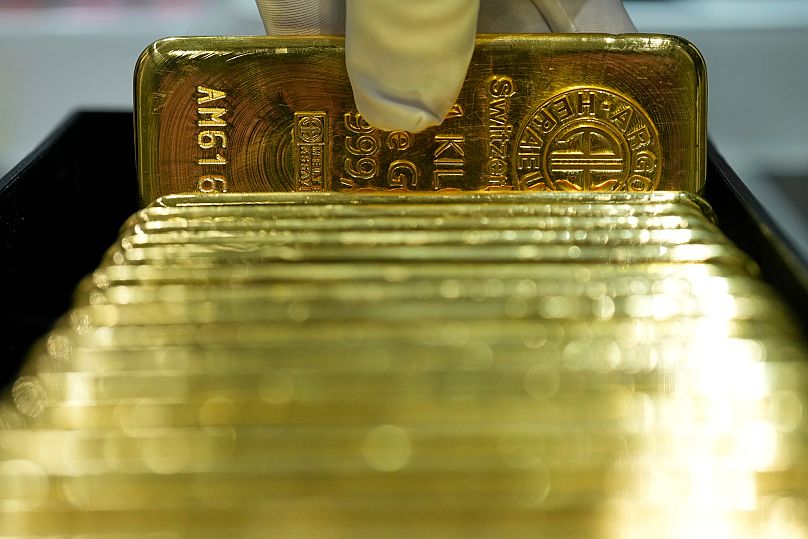
From wartime tungsten to the Banco de Portugal vault
Portugal reached its maximum reserves in 1974, with more than 800 tonnes. The large amount of gold that the country has accumulated didn't happen overnight. It is largely due to the history of Portuguese colonisation in Brazil and trade during the modern period, especially during the Estado Novo regime of 1933-1974.
Although there is a lot of discussion about the gold from Brazil, which became the main export product between the then colony and the metropolis in the 18th century, it is unlikely that any of this gold lasted until the times of the Estado Novo.
It is known, however, that a large part of the gold accumulated by António de Oliveira Salazar, driven by his obsession with balancing the budget, originated in Nazi Germany.
During World War II, Portugal declared neutrality but managed to maintain trade relations with both sides of the conflict. One of the main strategic products that Portugal exported during this period was wolfram, a metal that was crucial to the war industry because it hardened the steel used in cannons, ammunition and war machinery.
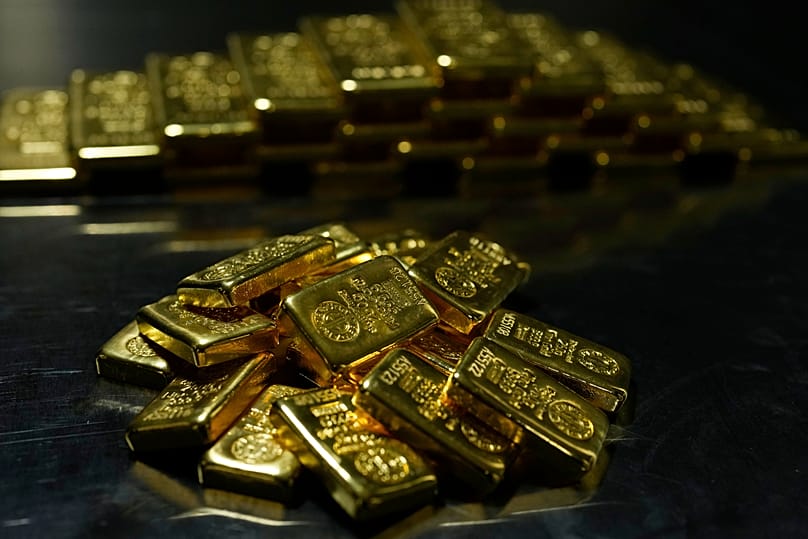
Due to the high quality and quantity of its reserves, Portugal became one of the world's main suppliers of wolfram, especially to Nazi Germany, which practically depended on this metal for its industrial arms production, and a large part of the payments were made in gold, a requirement of Salazar to protect the Portuguese economy.
According to the report available on the website of the General Secretariat of the Ministry of Finance, the Bank of Portugal's gold reserves were 65 tonnes in 1939 and increased to 306 tonnes in 1945. The reserves would reach the aforementioned 866 tonnes by the time of the Portuguese revolution in 1974.
Over time, the Republic disposed of the gold, mainly due to the loss of its monetary role. Until 1971, the gold held by each country was the reference for issuing currency, but from that date onwards, the precious metal no longer had this function. Currency issuance became dependent on other factors, such as the country's GDP.