
















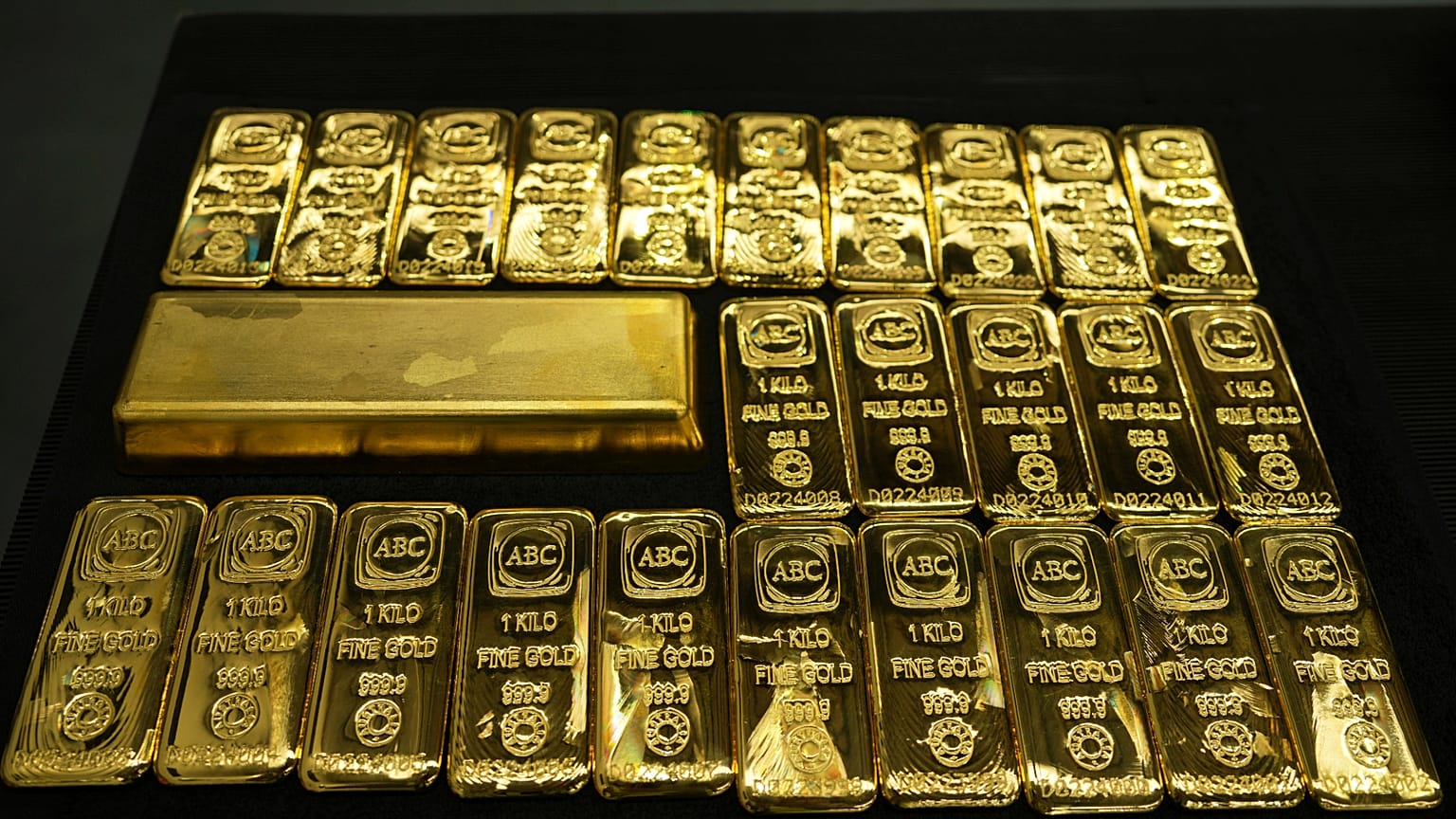













Gold soared over 60% in 2025, driven by geopolitical risks, rate cuts, and central bank demand. Many experts see further upside in 2026, with gold's role as a safe-haven asset still firmly intact.
After a historic 2025 that saw gold soar over 60% and break more than 50 record highs, investors are now turning their attention to whether the precious metal can sustain its upward trajectory into 2026.
 ADVERTISEMENT
ADVERTISEMENT
ADVERTISEMENT
Despite leading major asset classes in year-to-date performance, putting it on track for its best year since 1979, experts think gold may still have room to climb next year. Others warn that risks remain.
Unlike previous years when single events dominated gold’s trajectory, this year saw multiple drivers at play.
Sustained central bank buying, persistent geopolitical friction, elevated trade uncertainty, lower interest rates, and a weakening US dollar all combined to fuel demand for the metal as a safe-haven asset.
According to the World Gold Council’s latest report, geopolitical tensions contributed roughly 12 percentage points to year-to-date performance, while dollar weakness and slightly lower interest rates added another 10. Momentum and investor positioning accounted for nine points, with economic expansion contributing a further 10.
Central banks also continued to buy aggressively, keeping official-sector demand well above pre-pandemic norms.
Forecasts from the World Gold Council
Looking ahead, the Council expects many of the forces that powered gold’s extraordinary rally in 2025 to remain relevant in 2026.
However, the starting point is now fundamentally different. Unlike at the beginning of 2025, gold prices have already priced in what the WGC describes as the “macro consensus”. That's expectations of stable global growth, moderate US rate cuts, and a broadly steady dollar.
In this environment, the Council notes that gold appears fairly valued. Real interest rates are no longer falling significantly, opportunity costs are neutral, and the strong positive momentum seen in 2025 has begun to fade.
Investor risk appetite remains balanced, rather than tilting decisively toward caution or exuberance.
As a result, in its baseline scenario, the WGC sees gold trading within a narrow range in 2026, with performance likely limited to between –5% and +5%.
But the outlook is far from settled, as three alternative scenarios could shape a different path.
In a "shallow economic slip" — characterised by softer economic growth and additional Fed rate cuts — gold could rise by 5% to 15% as investors shift toward defensive assets, extending the gains of 2025.
In a deeper economic downturn, or "doom loop," gold could rally by 15% to 30%, fuelled by more aggressive monetary easing, declining Treasury yields, and strong safe-haven flows.
Conversely, if the Trump administration’s policies succeed in reigniting growth, a reflation return would likely push yields and the dollar higher, diminishing gold’s appeal.
Under this bearish scenario, gold could decline by 5% to 20%, particularly if investor positioning reverses and central bank demand weakens.
Predictions from Wall Street
Despite a more measured outlook from the WGC, major investment banks continue to predict further upside for gold in 2026.
J.P. Morgan Private Bank projects prices could reach between $5,200 and $5,300 per ounce, citing strong and sustained demand as a key driver.
Goldman Sachs forecasts gold at around $4,900 per ounce by the end of next year, supported by continued central bank buying.
Deutsche Bank offers a wide range of $3,950 to $4,950, with a base case near $4,450, while Morgan Stanley anticipates prices closer to $4,500, although it warns of near-term volatility.
Supporting this optimism is the ongoing accumulation of gold by central banks, particularly in emerging markets, as well as the view that many institutional investors remain underexposed to the metal.
The potential for lower real yields, coupled with global macro risks, continues to make gold attractive as a portfolio hedge.
Nonetheless, risks could cap further gains. A stronger-than-expected US recovery or a rebound in inflation could force the Federal Reserve to delay or reverse rate cuts, boosting real yields and the dollar, two classic headwinds for gold.
A slowdown in ETF flows or central bank purchases could also dampen demand, while increased recycling, particularly in India where gold is used as collateral, could raise supply and weigh on prices.
A constructive path forward
While a repeat of 2025’s extraordinary 60% surge appears unlikely, gold enters 2026 on solid footing.
The fundamental drivers such as macroeconomic uncertainty, central bank diversification, and gold’s role as a hedge against volatility remain intact.
In a world increasingly defined by unpredictability, gold continues to offer investors not just returns, but resilience. The metal may no longer be in the early stages of a rally, but its role as a strategic anchor in uncertain times is far from diminished.