






























Kazakhstan is emerging as a regional leader in female entrepreneurship.
Nearly half of all small and medium-sized enterprises in Kazakhstan are owned by women, generating an estimated 30 to 40 percent of the country’s GDP across key sectors. Kazakhstan is increasingly seeking to capitalise on the growing number of women-owned businesses and to steer their long-term development.
 ADVERTISEMENT
ADVERTISEMENT
ADVERTISEMENT
New state-backed and private non-profit support mechanisms have emerged in recent years. The government has expanded preferential lending through second-tier banks nationwide, offering longer loan maturities and reduced interest rates. Women-led enterprises also benefit from public–private initiatives in IT and technology, including grants, start-up competitions, preferential loan products and accelerator programmes.
Today, women-led businesses are concentrated mainly in services, retail and education, with growing participation in agribusiness and the creative industries. They range from beauty and tailoring services to children’s centres, online education platforms and creator-led product brands.
However, female entrepreneurship in Kazakhstan has yet to scale at the same pace as male-led businesses, according to the European Bank for Reconstruction and Development (EBRD). A high proportion of women operate micro or informal enterprises, indicating limited participation in high-growth sectors. Many women-led businesses are based in rural areas, where opportunities for scaling remain constrained.
Improved access to finance
One of the most influential instruments supporting the growth of women-led businesses has been the preferential lending programme of the DAMU Entrepreneurship Development Fund. Since 2007, the fund has provided €7.6 billion in financial instruments, supporting more than 110,000 projects, nearly 30 percent of all loans issued under its programmes.
With this support, women entrepreneurs “were able to scale their businesses, invest in additional equipment, and expand not only within the domestic market but also internationally,” said Leila Kulenova, chair of the Women Entrepreneurs Committee at the National Chamber of Entrepreneurs.
The committee has established sector-specific councils that now operate in every city, offering women entrepreneurs guidance and institutional support. “The aim is to represent the interests of female entrepreneurs before the state, consolidate their voices, develop practical solutions and ensure women have access to information, grants and other support mechanisms,” Kulenova said.
Kazakhstan also works closely with the EBRD through its regional Women in Business programme, which has channelled more than €300 million to female-led SMEs in Central Asia and Mongolia. The EBRD partners with local commercial banks to improve access to finance while helping them develop tailored financial products for women entrepreneurs.
The framework has supported 115,000 women with financing, as well as business advice and training. Younger entrepreneurs receive marketing support, mentoring, networking opportunities and technical expertise, while more established business owners are guided through strategic growth advisory as they scale their operations.
One woman’s success story
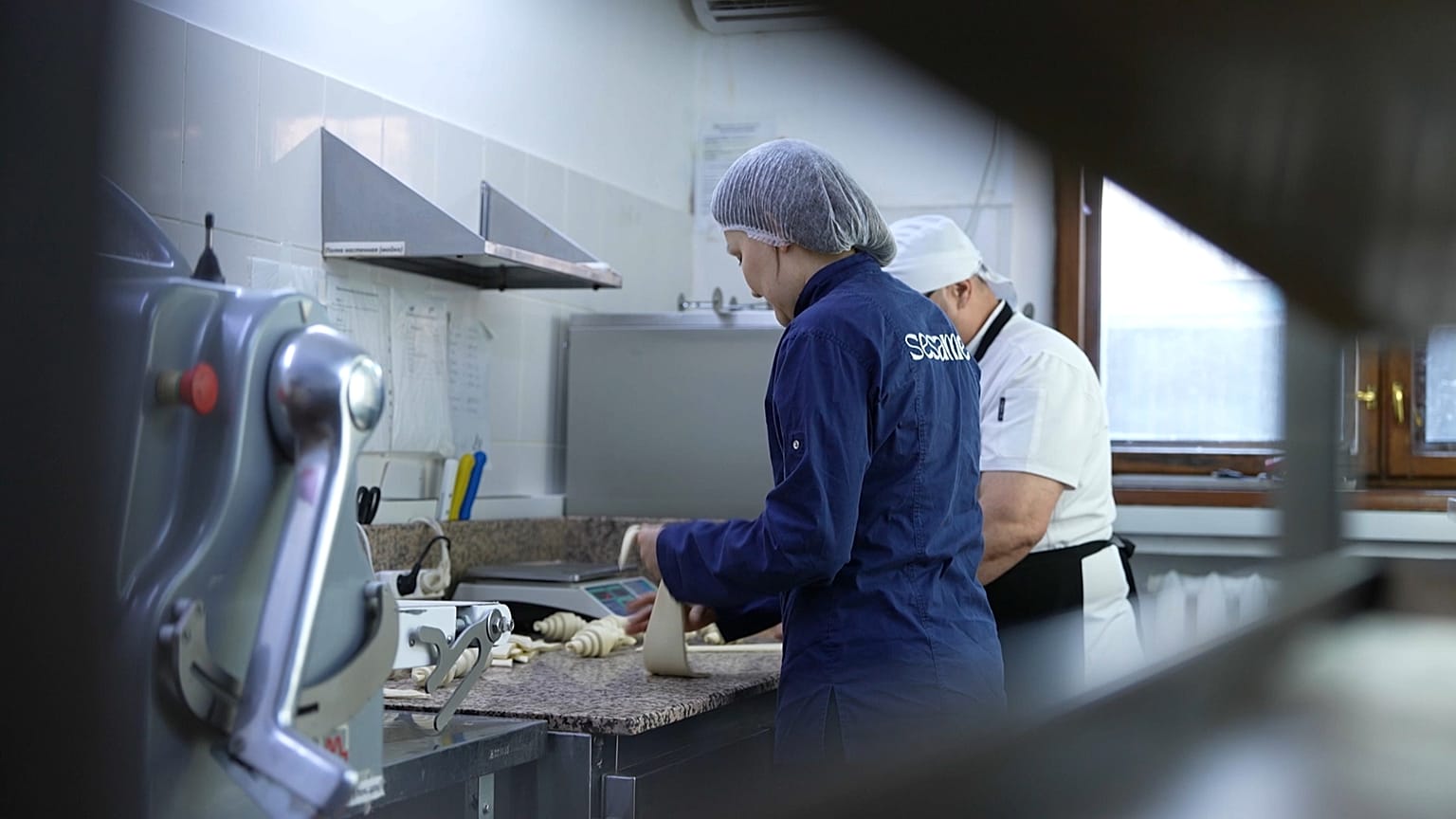
Leila Irsaliyeva has grown her catering business fourfold. She runs a company serving B2B clients, corporate events and households, offering everything from salads and pastries to full-course meals. What began as a 65-square-metre kitchen with three employees has expanded into a 40-person team, with plans to increase production space to 240 square metres by the end of the year.
Her company has already partnered with schools, universities and facilities such as Eco Life, where women undergo IVF treatment. Leila is now looking at developing products for different age groups, including kindergartens, schools and universities.
She initially received a preferential loan from the DAMU Entrepreneurship Development Fund to launch and scale her business, while the EBRD provided marketing support. More recently, she was awarded a business grant from a local bank, financed with EBRD backing.
Looking ahead, Leila plans to close the production cycle by expanding into greenhouse farming, growing her own tomatoes, cucumbers and leafy greens to meet the increasing demand of her catering kitchen.
Kazakhstani female entrepreneurs go digital
Kazakhstani women are also making inroads into the digital economy. The number of female-led start-ups has risen from 179 in 2023 to 300 this year. Central Asia’s largest international tech park and innovation cluster, Astana Hub, supports women entrepreneurs by helping them acquire digital skills and scale their projects through educational programmes, accelerators and access to investment.
One programme helps women under the age of 35 from rural areas and socially vulnerable groups, focusing on digital literacy and cybersecurity. Participants are trained in financial resilience and introduced to career opportunities in the tech sector. Another programme, designed for women over 25, helps participants master digital tools, work as freelancers or launch their own online businesses.
Astana Hub’s efforts are already producing results. YAYA, a children’s activity booking platform, has secured hundreds of thousands of dollars in investment, expanded into Uzbekistan and reached the semi-finals of the Startup World Cup. Another success story is ChecDoc.kz, a startup offering mobile, at-home medical diagnostics. It has attracted significant investment from an Arab investor and now partners with more than 300 clinics.
Support for women from socially vulnerable groups
City administrations have been awarding state-backed business grants of more than €8,000 for the past decade to women-led businesses facing economic marginalisation.
One initiative aimed at revitalising entrepreneurship in rural areas is One village – One product (OVOP). Based on a Japanese development philosophy, the programme helps identify unique, high-value products from different regions, add value to them and promote them in both local and international markets. It supports women in villages who often lack the skills, knowledge or opportunity to start a business, whether in garment production or small-scale home farming, by helping them develop, package and market their own brands.
Supported by the Japan International Cooperation Agency and financed by international development partners, the programme now operates nationwide and hosts annual exhibitions showcasing locally sourced products.
Running since 2021, the project “has delivered strong results. We can see a large community formed around it, where participants regularly meet at exhibitions, receive ongoing support and help one another. These women now have strong, high-quality products to showcase,” said Leila Kulenova.
Shared challenges across Central Asia
Central Asian economies could unlock more than €5 trillion in additional growth if women participated on equal terms with men, according to Simone Zeh Atanasovski, SME Finance and Development Associate Director for Central Asia and Mongolia at the EBRD.
One of the most persistent barriers women face across the region remains access to finance. Gender bias in lending creates collateral gaps, while “financial products are often unsuitable for the specific needs and profiles of women,” Atanasovski said.
Women across Central Asia also have more limited access to business development opportunities than men. Social norms and stereotypes restrict their entry into higher-growth sectors, while family responsibilities and unpaid care reduce the time and flexibility available to invest in their businesses.
Female entrepreneurs in the region are more likely to operate in rural or less urbanised areas, where growth opportunities are limited. Women are also overrepresented in micro and informal enterprises, further constraining access to formal financing and long-term expansion.
Through expanded financial and advisory support, Kazakhstan is positioning women-led SMEs as an increasingly important driver of economic growth. Cooperation with international institutions such as the EBRD and the Japan International Cooperation Agency remain central to efforts to build a more inclusive and supportive business environment.