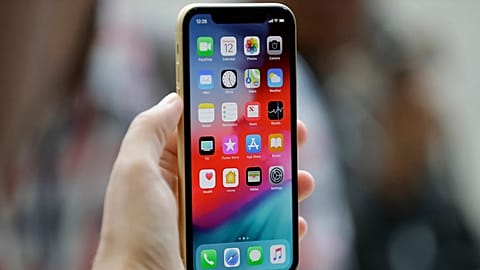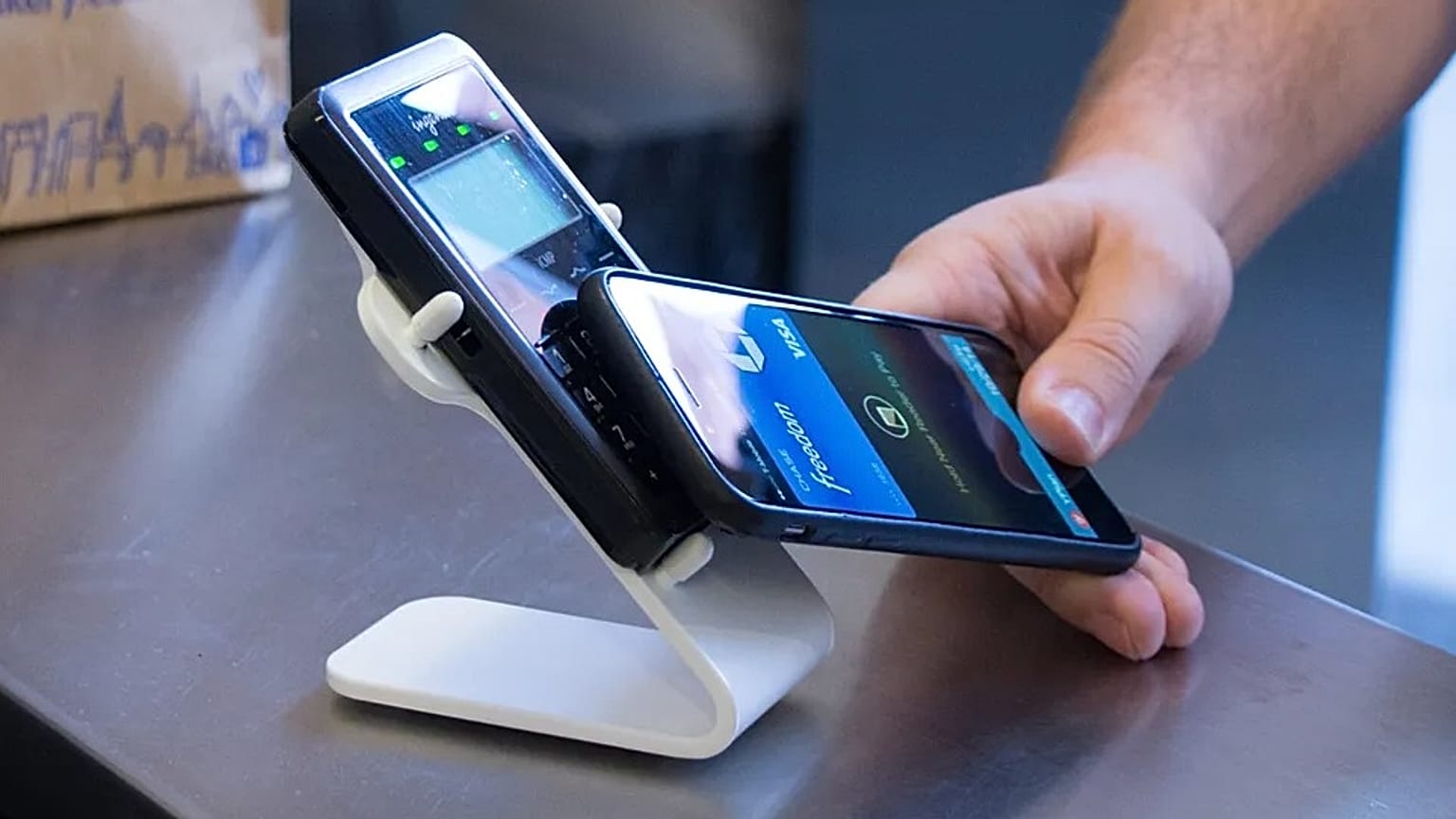













The world of payments is fast evolving as banks seek to improve customer experience. The prevalence of mobile transactions continues to rise, although adoption rates differ across Europe.
Technological developments are transforming daily life in many ways, including how people shop. Mobile payments are growing across Europe as more people use smartphones and smartwatches to make purchases.
 ADVERTISEMENT
ADVERTISEMENT
ADVERTISEMENT
In 2024, 6% of all point-of-sale (POS) payments in the euro area were made through mobile apps, accounting for 7% of the total value. In 2019, both figures were just 1%, according to the European Central Bank (ECB).
Mobile payments include the use of a mobile phone, smartwatch, fitness band, or another smart device. These payments are made through digital wallets or other mobile apps.
While the payment landscape is shifting, the pace of transformation still differs across countries.
In the euro area in 2024, 75% of day-to-day payments were made at the POS, referring to any in-person payment terminal. Around 21% were made online, while 4% were person-to-person (P2P) payments — such as sending money to a friend.
In terms of payment value, 58% of day-to-day payments were made at the POS and 36% were online. 6% were P2P payments, according to the ECB's SPACE survey.
In terms of payment instruments, cash is still used most often, making up 52% of transactions, although it accounts for only 39% of the total value. Cards are used for 39% of transactions but represent a higher share of value at 45%. This means that cards tend to be used for higher-value purchases.
Mobile payments, meanwhile, make up 6% of transactions and 7% of the total value.
The Netherlands leads in mobile payments
Among 20 countries in the euro area, the Netherlands is an outlier when it comes to digital payment transformation.
“In the Netherlands there are very high adoption rates of digital payment methods such as contactless payments with a debit card or smartphone,” a spokesperson for the Dutch Central Bank (DNB) told Euronews Business.
“Dutch consumers perceive contactless payments as faster and more convenient than for example cash or traditional debit card payments.”
At the POS, mobile payments are used in almost one in five (19%) of transactions in the Netherlands, while Ireland and Finland also see a high uptake, with 10% shares.
Slovenia, Croatia, and Belgium have the lowest shares of mobile payments, where only 3% of transactions use smart devices.
Among the EU’s ‘Big Four’ economies, Spain (7%) is the only country where the share of mobile payments is above the euro area average. While Germany matches the average at 6%, France and Italy fall below this total.
In terms of the value of payments, the Netherlands stands out with a 17% share, followed by Spain at 12%.
Croatia, Belgium, Portugal, and Austria record the lowest mobile payment value shares.
A practical way to pay?
Digital literacy, along with perceptions of speed and ease, play an important role in the uptake of mobile payments.
For consumers who prefer to pay with smart devices, carrying around cash or a card may now feel redundant.
Even so, the report reveals that for non-users, security concerns and fears of hacking (28%) or fraud (27%) are significant barriers to adoption.