




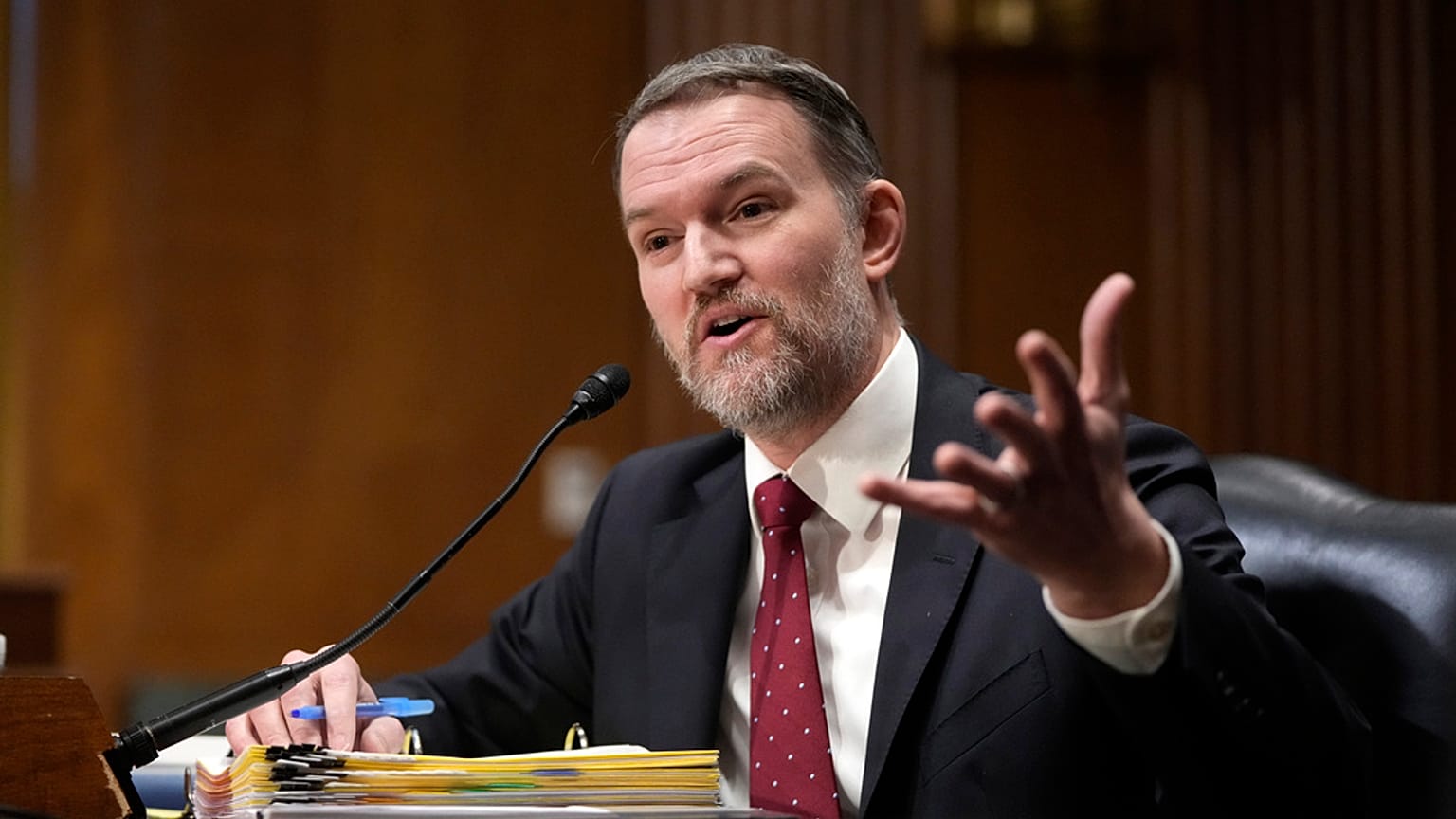













The US trade chief also explicitly warned the EU against activating its anti-coercion instrument, an emergency mechanism that would restrict US companies' ability to operate in European markets, calling such a move "unwise”.
Washington sees tariffs as a legitimate geopolitical tool, US Trade Representative Jamieson Greer said on Tuesday, warning European allies against retaliation as tensions over Greenland threaten a full-scale transatlantic trade war.
 ADVERTISEMENT
ADVERTISEMENT
ADVERTISEMENT
Answering a question from Euronews at a “pen and pad” meeting with a handful of journalists on the Davos promenade, Greer said that tariffs sit alongside export controls and sanctions in what was described as the national security toolkit.
“(US President Donald Trump’s) view has always been he would much rather work things out with folks, and so a tariff is a lesser measure," Greer said.
Greer further acknowledged that Trump uses tariffs to achieve geopolitical goals and that previous presidents have used other economic tools, too.
"Tariffs fall within that spectrum of 'of course we're going to continue to have trade, but we'll assess a fee,’” he explained.
Asked what happens when an issue is non-negotiable for the other side, Greer suggested such positions simply end negotiations.
“I find as a negotiator, if I ever say something's non-negotiable, it tends to just end the conversation, then we go back to our corners. And if that's the case, then so be it,” Greer said.
The US trade chief also explicitly warned the European Union against activating its anti-coercion instrument, an emergency mechanism that would restrict US companies' ability to operate in European markets, calling such a move "unwise”.
"Every country will do what it believes is in its national interest, and those choices have consequences,” Greer said.
"If the Europeans retaliate, President Trump will obviously have to consider whether to do something as well and what the magnitude might be."
French President Emmanuel Macron has been at the forefront of calls to activate the Anti-Coercion Instrument in response to Trump's threatened tariffs over Greenland.
The US president announced on Saturday he would impose 10% tariffs on goods from eight European nations starting on 1 February, which would then rise to 25% in June, until the US is given full control of Greenland.
Greer confirmed that US law permits tariffs to be levied on specific EU member states despite the bloc's single customs market, citing past disputes including France's digital services tax and European subsidies for Airbus.
"I don't want to hit Poland because France is doing something," Greer said, suggesting targeted measures could be preferable to broader actions affecting countries not involved in disputes.
'Our cars are as safe as yours — Europeans don't believe that'
The trade representative delivered his strongest rebuttal of European trade practices, describing the EU's regulatory ways as "completely burdensome and exclusive”.
"With respect to both industrial and agricultural goods, there has been a decades-long effort to effectively exclude American goods," Greer said.
"Europeans may say 'well, that's not deliberate.' But the effect of the way that industrial and agricultural standards are developed in Europe, they often exclude American stakeholders."
Greer also criticised Europe's refusal to accept US standards as equivalent to international norms.
"Our cars are as safe as yours. We know our food's as safe as yours. Europeans don't believe that," he said. "We have cases showing that the Europeans lost and they were wrong on this."
Washington's trade representative pointed to further shifts in US trade policy, declaring that permanent market access for all countries would not continue.
"The US market is never going to be permanently available to everyone all the time forever, like it has been for the past 25 years. We found that was a mistake," Greer said, telling business leaders that some degree of uncertainty should be expected unless companies manufacture in the US.
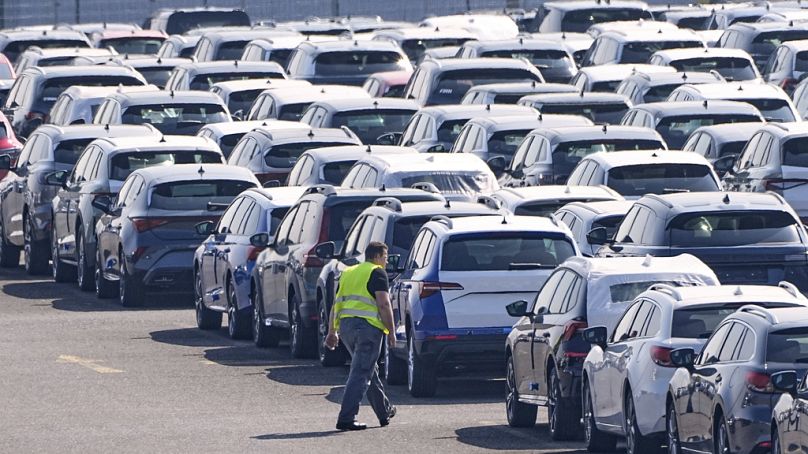
He said Washington would periodically review whether its level of market openness is appropriate, abandoning the concept of permanent normal trade relations that has underpinned global trade for decades.
"If you don't periodically review and assess whether your level of openness is appropriate, you're going to have outcomes that are inconsistent with your policy goals of the moment," he added.
“Listen, I’m just a nice guy. When foreign countries follow my advice, they tend to do okay," Greer concluded.
The escalating trade tensions come as Trump sent a letter to Norwegian Prime Minister Jonas Gahr Støre on Sunday linking his Greenland demands to his failure to win the Nobel Peace Prize, and stating he no longer feels "an obligation to think purely of peace.”
European Commission President Ursula von der Leyen and other leaders are preparing for an extraordinary EU summit on Thursday to coordinate their response to Trump's territorial ambitions and tariff threats.
Trump is scheduled to deliver his own special address to the World Economic Forum on Wednesday, which has already been branded the key moment of the week and is expected to dominate the five-day forum running until Friday.