















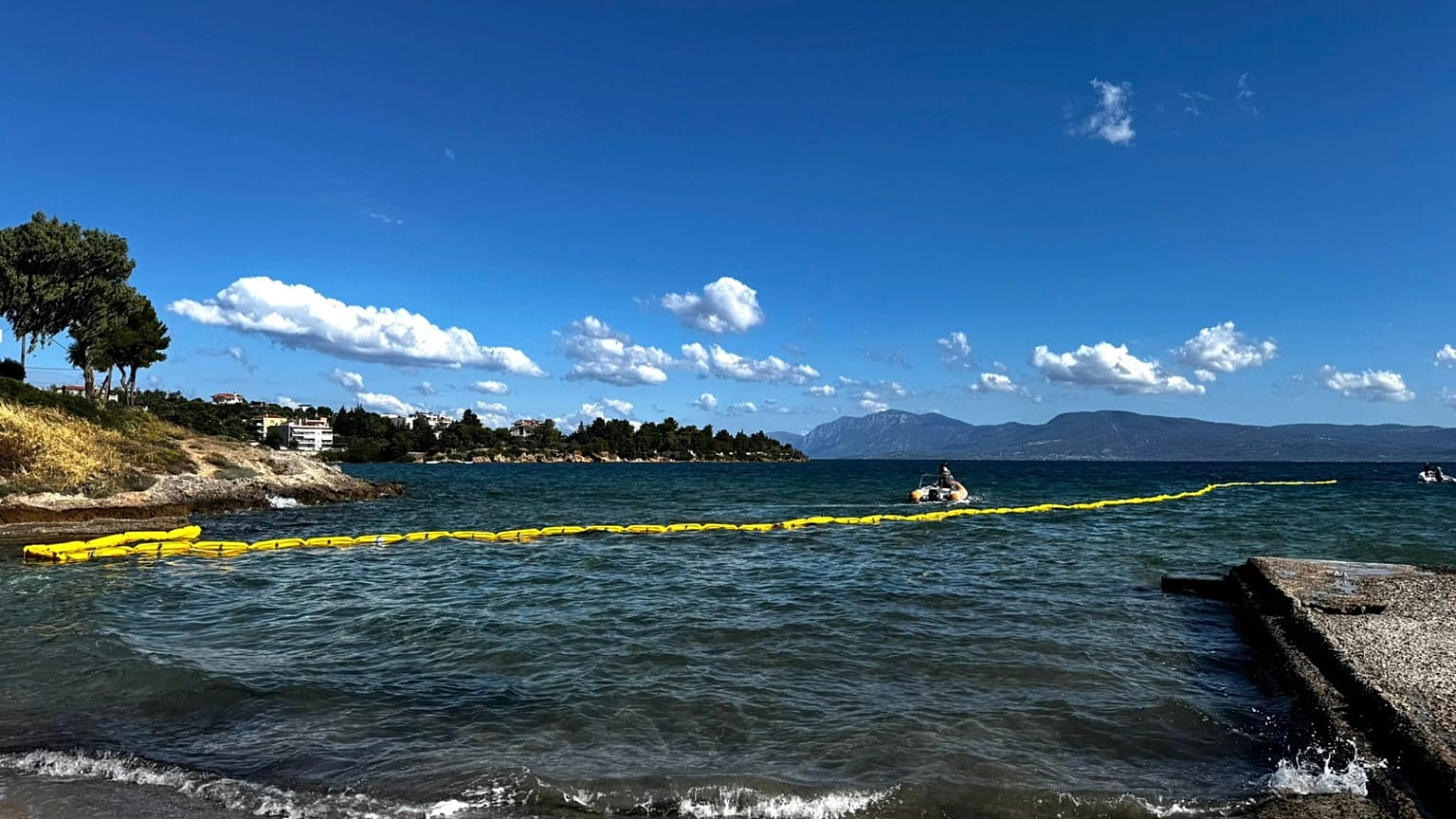













The most critical factor determining the effectiveness of floating barriers is ensuring they are positioned correctly in the water.
The mass arrival of jellyfish in the waters of the Euboean Gulf has been plaguing swimmers and local authorities for years, leading to painful stings and, in rare cases, severe allergic reactions. But now there are hopes that a new solution could bring relief to swimmers.
 ADVERTISEMENT
ADVERTISEMENT
ADVERTISEMENT
The Municipality of Chalkideon has started installing floating barriers, similar to those used to stop pollution spreading into the sea. The authorities hope they will allow bathers to swim without fearing a possible jellyfish sting.
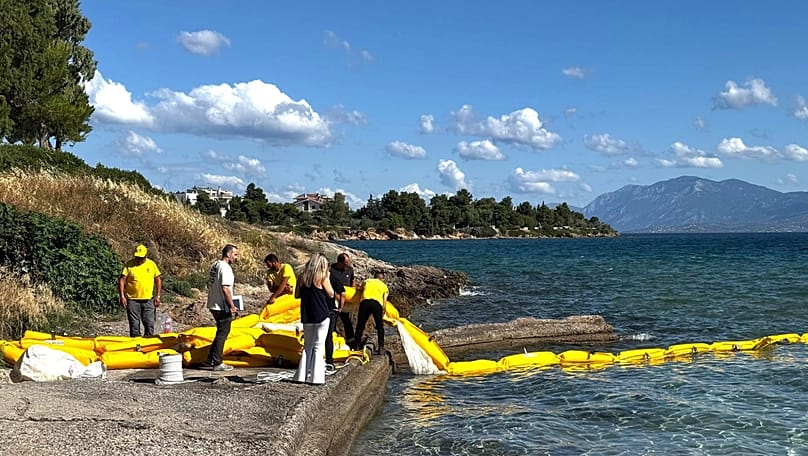
Where the floating barriers are being installed
The roll-out of the special floating barriers on beaches in the Municipality of Chalkideon began in mid-June at Rodies beach in Chalkida, at a total cost of €366,950.10.
The floating barriers are to be installed by specialised divers at six beaches in the Municipality of Chalkideon on the northern Euboean Gulf, namely Alykes, Mpourntontas, Valopoula, Kalamia and Zephyros.
At the same time, the Ports Organisation of Evia (OLNE) is planning to install similar floating barriers on the beaches of Sykies, Kourenti, Souvala and Papathanasiou, which fall under its jurisdiction.
"We would like to thank the Region of Central Greece for funding such an important initiative, which enables us to limit the entry of jellyfish, as well as floating waste and surface pollution, into bathing areas, enhancing safety for swimmers and improving the image of our beaches for residents and visitors to our municipality," the Mayor of Chalkideon said.
Are the floating barriers effective against pufferfish as well?
According to experts, this type of floating barrier can indeed be effective, provided it is installed properly. It goes without saying that it protects only the specific area it covers and prevents jellyfish and fish, including pufferfish, from entering the enclosed zone.
The proper installation of an anti-jellyfish floating barrier requires it to start from the shore, extend into deeper waters and return to land, forming a completely closed, semi-circular or rectangular "safety zone".
The lower part of the net is fitted with special weights (chains or sunk weights). These must rest properly on the seabed or leave only a minimal gap so that jellyfish cannot be swept along by underwater currents and slip under the net.
The upper part of the barrier consists of reinforced floats (buoys). It needs to stand clearly above the surface of the water (around 30–50 centimetres) so that even in rough seas, the jellyfish cannot ride over the barrier to reach the swimmers' zone.
The barrier must be placed at a sufficient depth to be both effective and practical for beachgoers. Some bathers at Rodies, for instance, are reported to have complained that it was put in very shallow water, reducing the space available for free swimming.
To remain effective, the nets need regular cleaning by specialised crews so that seaweed and marine organisms do not build up on them, weighing them down or damaging them and creating "entry holes".