

















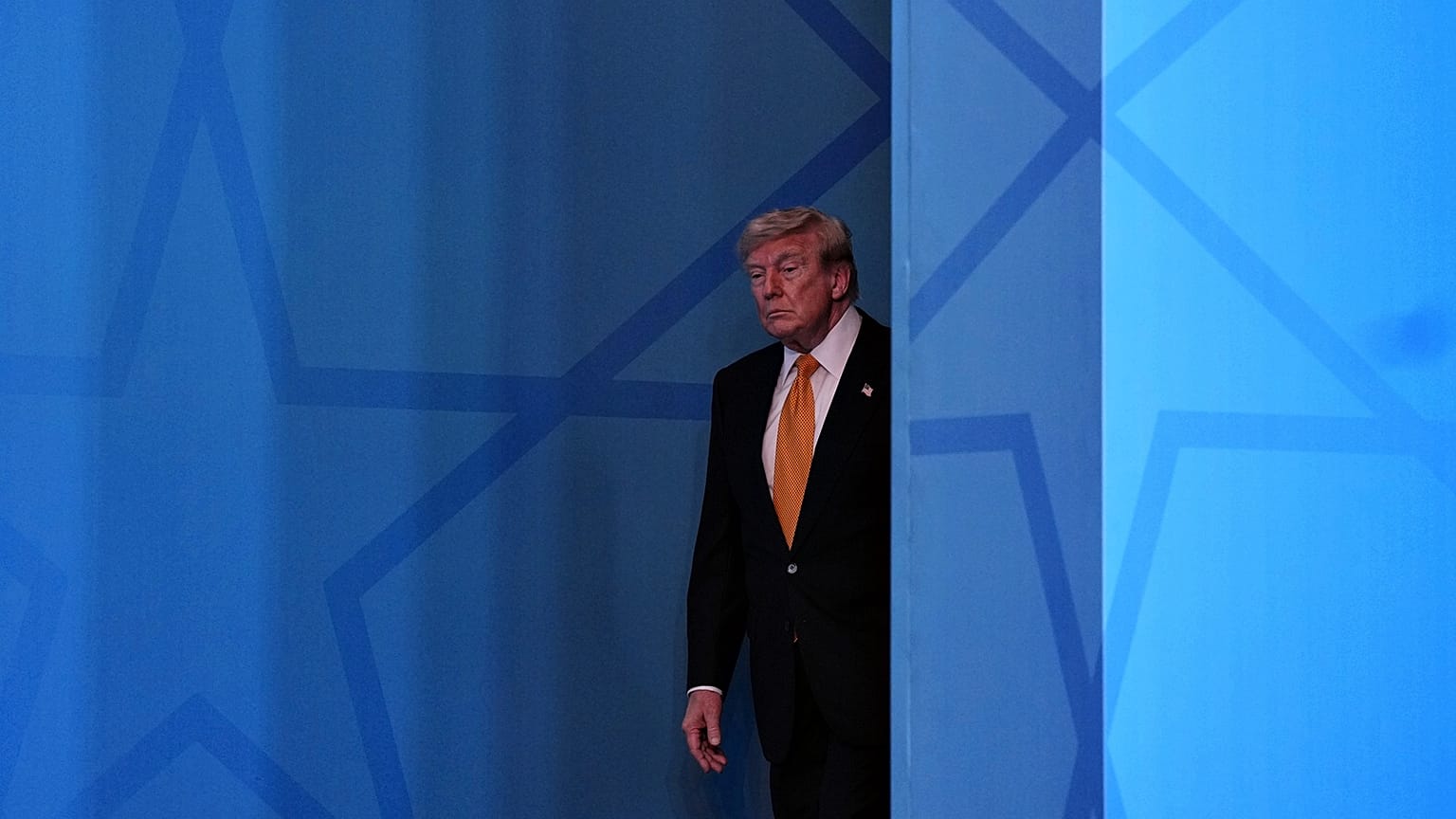













The fight over Greenland’s future is far from over as Trump revives his bid to seize the island, reopening Europe’s deepest fears.
Caught between a series of domestic and international crises, Europeans hoped that, at the very least, Greenland would no longer be one of their concerns.
 ADVERTISEMENT
ADVERTISEMENT
ADVERTISEMENT
That hope, however, proved short-lived — lasting just six months.
Not long after landing in Ankara, Turkey, to attend the annual summit of NATO leaders, US President Donald Trump revived his ambition to seize Greenland, the mineral-rich island that belongs to the Kingdom of Denmark and that the former Manhattan tycoon has long pursued as the ultimate real-estate deal.
Greenland "should be controlled by the United States, not by Denmark", Trump said on Tuesday, after being received by Turkish President Recep Tayyip Erdoğan.
"Greenland doesn't help Denmark. Denmark doesn't spend money to really help Greenland," he added. (In fact, Denmark provides Greenland with a so-called block grant worth almost €600 million per year.)
The following day, Trump doubled down on his claims.
"Greenland is very important for the United States, but it's not important for Denmark," he said. "I'm not happy with NATO for what they did with Greenland."
The remarks immediately made it to front pages worldwide, forcing Danish Prime Minister Mette Frederiksen to once again defend her country's integrity against one of its own military allies — a deeply unusual scenario for a military alliance summit.
"The US position is, unfortunately, very clear on this topic. But our position is as clear as it has been all through: Greenland is not for sale. I hope all allies will respect the Greenlandic people's right to self-determination," Frederiksen told reporters in Ankara.
"We are ready to defend every inch of NATO, including our own territory."
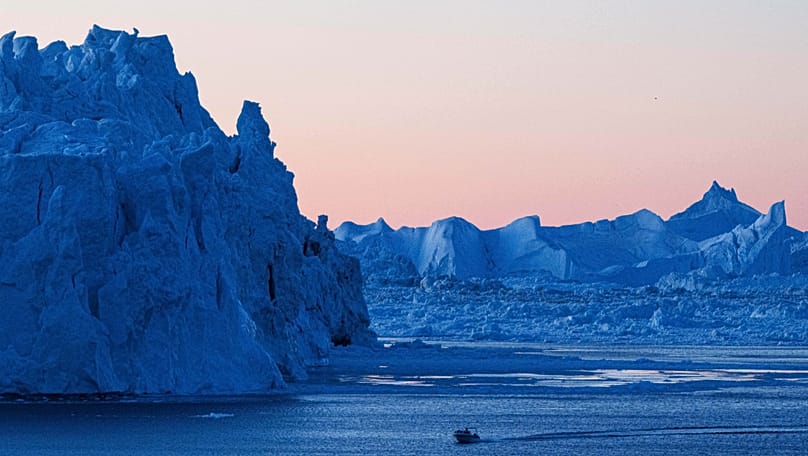
For Europeans, it is a painful flashback to January, when Trump threatened to impose a 10% tariff on eight European countries to coerce Denmark into giving up Greenland.
The traumatic saga, which lasted five days, brought the transatlantic alliance closer to collapse than at any time in its 77-year history. The EU, which shares 23 members with NATO, convened an emergency summit of leaders to prepare for what could have become a full-scale trade war.
The clash was ultimately defused by NATO Secretary-General Mark Rutte, who met Trump in Davos, Switzerland, and struck a "framework deal" to enhance security in Greenland and the entire Arctic region.
A wave of relief swept across Europe. By the time leaders met in Brussels for the emergency summit, the atmosphere had been transformed. Though they spoke about the need for mutual respect and enhanced vigilance, they all smiled and patted each other on the back, signalling a willingness to close the chapter and move on.
Greenland swiftly vanished from the main conversation, and the political energy shifted back to Ukraine, Russia, China and the Middle East.
Far from over
In Copenhagen, however, an intense apprehension lingered on, as the core issue of the bitter dispute remained uncomfortably unresolved.
Since the events of January, Denmark and Greenland have discreetly pursued trilateral talks with the White House to find a new common understanding on the ice-covered island, which is still governed by a 1951 bilateral defence agreement.
The diplomatic track has moved slowly and has yet to deliver any tangible results.
In May, the New York Times reportedthat the US was pushing to secure a forever clause on military deployments and veto power over new investments to stave off Russia and China, two requests that directly challenge sovereignty.
On Tuesday, Rutte promised to "make sure the deal is step-by-step implemented" so that Trump can eventually install the Golden Dome on Greenland. (The multi-layer, multi-billion-dollar defence system is in the early stages of development.)
While Copenhagen and Nuuk are keen to make diplomacy a success, they have serious reservations about whether any deal would effectively satisfy Trump's fixation, given how personal it has become. Trump has variously framed Greenland as a maximalist land transaction, a matter of national security and a fervid desire for ownership.
Danish officials privately warn that the White House can still resort to alternative methods to advance annexation through non-military means and urge their European peers to stay on high alert rather than fall into complacency.
In Brussels, the matter is treated with extra care to avoid fuelling tensions.
During last month's G7 summit in Évian, France, a camera caught Trump having an intriguing open-mic chat with António Costa, the president of the European Council.
"You understand?" Trump appeared to tell Costa. "Greenland."
Despite the footage and audio being widely circulated by news organisations, Costa's team strenuously denied that the contentious matter had been discussed.
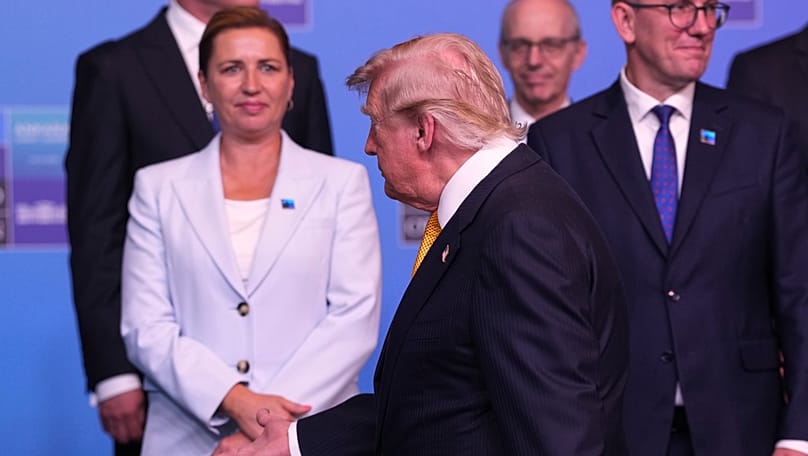
Following the Ankara comments, Brussels reacted with similar caution.
"Territorial integrity, national sovereignty and inviolability of borders are fundamental principles of international law. They are essential not only for the European Union, but for nations around the world," the European Commission said.
"We will not stop defending them, and the EU stands in full solidarity with Denmark and the people of Greenland."
The Commission is updating its Arctic security strategy to strengthen the European presence in the region and expand investments to counter Trump's long-running complaint that the continent is not pulling its weight.
President Ursula von der Leyen initially planned to visit Greenland in March to unveil a beefed-up financial package, but the trip was indefinitely postponed after Frederiksen called for snap elections. The visit is still under consideration.
It remains to be seen how far Trump will go this time to fulfil his territorial ambitions.
For now, his administration is fully absorbed in ending the war with Iran. Moreover, his authority to impose tariffs has been weakened after a bruising US Supreme Court ruling, and the upcoming congressional midterm elections — where opposition to any move to annex Greenland is strong — pose a risk to the rest of his second term.
The only certainty is that the struggle over Greenland's future is far from settled.
"From a geopolitical, strategic, or even economic standpoint, President Trump's arguments for the need to secure US ownership of Greenland simply don't hold up. His fixation on Greenland looks like nothing more than a real estate impulse, which is precisely why it keeps resurfacing," Tiago Antunes, an associate senior fellow at the European Council on Foreign Relations (ECFR), said.
"And it is deeply troubling, obviously, for a defence alliance when one of its own members insists on taking control of an ally's territory. That undermines the very trust the alliance is built on."